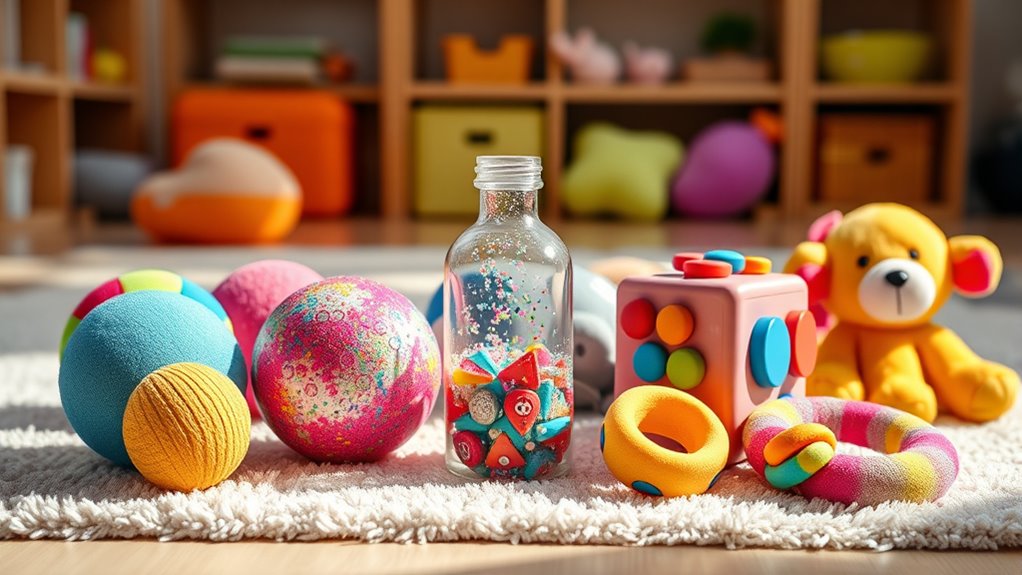

Choosing the right emotional regulation toys can make a significant difference in helping children and teens manage their feelings effectively. The Best Overall pick, A Little SPOT of Emotion 8 Plush Toys with Feelings Book Box Set, offers a comprehensive approach combining tactile comfort with educational content. For those seeking quick distraction, the Feelings Clock Puzzle stands out, while the ThinkPsych Roll with It provides practical coping strategies. Tradeoffs in this category often involve balancing educational value, ease of use, and engagement level. Continue reading for a detailed breakdown of these options and what makes each one unique.

Turn the school run and nap time into listening time
- Thousands of audiobooks, podcasts and originals
- Listen on your phone, tablet or Echo — also offline
- Cancel anytime
Complete the kit


Key Takeaways
- Top picks vary between plush comfort, interactive games, and educational tools, highlighting different approaches to emotional regulation.
- Products that combine tangible elements with instructional content tend to offer the best balance of engagement and skill-building.
- The most effective toys are adaptable for different age groups and emotional states, ensuring broader usability.
- Price and complexity often influence whether a toy is better suited for beginners or more experienced users.
- Choosing a toy that aligns with the child’s specific emotional needs leads to more meaningful and lasting benefits.
| A Little SPOT of Emotion 8 Plush Toys with Feelings Book Box Set |  | Best Overall for Self-Directed Emotional Learning | VIEW ON AMAZON | See Our Full Breakdown | |||
| Feelings Clock Puzzle – Wooden Emotions Wheel for Kids |  | Best for Recognizing and Expressing Basic Emotions | Material: Wood | Age Range: Ages 3+ | Included Components: Wooden clock with 8 emotion pieces | VIEW ON AMAZON | See Our Full Breakdown |
| ThinkPsych Roll with It – CBT Coping Skills Kit |  | Best for Developing Emotional Resilience Through Play | Item Weight: 1.14 pounds | Dimensions: 10.47 x 6.42 x 2.83 inches | Model Number: RWIK-02 | VIEW ON AMAZON | See Our Full Breakdown |
| Vibes Therapy Games for Teens & Kids 6+ | 2-in-1 Feelings Dartboard Game |  | Best for Active Engagement and Social Emotional Learning | Set Includes: board, 6 magnetic darts, 96 cards | Recommended Age: 6-17 years | Warranty: 90 days | VIEW ON AMAZON | See Our Full Breakdown |
| ThinkPsych Escape from Anger Mountain Board Game |  | Best for Managing Anger with Evidence-Based Strategies | Brand: ThinkPsych | Genre: Educational, Family | Number of Players: 8 | VIEW ON AMAZON | See Our Full Breakdown |
| See My Feelings Mirror, Feelings and Emotions Toys |  | Best for Visual Self-Awareness and Social Skills | Includes: 1 kid-safe mirror, 6 snap-in slides, 4 activities | Core Emotions: Happy, Angry, Surprised, Silly, Scared, Sad | Material: Shatterproof plastic | VIEW ON AMAZON | See Our Full Breakdown |
| hand2mind Express Your Feelings Sensory Bottles – Primary Emotions |  | Best for Independent Emotional Recognition and Mindfulness | Number of bottles: 4 | Emotions represented: Happy, Angry, Scared, Sad | Material: Sealed, durable plastic | VIEW ON AMAZON | See Our Full Breakdown |
| Thought-Spot I Know What to Do Flipbook | Emotions Wheel & Feelings Chart | Emotional Regulation Tool for Kids |  | Best for Visual Learning and Self-Expression in Young Children | Dimensions: 9″ x 9″ | Pages: 20 | Material: Laminated, hard cover | VIEW ON AMAZON | See Our Full Breakdown |
| Emotional Rollercoaster | Anger Management Board Game for Kids & Families | Therapy Learning Resources | Emotion & Social Skills |  | Best for Family and Group Anger Regulation | Brand: S.T.O.R.M. | Genre: Family, Strategy | Number of Players: 2-6 | VIEW ON AMAZON | See Our Full Breakdown |
More Details on Our Top Picks
A Little SPOT of Emotion 8 Plush Toys with Feelings Book Box Set
This plush set excels at introducing children to a variety of emotions through tactile, relatable toys, making it ideal for self-guided exploration. Unlike the Feelings Clock Puzzle, which emphasizes recognizing emotions visually and kinesthetically, this set combines soft toys with a storybook, fostering emotional understanding in a playful way. However, it lacks detailed specifications and reviews, which could leave some buyers uncertain about durability or educational depth. It’s perfect for parents or caregivers seeking a comprehensive, engaging package that promotes emotional intelligence independently. The main tradeoff is that this set doesn’t offer structured activities or coping strategies, making it less suited for children needing targeted emotion regulation tools.
Pros:- Variety of plush toys representing different feelings for comprehensive exposure
- Includes a narrative book for contextual learning
- Soft, engaging design encourages independent exploration
Cons:- No detailed specifications or durability info available
- Lacks structured coping strategies or emotion regulation guidance
Best for: Self-motivated children or parents looking for an all-in-one emotional literacy starter kit
Not ideal for: Children requiring guided therapy or specific emotion regulation techniques, due to limited instructional content
Our verdict“This set is ideal for self-directed learners who thrive with tactile, visual, and narrative tools to understand feelings independently.”
Feelings Clock Puzzle – Wooden Emotions Wheel for Kids
Compared to the plush set, the Feelings Clock Puzzle offers a hands-on, visual approach to emotion recognition, helping children articulate feelings through movable pieces on a durable wooden clock. Designed by psychologists, it supports both emotional vocabulary building and regulation, especially useful for children who respond well to visual aids. Still, it covers only basic emotions, limiting its usefulness for more complex feelings, and younger children might need adult supervision to prevent misuse. This product makes sense for caregivers seeking a sturdy, interactive tool to reinforce emotional words and regulation skills at home or in therapy, but it may fall short for children needing nuanced emotion management.
Pros:- Interactive, visual method for recognizing and expressing feelings
- Durable wooden construction suitable for various environments
- Supports emotional vocabulary development and regulation
Cons:- Limited to basic emotions, not ideal for complex feelings
- Requires adult supervision for safe use with younger kids
Best for: Parents, teachers, or therapists seeking a durable, visual tool for teaching basic emotional recognition
Not ideal for: Children who need help understanding complex feelings or require more comprehensive emotion regulation strategies
- Material:Wood
- Age Range:Ages 3+
- Included Components:Wooden clock with 8 emotion pieces
- Warranty:1 Year
Our verdict“This product suits children who benefit from visual, hands-on learning of fundamental emotions, especially in educational or therapeutic settings.”
ThinkPsych Roll with It – CBT Coping Skills Kit
Compared with simpler emotion recognition tools, the Roll with It kit integrates CBT-based coping strategies, making it especially suitable for children who need practical tools to manage feelings actively. Its interactive dice and guides promote emotional resilience, making it a strong option for clinical or home use. However, its complexity might overwhelm very young children, and adult supervision is recommended to maximize benefits. This kit makes the most sense for caregivers or therapists aiming to teach coping skills alongside emotional awareness, though it may be less appropriate for kids who prefer straightforward toys or need immediate simplicity.
Pros:- Engaging, interactive format enhances emotional learning
- Includes diverse tools and guides for comprehensive support
- Research-backed strategies help reduce anxiety and build resilience
Cons:- May require adult supervision for effective use
- Complexity could be confusing for very young children
Best for: Children aged 5-12 who are ready for structured coping strategies and guided emotional support
Not ideal for: Very young children or those who prefer minimal complexity in toys, due to potential overwhelm
- Item Weight:1.14 pounds
- Dimensions:10.47 x 6.42 x 2.83 inches
- Model Number:RWIK-02
Our verdict“Ideal for children who can engage with structured, guided play to develop resilience and coping skills, especially in therapeutic contexts.”
Vibes Therapy Games for Teens & Kids 6+ | 2-in-1 Feelings Dartboard Game
This game set expands emotional awareness through active, social play, combining card-based recognition with physical activity via darts. Unlike the more structured, therapy-focused tools, Vibes encourages spontaneous conversation and peer interaction, making it excellent for group settings or family game nights. However, the dart component may not be suitable for very young children, and limited to just two games, it might need supplementation for prolonged use. It makes sense for caregivers seeking a lively, engaging way to promote emotional vocabulary and social skills, though it isn’t as deep in emotion regulation techniques as other options.
Pros:- Encourages emotional awareness through active, social play
- Includes two engaging games for varied interaction
- Safe magnetic darts suitable for active play
Cons:- Limited to two games, may require additional activities
- Dart component less suitable for very young children
Best for: Families or educators wanting a fun, active way to foster emotional conversations among children and teens
Not ideal for: Very young children or groups needing intensive emotion regulation skills, due to activity limitations and safety considerations
- Set Includes:board, 6 magnetic darts, 96 cards
- Recommended Age:6-17 years
- Warranty:90 days
Our verdict“This game works best for active, social learners who enjoy combining physical activity with emotional discussions in group settings.”
ThinkPsych Escape from Anger Mountain Board Game
Compared to playful recognition tools, this board game emphasizes managing anger through structured activities and coping prompts, making it suitable for children who need targeted regulation strategies. Its engaging format supports family, therapy, or school use, but its 30-minute playtime might limit depth for some children seeking longer engagement. The game’s focus on anger makes it less versatile for broader emotional regulation but highly effective for children specifically struggling with anger management. This makes it an excellent choice for caregivers or therapists aiming to teach anger regulation in a collaborative, game-based way, though it may be less effective for general emotional regulation or complex feelings.
Pros:- Uses evidence-based coping strategies for anger management
- Suitable for multiple settings including therapy and family game nights
- Includes a variety of cards and activities to teach regulation
Cons:- Limited to 8 players, less suited for large groups
- Shorter gameplay may limit depth for some children
Best for: Children ages 6 and up needing focused anger management skills in family, school, or therapy settings
Not ideal for: Children without anger issues or those seeking a broader emotional regulation toolkit, due to its specific focus
- Brand:ThinkPsych
- Genre:Educational, Family
- Number of Players:8
- Estimated Playing Time:30 minutes
Our verdict“This game is best for children who need targeted, structured tools to manage anger within a supportive, game-based environment.”
See My Feelings Mirror, Feelings and Emotions Toys
This toy stands out for its simple, approachable design that helps children recognize and manage basic emotions, making it ideal for early learners or children just beginning to grasp feelings. Compared with the flipbook, it offers a more tactile, physical interaction, which can be more engaging for children who benefit from hands-on tools. However, its focus on only six core emotions can limit its usefulness for kids experiencing more complex feelings, and it requires adult guidance to maximize its benefits. Its durable, shatterproof construction makes it perfect for daily use in homes, classrooms, or therapy settings, fostering social skills and emotional awareness in a straightforward way.
Pros:- Helps children recognize and manage emotions effectively
- Durable, shatterproof construction suitable for daily use
- Supports social skills and emotional regulation across different settings
- Includes multiple activities for easy integration into routines
Cons:- Limited to basic emotions, may not address complex feelings
- Requires adult involvement for optimal use
Best for: Parents, teachers, or therapists working with young children who need basic emotion recognition and social skills development
Not ideal for: Older children or those needing support for complex, nuanced emotional states, as the toy covers only basic feelings
- Includes:1 kid-safe mirror, 6 snap-in slides, 4 activities
- Core Emotions:Happy, Angry, Surprised, Silly, Scared, Sad
- Material:Shatterproof plastic
- Intended Use:Therapy, SEL lessons, social skills development
Our verdict“This mirror is best for early learners and those new to emotional regulation, offering simple, durable tools for foundational social-emotional skills.”
hand2mind Express Your Feelings Sensory Bottles – Primary Emotions
This set excels at fostering independent emotional awareness through tactile, visual cues, making it ideal for children who thrive with self-guided activities. Unlike the flipbook, which offers visual prompts and coping strategies, these sensory bottles provide a calming, sensory-rich experience that promotes mindfulness and emotional regulation without adult intervention. Their sealed, durable plastic design means they can handle frequent handling, but limiting the range to four core emotions might leave some children needing additional tools for broader emotional understanding. This pick makes the most sense for children who benefit from sensory play and can engage with minimal supervision.
Pros:- Helps children recognize and manage emotions independently
- Mess-free, durable design suitable for frequent handling
- Encourages mindfulness and sensory exploration
- Promotes social-emotional learning in a calming way
Cons:- Limited to four emotions, may require additional sets for broader range
- Some children might need adult guidance to interpret or use effectively
Best for: Children who thrive with sensory-based, self-guided emotional regulation tools, especially in classroom or home settings
Not ideal for: Kids needing support with complex or nuanced emotions, or those who require more verbal or visual cues than bottles provide
- Number of bottles:4
- Emotions represented:Happy, Angry, Scared, Sad
- Material:Sealed, durable plastic
- Intended use:Sensory play, emotional regulation, mindfulness
Our verdict“These sensory bottles are ideal for children who prefer self-directed, tactile emotional regulation tools with a calming focus.”
Thought-Spot I Know What to Do Flipbook | Emotions Wheel & Feelings Chart | Emotional Regulation Tool for Kids
This flipbook is a strong choice for children aged 3-5, offering visual cues and coping strategies that support emotional expression and self-awareness. Compared with sensory bottles, it provides richer content for understanding a range of emotions and encourages communication, especially for children developing language skills. However, its reliance on adult guidance for younger children can limit independent use, and it addresses only common moods, potentially leaving gaps for children experiencing more nuanced feelings. Its laminated, durable design makes it suitable for everyday use in various environments, including calm-down corners and therapy sessions.
Pros:- Helps children identify and express emotions with visual aids
- Includes coping strategies to promote regulation
- Durable, laminated design for frequent use
- Supports neurodiverse learners, including autism and ADHD
Cons:- May require adult guidance for younger children
- Limited to common moods, not covering all emotional subtleties
Best for: Parents, teachers, or therapists seeking a visual, interactive tool for early emotional self-awareness and communication
Not ideal for: Older children or those requiring support with complex emotional nuances, as it covers mainly basic feelings
- Dimensions:9″ x 9″
- Pages:20
- Material:Laminated, hard cover
- Intended Age:3-5 years
- Use Cases:Home, classroom, therapy, calm-down corner
Our verdict“This flipbook offers a visual and strategic approach ideal for early childhood emotional education and communication.”
Emotional Rollercoaster | Anger Management Board Game for Kids & Families | Therapy Learning Resources | Emotion & Social Skills
This game makes a lively, engaging way to teach children aged 4-8 coping strategies for anger and frustration, promoting emotional regulation through interactive gameplay. Compared with the flipbook, which focuses on self-awareness, this game introduces social and problem-solving skills in a fun context. Its requirement for adult facilitation can be a drawback for independent play, and the limited player capacity (2-6) makes it less suited for larger groups or classroom-wide activities. Still, it effectively combines learning with play, making it a compelling choice for family therapy or small group settings where fun reinforces emotional skills.
Pros:- Helps children develop emotional regulation and coping skills
- Encourages mindfulness and self-expression through gameplay
- Suitable for a wide age range and small groups
- Makes learning about emotions engaging and memorable
Cons:- May require adult facilitation for younger children
- Limited to 2-6 players, not ideal for large groups
Best for: Families or small groups seeking a playful, interactive approach to anger management and emotional regulation
Not ideal for: Children or settings where independent, solitary emotional regulation tools are preferred, or for large groups exceeding six players
- Brand:S.T.O.R.M.
- Genre:Family, Strategy
- Number of Players:2-6
- Edition:Standard Edition
Our verdict“This game is best suited for family or small group settings, making emotional regulation a fun team activity for children aged 4-8.”

How We Picked
We evaluated emotional regulation toys based on several key criteria: effectiveness in teaching emotional skills, ease of use for both children and caregivers, durability, and overall engagement. We prioritized products that offer clear benefits for emotional understanding, whether through interactive play, sensory engagement, or educational content. The ranking reflects a combination of versatility, quality, and value for different stages of emotional development, ensuring that each product serves a distinct purpose and user need.Factors to Consider When Choosing Emotional Regulation Toys
Selecting the right emotional regulation toy depends on understanding your child’s specific needs, age, and emotional challenges. The right toy should foster emotional awareness, provide coping strategies, and be engaging enough to encourage regular use. Considering these factors can help avoid common pitfalls like choosing toys that are too complex or not developmentally appropriate. Here are key factors to keep in mind when making your choice.Age Appropriateness and Developmental Stage
It’s vital to match the toy to your child’s age and emotional maturity. Toys designed for younger children typically focus on simple recognition and expression of feelings, while older kids and teens benefit from tools that promote deeper emotional understanding and regulation strategies. Investing in age-appropriate toys ensures engagement and reduces frustration, making emotional learning more effective.
Type of Engagement and Learning Style
Some children respond better to tactile, sensory toys like bottles or plush animals, while others may prefer games or puzzles that challenge their thinking and problem-solving skills. Recognizing your child’s preferred learning style can increase the likelihood of consistent use and emotional growth. Combining different types of toys can also provide a well-rounded approach to emotional regulation.
Educational Content Versus Play Value
Striking a balance between educational content and play value is essential. Toys that are purely fun might not teach emotional skills effectively, whereas overly educational toys risk being boring or intimidating. Products that incorporate storytelling, scenarios, or interactive elements tend to foster better learning and emotional awareness while maintaining engagement.
Ease of Use and Portability
Choose toys that are simple to use independently or with minimal guidance, especially for children who are just starting to learn emotional regulation. Portability can also be a deciding factor if the toy needs to travel between home, school, or therapy sessions. Ease of use encourages regular interaction and helps reinforce emotional skills in different settings.
Durability and Maintenance
Durable materials and easy maintenance are important for toys intended for regular use. Fragile or complicated toys can lead to frustration and reduced usage over time. Investing in well-made products ensures they withstand active handling and continue providing value through repeated use.
Frequently Asked Questions
How do I choose an emotional regulation toy for a child who struggles with anger?
For children managing anger, look for toys that provide immediate calming strategies, such as sensory bottles or anger management board games. These tools can help redirect intense feelings into constructive activities or mindfulness exercises. It’s also helpful to select toys that teach coping skills through relatable scenarios or role-playing, making it easier for the child to practice regulation in real life.
Are educational toys more effective than sensory toys for emotional regulation?
Both types serve different purposes; educational toys help build understanding of feelings and emotional vocabulary, while sensory toys assist in calming and grounding the child. The most effective approach often involves combining both, depending on the child’s specific needs. For example, a sensory bottle paired with an emotion storybook can address both regulation and emotional literacy simultaneously.
Can these toys be used for teenagers, or are they only suitable for younger children?
Many emotional regulation toys are adaptable for teens, especially those that focus on mindfulness, journaling, or problem-solving skills. Teenagers often respond better to tools that respect their growing independence and identity, such as advanced board games or reflective flipbooks. Choosing age-appropriate, engaging options helps ensure they remain relevant and effective.
How often should I introduce a new emotional regulation toy?
Introducing a new toy should be based on your child’s engagement and progress. Regular use—several times a week—can reinforce emotional skills, but overloading with too many toys at once may reduce their impact. Rotating different tools helps maintain interest and allows your child to develop a versatile toolkit for managing various emotions.
Is it better to buy a single multipurpose toy or several specialized ones?
Choosing between a multipurpose toy and several specialized tools depends on your child’s needs and your goals. A versatile toy can cover multiple emotional skills and be cost-effective, but specialized toys often target specific issues more precisely. For many families, a combination of both provides the most comprehensive support, offering flexibility and focused learning opportunities.
Conclusion
For parents seeking a comprehensive, all-in-one solution, the Best Overall pick, A Little SPOT of Emotion 8 Plush Toys with Feelings Book Box Set, offers a balanced approach suitable for most children. Those prioritizing affordability and straightforward use may prefer the Feelings Clock Puzzle or Express Your Feelings Sensory Bottles. For more advanced emotional skills or for teens, the Vibes Therapy Games and Thought-Spot Flipbook provide engaging, educational options. If you’re looking for premium quality or specialized tools, investing in higher-end products like the Emotional Rollercoaster Board Game can deliver deeper learning. Ultimately, choosing the right toy depends on your child’s age, emotional needs, and your goals for development.
Cold & flu season Picks
humidifiers
As an affiliate, we earn on qualifying purchases.