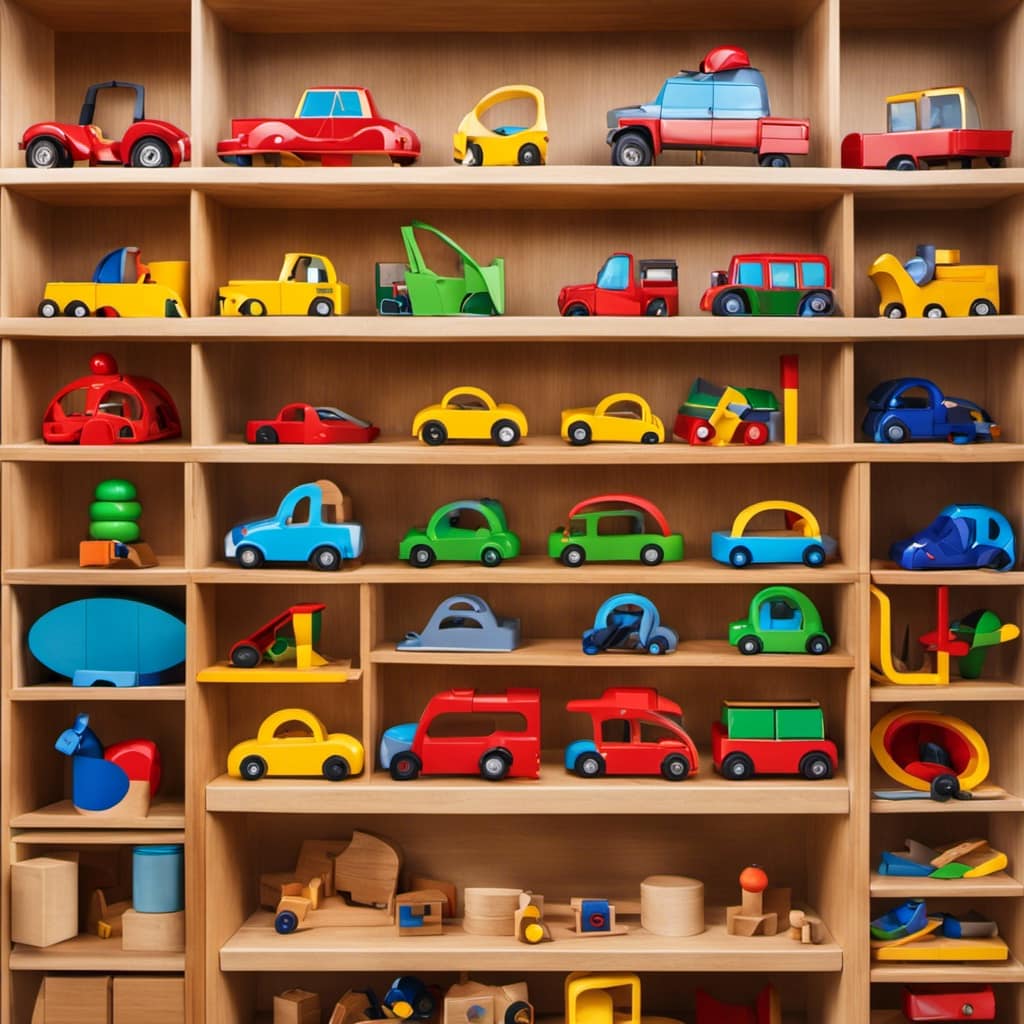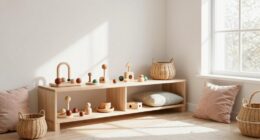

To create a simple Montessori shelf for toddlers, choose durable, child-safe materials like natural wood and avoid plastics with harmful chemicals. Place the shelf at an accessible height, ensuring it’s stable and secure on the wall. Organize items in small trays or baskets for easy access, and include real-world objects like bowls and utensils. Keep the setup tidy and rotated regularly to foster independence and curiosity. Continue exploring for more tips on making a nurturing, engaging space.

Turn the school run and nap time into listening time
- Thousands of audiobooks, podcasts and originals
- Listen on your phone, tablet or Echo — also offline
- Cancel anytime
Key Takeaways
- Use natural, child-safe materials like wood and real objects for durability and sensory development.
- Mount the shelf at toddler eye level and ensure it is stable and securely attached to the wall.
- Organize items in small baskets or trays to promote independence and easy access.
- Keep the shelf minimal with only essential, age-appropriate items to reduce clutter and encourage exploration.
- Regularly rotate activities and maintain cleanliness to support ongoing curiosity and safety.

Creating a Montessori shelf for toddlers encourages independence and hands-on learning right in your home. The goal is to design a space that invites your child to explore, select, and return items with minimal guidance. To do this effectively, start by choosing materials that are durable, non-toxic, and child-friendly. Opt for natural wood, which offers a warm, inviting feel and withstands the wear and tear of daily use. Avoid plastic or other synthetic materials that might contain harmful chemicals. When selecting items for the shelf, prioritize simple, real-world objects like small bowls, utensils, or fabric pieces, as these promote practical life skills. Make sure each item is appropriately sized for tiny hands to grasp comfortably, and ensure they are easy to clean and maintain.
Safety considerations are paramount when creating a Montessori shelf for toddlers. Before placing anything within reach, thoroughly inspect all items for sharp edges, loose parts, or small pieces that could pose choking hazards. Use rounded, smooth-edged containers and avoid anything that could break easily into sharp shards. The shelf itself should be stable and sturdy, with no risk of tipping over when your child pulls or leans on it. Mount the shelf securely to the wall if necessary, especially if it’s a taller or more narrow piece. Keep cords, small toys, or items with strings out of reach to prevent accidents. Additionally, choose a height for the shelf that allows your toddler to access everything independently without climbing or stretching dangerously. This encourages autonomy while maintaining safety. Ensuring the space is child-safe is essential for fostering confidence and exploration. Incorporating age-appropriate items also helps your child develop skills suited to their developmental stage. Creating a structured environment that is both safe and inviting supports their natural curiosity and desire to learn.
When arranging the shelf, keep it simple and organized, so your child can easily see and choose what they want to work on. Use small baskets or trays to contain different items, which helps your child learn about sorting and organizing. Rotate activities regularly to keep their interest fresh and introduce new skills over time. Be mindful of the overall height and spacing, ensuring everything is accessible and visually appealing. Remember, the focus of a Montessori shelf is to foster independence, so avoid clutter and keep only a manageable number of items within reach. By choosing the right materials, considering safety at every step, and maintaining an organized, inviting display, you create an environment that encourages your toddler’s curiosity and self-directed learning every day. Incorporating child-safe materials ensures a secure and nurturing space for your child’s growth. Additionally, paying attention to appropriate shelving height promotes independence and safety during your child’s exploration.
natural wood Montessori shelf for toddlers
As an affiliate, we earn on qualifying purchases.
As an affiliate, we earn on qualifying purchases.
Frequently Asked Questions
What Materials Are Safest for Toddler Shelves?
You should choose materials that meet safety standards and guarantee durability for toddler shelves. Opt for solid wood or high-quality, non-toxic MDF with smooth finishes, avoiding harmful chemicals like formaldehyde. Look for sturdy, well-constructed pieces that can withstand daily use without tipping or breaking. By prioritizing safety standards and material durability, you create a secure, long-lasting environment for your toddler’s exploration and learning.
How High Should the Shelf Be Placed?
You should place the shelf about 12-15 inches above your toddler’s eye level, encouraging independence. Investigate whether color coordination and labeling techniques can make it easier for your child to select and put away items. When you position the shelf at this height, your toddler can easily access their materials, fostering responsibility. Use clear labels and vibrant colors to help your child develop organization skills and build confidence in choosing their activities.
How to Encourage Independent Use of the Shelf?
To encourage child independence and guarantee shelf accessibility, consistently demonstrate how to use the shelf and involve your toddler in organizing it. Praise their efforts, making the process positive. Keep items within easy reach, so they can select and put away toys or materials independently. By fostering a routine, your child will feel confident exploring the shelf, promoting independence and reinforcing their growing sense of responsibility.
Can a DIY Shelf Be as Durable as Store-Bought?
A DIY shelf can be just as durable as store-bought if you choose sturdy materials like solid wood or reinforced plywood. Incorporate decorative accents that also strengthen the structure, and use high-quality storage containers to prevent clutter and damage. Proper assembly and finishing, such as sealing or painting, help guarantee longevity. With attention to detail, your homemade Montessori shelf will be resilient, functional, and visually appealing for your toddler’s space.
How to Organize Items on the Montessori Shelf Effectively?
To organize items effectively on your Montessori shelf, use clear, accessible storage solutions like baskets or trays that encourage independence. Incorporate decorating ideas that keep items visually appealing and easy to identify. Keep similar items together to foster order, and rotate toys or materials regularly to maintain interest. Label containers if needed, but make certain everything is at your toddler’s eye level, making it simple for them to select and return items independently.
Conclusion
Creating a Montessori shelf isn’t just about organization—it’s about fostering independence and curiosity in your toddler. When you design a space tailored to their needs, you’re supporting their natural desire to explore and learn. Some believe that a well-structured environment can considerably boost a child’s development, aligning with Montessori principles. So, why not give it a try? Your little one might surprise you with how much they can achieve when given the right tools and space.
Halloween Picks
halloween
As an affiliate, we earn on qualifying purchases.