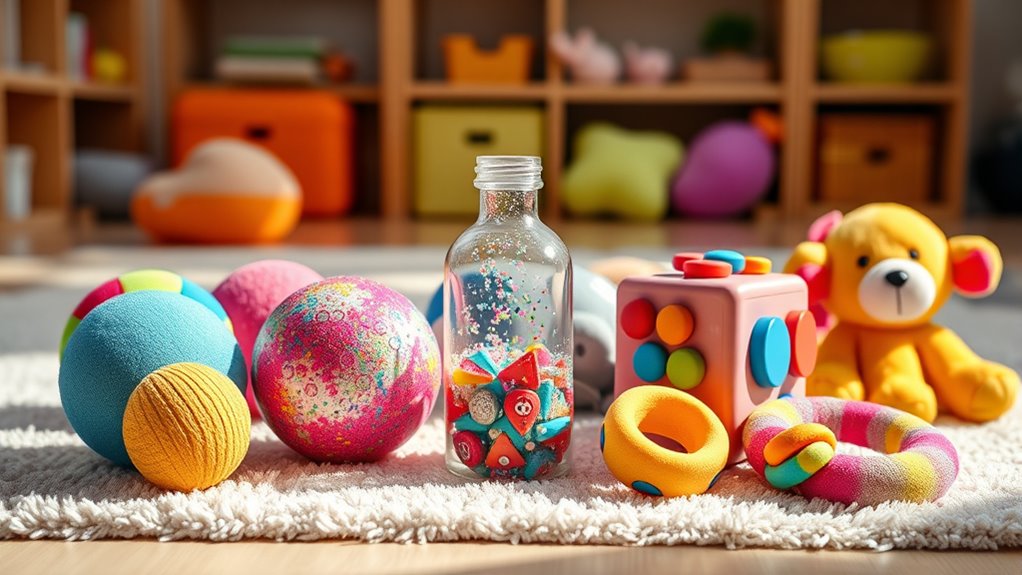

If you’re looking for the best emotional regulation toys to help kids stay calm and focused, I recommend options like sensory pillows, calming boards, and expressive tools like emotion flashcards and plush toys. Tools such as fidget toys, character mirrors, and calm corner kits can also make a big difference. These items are designed to support emotional awareness and self-regulation. Keep exploring, and you’ll find the perfect tools to suit your child’s needs.
Key Takeaways
- Sensory tools like the Bright Autism Hugger Pillow provide calming tactile input through vibrations and textures, aiding emotional regulation.
- Visual aids such as feelings charts and mirrors help children identify and express emotions, promoting self-awareness and focus.
- Fidget toys with textured silicone strings and squeeze foam offer sensory stimulation to reduce anxiety and improve concentration.
- Social-emotional kits like Conversation Cubes encourage storytelling and emotional dialogue, supporting focus and emotional understanding.
- Positivity items like plush stress relief toys foster comfort and mood regulation, helping kids stay calm and engaged.
Bright Autism Hugger Pillow for Sensory Needs
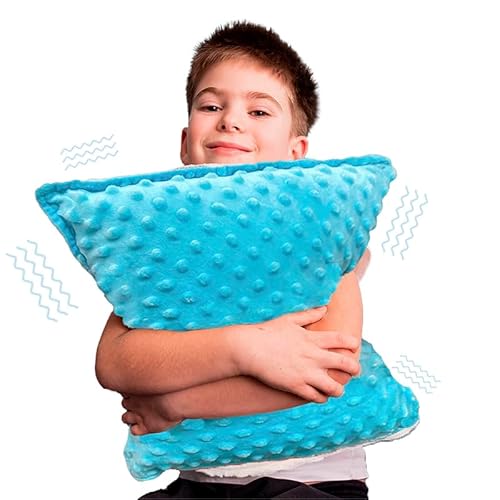

If you’re looking for a calming tool tailored for children with autism, the Bright Autism Hugger Pillow is an excellent choice. I’ve found it provides sensory comfort, calming vibrations, and emotional support all in one. Its soft plush fabric with textured bumps offers just the right sensory stimulation, while the memory foam filling cradles your child comfortably. Simply squeeze the pillow to activate gentle vibrations, which help soothe stress and anxiety. It’s portable, easy to use, and perfect for sensory rooms or travel. This pillow helps children build tolerance to sensations and promotes emotional regulation, making it a valuable addition to any calming routine.
Best For: children with autism, ADHD, or sensory processing needs seeking a portable, calming tool for emotional regulation and sensory comfort.
Pros:
- Provides gentle calming vibrations activated simply by squeezing, no switches or remotes needed
- Soft plush fabric with textured bumps offers optimal sensory stimulation and comfort
- Compact 12×12 inch size makes it portable for travel, sensory rooms, or on-the-go use
Cons:
- Requires two AA batteries (not included), so batteries need replacement over time
- May not have adjustable vibration intensity or modes for personalized preferences
- Some children might prefer different textures or sensory inputs for maximum calming effect
Emotional Rollercoaster Anger Management Board Game for Kids & Families
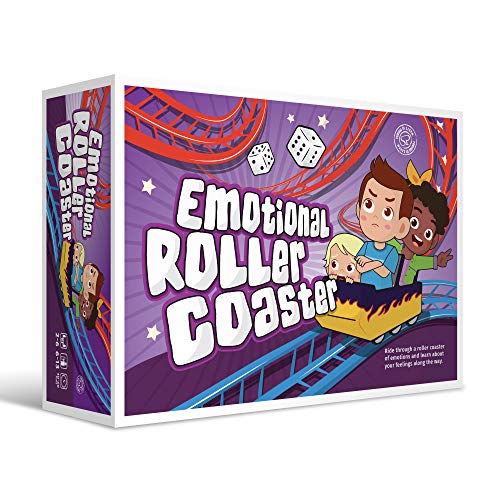
The Emotional Rollercoaster Anger Management Board Game is an excellent choice for children aged 4 to 12 who need support in managing their emotions, especially anger. I love how it teaches kids emotional regulation and social skills through engaging gameplay. The game encourages problem-solving by exploring anger triggers and practicing coping strategies like mindfulness and breathing exercises. It’s perfect for family, classroom, or therapy settings, helping children express themselves and build resilience. By making learning fun, this game helps kids develop self-awareness and emotional control, turning difficult feelings into manageable experiences. It’s a valuable tool for fostering emotional growth in a playful way.
Best For: children aged 4 to 12, their families, teachers, and therapists seeking an engaging way to teach emotional regulation and anger management skills.
Pros:
- Promotes emotional regulation, problem-solving, and social skills through fun gameplay
- Incorporates mindfulness, breathing exercises, and coping strategies suitable for various learning settings
- Supports self-awareness and resilience development in children, making emotional growth accessible and enjoyable
Cons:
- May require adult supervision for younger children to fully understand and participate effectively
- Limited to a specific age range (4-12), less suitable for older children or teenagers
- Might take multiple sessions for children to fully grasp and integrate the emotional skills into daily life
Skillmatics Conversation Cubes for Kids
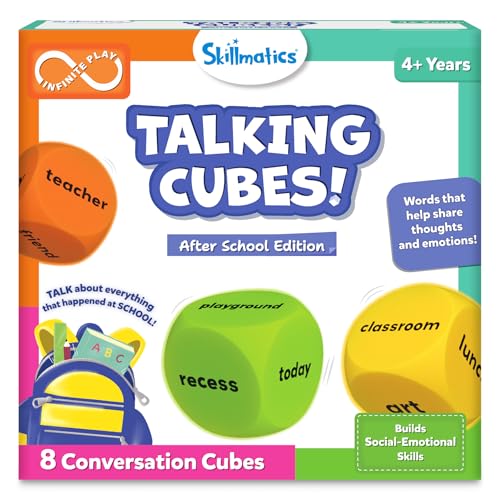
Skillmatics Conversation Cubes for Kids stand out as an excellent choice for children who need support with emotional regulation and social skills. These eight foam cubes, packed with 48 words about feelings, places, times, and more, encourage open-ended conversations. Their bright colors and squishy texture make them sensory-friendly, engaging small hands and minds. Kids roll the cubes to spark storytelling, reflection, or emotional expression, making learning fun and interactive. Suitable for children ages 4 and up, they can also be adapted for younger kids. Whether at home, school, or therapy, these versatile, durable cubes promote communication, creativity, and social-emotional growth in a simple, enjoyable way.
Best For: children ages 4 and up who need support with emotional regulation, social skills, and communication development.
Pros:
- Encourages open-ended conversations and storytelling, fostering creativity and emotional expression.
- Sensory-friendly, soft, and brightly colored, making them engaging and safe for small hands.
- Versatile for use at home, in classrooms, or therapy sessions, supporting various developmental needs.
Cons:
- May require modifications for children under 4 to ensure age-appropriate use.
- Limited to 8 cubes, which might not provide enough variety for extensive activities without additional prompts.
- Some children may need adult guidance to maximize engagement and understanding of the open-ended words.
Positive Pickle Crochet Gift – Emotional Support Plush with Encouragement Card

Kids who need a cheerful, comforting companion during stressful moments will find the Positive Pickle Crochet Gift especially helpful. This adorable plush features a handmade, squishy pickle with a tiny cowboy hat, making it a fun, uplifting desk or home accent. Its perfect size allows for tactile stress relief—just squeeze and feel the calming softness. Including an encouragement card, it’s great for birthdays, get well, or just to brighten someone’s day. Customers love its high-quality craftsmanship and cheerful design, making it a popular gift. Plus, the removable cowboy hat adds a playful touch, encouraging kids to display it proudly and find comfort whenever needed.
Best For: kids, students, or anyone in need of a cheerful, comforting, and stress-relieving plush companion to boost mood and promote positivity.
Pros:
- Handmade and squishy for satisfying tactile stress relief
- Adorable design with a removable cowboy hat for display versatility
- Includes an encouragement card, perfect for gifting occasions
Cons:
- Small size may limit use as a large comfort object
- Handmade craft may have slight variations, affecting uniformity
- Not suitable for very young children due to small parts like the cowboy hat
A Little SPOT of Emotion 8 Plush Toys with Feelings Book Box Set

If you’re looking for an engaging way to help children recognize and manage their emotions, the A Little SPOT of Emotion 8 Plush Toys with Feelings Book Box Set is an excellent choice. It includes eight small, adorable plush toys, each representing a different emotion, paired with a beautifully illustrated book that explains each feeling through rhymes or songs. The tactile plush toys make emotional learning interactive and comforting, especially for young children or those with special needs like autism. Used by parents, teachers, and therapists, this set promotes emotional awareness, regulation, and communication, making complex feelings easier for kids to understand and express effectively.
Best For: parents, teachers, and therapists seeking an engaging, tactile tool to teach children emotional recognition, regulation, and communication skills.
Pros:
- Includes eight adorable plush toys representing different emotions, making learning interactive and comforting for children.
- Accompanied by a beautifully illustrated book with rhymes or songs that reinforce emotional understanding.
- Versatile for use in classrooms, therapy sessions, and at home to promote emotional intelligence and social skills.
Cons:
- Contains only one book, which may be confusing as some expect multiple books for each plush toy.
- The plush toys and set may be considered somewhat expensive for the number of items included.
- Plush faces should be used as emotional reference points rather than toys to avoid potential overuse as play objects.
hand2mind Express Your Feelings Sensory Bottles for Toddler Emotions

hand2mind Express Your Feelings Sensory Bottles are an excellent choice for young children who are learning to identify and express their emotions. These bottles provide a visual and tactile way for kids to connect feelings like happy, angry, scared, and sad with facial expressions and colors. By shaking or swirling the bottles, children can calm themselves and practice mindfulness. The contents match the emotions shown, helping kids understand and manage their reactions. Perfect for classrooms, therapy, or home, these bottles encourage conversations about feelings, fostering emotional awareness and empathy in a fun, engaging way.
Best For: young children, educators, and therapists seeking a hands-on tool to help children recognize, understand, and regulate their emotions through visual and tactile engagement.
Pros:
- Promotes emotional awareness and expression through facial cues and colors
- Serves as an effective calming and mindfulness tool for self-regulation
- Versatile for use in classrooms, therapy sessions, and home environments
Cons:
- Limited to four basic emotions, which may not cover all feelings children experience
- Requires supervision to ensure bottles are sealed securely and handled safely
- May need multiple sets for comprehensive emotional learning or larger group activities
No Hitting Book for Toddlers

The No Hitting Book for Toddlers stands out as an excellent choice for parents seeking a practical, age-appropriate resource to address aggressive behaviors. I’ve seen it effectively help children manage big feelings and reduce hitting over time, often within two months of consistent reading. Kids stay engaged thanks to colorful, appealing illustrations and simple language that resonate, even with those on the spectrum or with speech delays. The book teaches coping strategies like asking for help, drawing feelings, or giving hugs, using repetition to reinforce understanding. Its inclusive content and durable pages make it a valuable tool for fostering emotional regulation and promoting respectful interactions.
Best For: Parents of toddlers seeking a practical, engaging tool to teach emotional regulation and reduce hitting behaviors.
Pros:
- Highly engaging with colorful, appealing illustrations that resonate with young children, including those on the spectrum or with speech delays
- Uses simple language, repetition, and relatable scenarios to reinforce coping strategies effectively
- Durable pages and credible content from a child psychologist, making it a reliable resource for ongoing use
Cons:
- Some pages may glue poorly, leading to pages falling out more quickly than expected
- Slightly longer reading sessions might be challenging for very short attention spans in some toddlers
- May require consistent reading over a couple of months to see significant behavioral changes
hand2mind Mindful Maze Boards for Kids
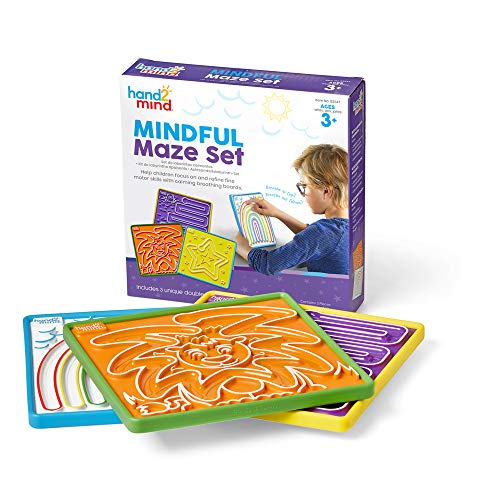
Looking for a calming tool that helps children manage their emotions independently? The hand2mind Mindful Maze Boards are perfect. These tactile, screen-free devices are designed to support kids’ self-regulation, reduce anxiety, and promote mindfulness. Suitable for children ages 3 to 12, each set includes three durable, double-sided boards with colorful visuals and indented finger paths for breathing exercises. Kids can practice slow, deep breaths using patterns like Rainbow, Square, or Star. These boards are great for classrooms, therapy sessions, or at home, helping children pause, focus, and feel calmer without noise or batteries. They foster emotional control and sensory engagement effortlessly.
Best For: children aged 3 to 12 who need a calming, tactile tool to develop self-regulation, mindfulness, and emotional control skills in classrooms, therapy, or at home.
Pros:
- Durable, high-quality plastic construction that withstands frequent use
- Engaging, colorful visuals and various breathing patterns to promote focus and relaxation
- Portable and easy to clean, suitable for a variety of settings including calming corners and sensory rooms
Cons:
- Limited to specific breathing exercises, may require additional tools for broader sensory needs
- Some children may need guidance initially to use the boards effectively
- The set includes only three boards, which may require multiple sets for larger groups or frequent use
Feelings Chart and Social Emotional Learning Materials

A feelings chart and social emotional learning materials like this one are perfect for educators, parents, and therapists working with young children, especially those with ADHD or autism. This all-encompassing tool helps kids recognize and express 24 feelings using vivid cartoon illustrations, supporting emotional awareness and regulation. Its versatile design includes a felt board, cards, and storage bags, making it durable and easy to use at home or in the classroom. It’s especially helpful for managing emotions, controlling impulsive behaviors, and developing coping strategies. Overall, it promotes positive social skills and emotional growth, making it an essential resource for fostering self-awareness and responsible decision-making.
Best For: Educators, parents, and therapists working with young children, especially those with ADHD or autism, seeking to improve emotional recognition and regulation.
Pros:
- Helps children identify and express 24 feelings with vivid cartoon illustrations to promote emotional awareness.
- Durable and versatile design includes waterproof cards and a felt board suitable for various settings.
- Supports emotional regulation, impulsive behavior control, and social skills development, ideal for therapy and classroom use.
Cons:
- May require adult guidance to effectively facilitate emotional learning sessions.
- The set might be overwhelming for children who are sensitive to visual stimuli or easily distracted.
- Some users might find the need for additional resources or activities to complement the feelings chart for comprehensive social-emotional learning.
Learning Resources Cool Down Cubes Sensory Fidget Set

If you’re seeking a versatile sensory tool to help children manage big feelings, the Learning Resources Cool Down Cubes Sensory Fidget Set is an excellent choice. It includes four tactile activities—squeeze foam, spin spinner, maze puzzle, and shifting beads—that engage kids’ senses and promote calming. Designed for children aged 3 and up, these cubes help reduce anxiety, improve emotional awareness, and develop self-regulation skills. Made from durable, BPA-free plastic, they’re perfect for home, classroom, or therapy use. The set’s compact tray makes cleanup easy, and its variety of sensory experiences encourages hands-on, screen-free play that supports emotional growth.
Best For: children aged 3 and up who need calming, sensory stimulation, and emotional regulation tools at home, school, or therapy settings.
Pros:
- Provides a variety of tactile and visual sensory activities to promote calming and focus.
- Durable, BPA-free plastic construction ensures long-lasting use and safety.
- Compact tray and portable design make it easy to store, clean, and take on-the-go.
Cons:
- May be less engaging for older children or those needing more advanced sensory tools.
- Limited number of cubes might not satisfy children seeking more complex or diverse sensory experiences.
- Some users may find the maze or spinner less challenging or stimulating over time.
PreK to 5th Calm Corner Kit with ‘I Feel…’ Dry Erase Board & Fidget Cube

The PreK to 5th Calm Corner Kit with ‘I Feel…’ Dry Erase Board & Fidget Cube is an excellent choice for educators and parents seeking an all-encompassing set of tools to support children’s emotional regulation. This kit creates a safe space for kids to express feelings, develop emotional intelligence, and improve focus through visual aids, sensory items, and guided activities. It includes breathing diagrams, emotion magnets, sensory fidgets, and a dry erase board, all designed to promote mindfulness, self-awareness, and calmness. Durable and safe for children aged 4 and up, it’s a practical solution to help children manage emotions and build confidence.
Best For: educators and parents looking for a comprehensive, safe, and engaging toolkit to support children’s emotional regulation and focus from pre-kindergarten through fifth grade.
Pros:
- Includes a variety of sensory tools, visual aids, and guided activities to address multiple learning and emotional needs
- Safe, non-toxic, durable, and suitable for children age 4 and up
- Promotes mindfulness, self-awareness, and confidence in both classroom and home settings
Cons:
- Limited to a 30-day return policy, which may not suit all buyers
- Customer rating is moderate at 4.1 out of 5 stars, indicating some users may desire more or different features
- The kit’s size and weight (13 x 8 x 2 inches, 7.8 ounces) may limit portability for some users
2 Pack Sensory Activity Board Silicone Fidget Toy for Autism and Stress

Designed with sensory needs in mind, the Pack Sensory Activity Board Silicone Fidget Toy is an excellent choice for children with Autism or stress-related challenges. Its double-sided, rainbow-colored design offers vibrant visuals and a perforated surface that encourages tactile exploration. The set includes 24 silicone strings for threading and pattern-making, promoting fine motor skills and hand-eye coordination. Compact and lightweight, it’s perfect for travel, fitting easily into a bag for use in cars, planes, or waiting rooms. Made from durable, easy-to-clean silicone, it’s suitable for kids, teens, and adults alike, helping to reduce anxiety and foster calming, focused play.
Best For: children, teens, and adults seeking a durable, versatile sensory toy for stress relief, fine motor skill development, and calming entertainment during travel or at home.
Pros:
- Vibrant rainbow colors and textured perforated surface enhance tactile stimulation and visual engagement
- Compact, lightweight design with a travel bag makes it highly portable and convenient for on-the-go use
- Made from durable, easy-to-clean silicone suitable for a wide age range, including children with sensory needs
Cons:
- Some users may find the size smaller than expected for certain activities or age groups
- Limited complexity; may not provide enough challenge for more advanced users seeking intricate patterns
- Slightly higher price point compared to basic fidget toys with fewer features
hand2mind Feelings Mirror for Kids, Emotional Regulation & Mindfulness Toys

Looking for an engaging way to help young children recognize and understand their emotions? The hand2mind Feelings Mirror for Kids is a fantastic tool for emotional regulation and mindfulness. It features easy-to-recognize emojis and snap-in emotion slides representing six core feelings: Happy, Angry, Surprised, Silly, Scared, and Sad. The mirror displays diverse photos of children expressing real emotions, making recognition relatable. Perfect for classroom calm-down corners, it creates a cozy, safe space for kids to identify and manage their feelings. With its child-safe, shatterproof design and cheerful materials, this mirror makes emotional learning approachable, helping children build social skills and emotional awareness effectively.
Best For: young children and educators seeking an engaging tool to promote emotional recognition, regulation, and social skills development in a classroom or home setting.
Pros:
- Features easy-to-recognize emojis and diverse photos of children expressing real emotions, enhancing relatability.
- Includes shatterproof, child-safe mirror and cheerful, engaging materials that create a calming, approachable environment.
- Supports emotional regulation and social skills through interactive activities and a cozy calm-down corner setup.
Cons:
- May require adult guidance to maximize learning and emotional recognition skills.
- Limited to six core emotions, which might not encompass the full range of children’s feelings.
- Might be less effective for children who prefer digital or non-physical learning methods.
Factors to Consider When Choosing Emotional Regulation Toys

When selecting emotional regulation toys, I focus on factors like age appropriateness and sensory features to make sure they fit the child’s needs. I also consider how easy they are to use, along with their durability and safety, so the toys last and protect the child. Ultimately, I look for toys that are emotionally relevant, helping kids connect with their feelings effectively.
Age Appropriateness
Choosing the right emotional regulation toys depends heavily on the child’s developmental stage. It’s essential to select toys with age recommendations that match their abilities, usually starting at age three. For younger children, opt for simple, intuitive designs that are easy to understand and handle, reducing frustration. As children grow, they can manage more complex activities or multi-step instructions, helping to challenge and develop their skills. Safety features are also critical—look for non-toxic materials, restrictions on small parts, and shatterproof components to ensure safe play. Additionally, consider the toy’s size and complexity to match your child’s cognitive and motor skills, fostering engagement without overwhelming them. Using age-appropriate themes helps promote emotional understanding in a way that’s both effective and enjoyable.
Sensory Features
Sensory features play an essential role in selecting emotional regulation toys because they directly engage a child’s senses to promote calmness and focus. Textured surfaces, bright colors, and tactile elements stimulate the senses, helping children self-regulate more effectively. Incorporating sensory-rich toys like squishy plushes, textured fidget tools, and sensory bottles can boost emotional awareness and encourage calming responses. Research supports that tactile input reduces anxiety and enhances focus, especially for kids with sensory processing needs. Toys with multiple stimulations, such as vibrating or spinning components, offer varied input to help children manage overstimulation or hypersensitivity. It’s also important to choose sensory toys that are safe, durable, and easy to clean, ensuring ongoing engagement and consistent emotional regulation support.
Ease of Use
Selecting emotional regulation toys that are simple to use can make a big difference in how effectively children engage with them. Toys with minimal instructions and straightforward mechanisms are accessible for kids with various developmental needs. For example, toys with single-button activation or clear visual cues help children understand how to use them without adult help. When toys are easy to operate, children can quickly grasp their functions, which boosts confidence and independence. Simplified designs also reduce frustration, encouraging consistent use—key for developing emotional regulation skills over time. The fewer steps or features a toy has, the more likely children are to use it regularly, reinforcing calming techniques and focus. Overall, ease of use ensures that these tools support children’s emotional growth effectively and enjoyably.
Durability and Safety
Ensuring emotional regulation toys are durable and safe is essential because children often handle these tools frequently and enthusiastically. Durable toys withstand constant use, maintaining their safety and effectiveness over time. Choosing toys made from non-toxic, BPA-free, and child-safe materials reduces the risk of poisoning or allergic reactions during regular play. High-quality construction, like reinforced seams or sturdy plastic parts, minimizes breakage and prevents small, choking hazards. Safety certifications such as ASTM, EN71, or CPSIA confirm that the toys meet strict safety standards for durability and child safety. Additionally, easy-to-clean, non-porous surfaces help prevent bacterial buildup, ensuring long-term hygiene and safe use. Prioritizing durability and safety guarantees that the toys remain reliable and secure for your child’s well-being.
Emotional Relevance
Choosing emotionally relevant toys is essential because they help children connect with and understand their feelings more effectively. When toys depict a wide range of emotions, kids can better recognize, label, and navigate their own experiences, boosting emotional awareness. These toys also foster empathy by encouraging children to relate to different feelings and situations, which strengthens their social skills. When a toy resonates with a child’s personal emotional experiences, it increases their engagement and makes emotional regulation practice more meaningful. Additionally, emotionally relevant toys provide familiar stimuli that support children in developing coping strategies for managing complex feelings. By choosing toys that reflect real emotional states, you create a more impactful tool that encourages kids to explore and regulate their emotions with confidence.
Versatility Options
When it comes to emotional regulation toys, versatility plays a key role in their effectiveness across different settings. I look for toys that work well in classrooms, therapy rooms, and at home, making them adaptable for various environments. Many versatile toys combine sensory, cognitive, and emotional activities, addressing a child’s diverse needs. Adjustable difficulty levels or multiple modes are essential, allowing me to customize the toy to suit different ages and skill levels. Open-ended designs encourage creativity and support a broad range of emotional skills, from calming to self-expression. Additionally, I consider materials like silicone, fabric, or plastic, which guarantee durability, ease of cleaning, and sensory compatibility. This versatility makes it easier to incorporate these toys into daily routines and different contexts effectively.
Cost and Value
The cost of emotional regulation toys can vary widely, making it important to weigh price against quality and features. Cheaper options under $10 may be basic but can still offer value if they incorporate sensory elements or multiple functions. Higher-priced sets over $50 often feature durable materials and more extensive features, which can lead to better therapeutic benefits and longer use. When choosing, consider the balance between cost and the number of items or features included; this helps determine if the toy provides good value for supporting emotional needs. Durability is also key—investing in well-made toys might cost more initially but can save money over time by reducing the need for replacements. Overall, selecting a toy with the right mix of price, quality, and features ensures you get the best value for your child’s emotional regulation.
Therapeutic Effectiveness
Since the main goal is to support children’s emotional regulation, I look for toys that have proven therapeutic benefits. Toys that reduce anxiety and strengthen self-regulation skills are most effective. I focus on those incorporating evidence-based practices like mindfulness, deep pressure, or sensory integration, which research shows lead to better outcomes. Multi-sensory stimuli—touch, sight, and sound—also enhance a toy’s calming effects. Consistent use, whether in therapy sessions or daily routines, can result in measurable improvements in emotional awareness and coping strategies. I prioritize toys with clear calming functions and opportunities for self-expression, as empirical studies support their role in fostering emotional resilience. Choosing toys backed by evidence ensures they truly support kids’ emotional growth and regulation.
Frequently Asked Questions
How Do Emotional Regulation Toys Support Children’s Social Skills Development?
Emotional regulation toys help children develop social skills by teaching them to identify, express, and manage their feelings effectively. When kids use these toys, they practice calming down during challenging moments, which improves their patience and empathy. I’ve seen kids become more confident in social situations because they’re better equipped to handle emotions. These toys foster self-awareness and encourage positive interactions, ultimately strengthening their ability to connect with others.
Are These Toys Suitable for Children With Sensory Processing Disorders?
Absolutely, these toys can be a gentle lighthouse guiding children with sensory processing disorders through stormy seas. I’ve seen how textured fidgets and calming lights provide soothing anchors, helping kids self-regulate. But, I always recommend personalized evaluation—what works for one might not for another. With patience and the right tools, these toys can become allies in creating a calmer, more focused world for children with sensory needs.
How Can Parents Incorporate These Toys Into Daily Routines Effectively?
You can incorporate these toys into daily routines by setting aside specific times for calming activities, like after homework or before bedtime. I find that making them part of a predictable routine helps my child feel secure and enthusiastic to engage. I also encourage them to choose their favorite toys, fostering independence. Consistency and positive reinforcement make these tools more effective, helping my child develop better emotional regulation skills over time.
What Safety Features Should I Look for in Emotional Regulation Toys?
When choosing emotional regulation toys, I look for safety features like non-toxic, BPA-free materials and secure, smooth edges to prevent injuries. I also check for sturdy construction that won’t easily break, and make sure small parts are absent or securely attached to avoid choking hazards. It’s crucial to select toys that are age-appropriate, easy to clean, and free from sharp points, giving both my child and me peace of mind during use.
Can These Toys Help Children With Special Educational Needs Beyond Emotional Regulation?
Absolutely, these toys can benefit children with special educational needs beyond calming and focus. I’ve seen how sensory toys, fidget tools, and calming gadgets support their sensory processing and help improve attention, reduce anxiety, and foster self-regulation. By providing a safe outlet for their emotions and sensory input, I believe these tools can enhance their overall learning experience and emotional well-being, making a positive difference in their daily routines.
Conclusion
Just like a lighthouse guides ships safely to shore, the right emotional regulation toy can anchor kids through stormy feelings. I’ve seen children transform from overwhelmed to calm when given tools that resonate with them. Choosing the right toy isn’t just about fun—it’s about lighting the way to emotional resilience. Trust me, finding that perfect fit can turn chaos into calm, making every emotional journey a little easier for both of you.