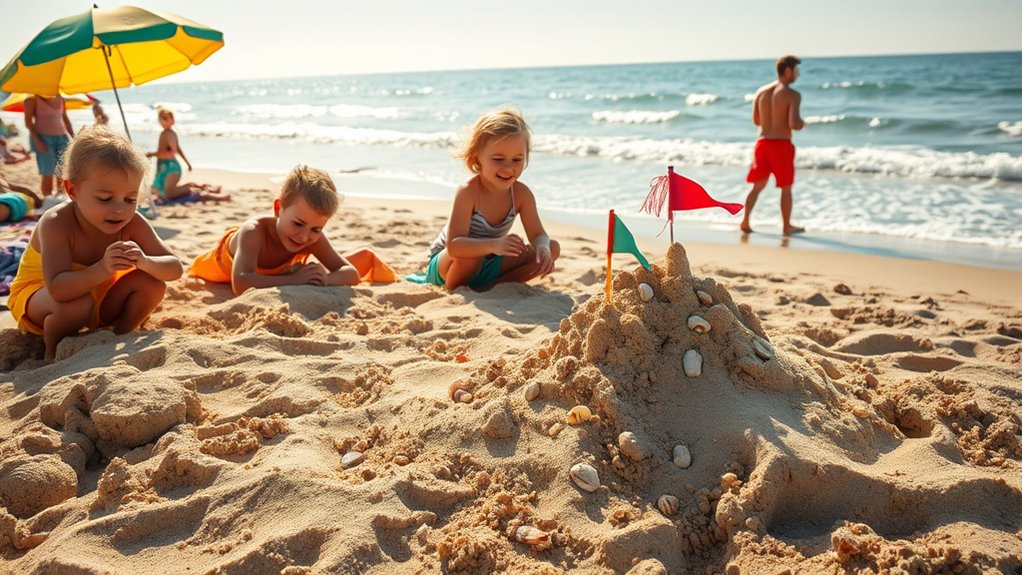

Playing on the beach is fun, but safety comes first. Build sandcastles and dig moats, keeping an eye on the tide to avoid sudden floods. Always stay within safe swimming zones and be aware of rip currents. Keep hydrated and watch your little ones closely. Understanding how tides move helps you choose the best spots for playing. If you’re curious how to enjoy beach time safely, discover more tips below.
Key Takeaways
- Build sandcastles away from the tide line to prevent erosion and loss of your creations.
- Be aware of tide schedules to plan activities and avoid being caught in rising water.
- Watch for rip currents and stay within designated safe swimming areas for safety.
- Keep small children supervised and hydrate regularly during beach play.
- Use digital tools or signs to monitor weather conditions and tide changes for a safe beach experience.
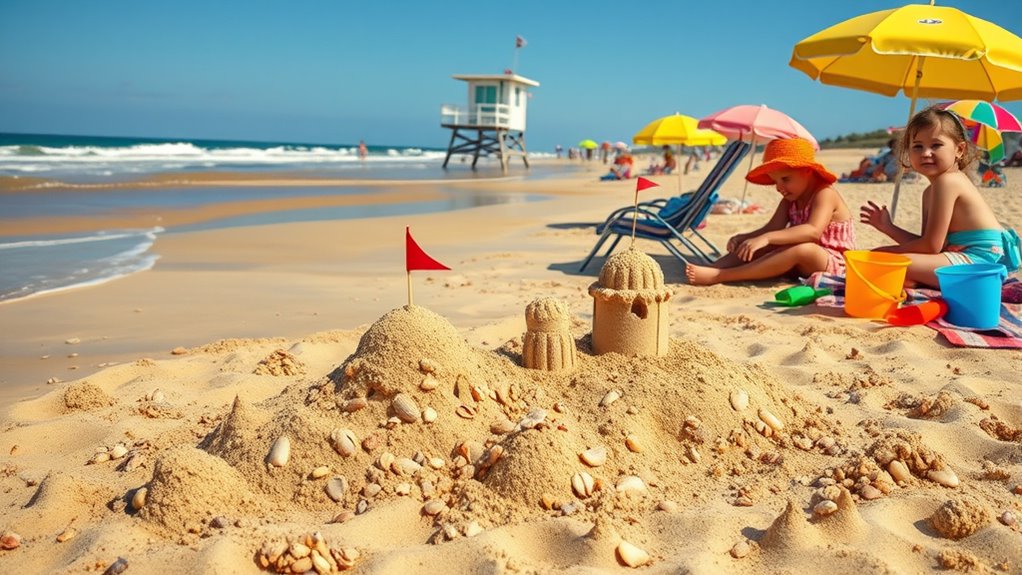
There’s nothing quite like the feeling of warm sand between your toes and the sound of waves crashing nearby when you head to the beach. As you step onto the soft, sun-warmed shoreline, you’re immediately drawn to the endless possibilities for fun and exploration. One of the most engaging activities you can immerse yourself in is shell collecting. Scattered along the surf’s edge, shells of all shapes and sizes beckon you to pick them up. Some are smooth and shiny, while others are jagged or weathered from the ocean’s relentless work. As you browse, you realize shell collecting isn’t just about amassing pretty objects; it’s about connecting with the ocean’s history and discovering tiny treasures that tell stories of marine life and distant beaches. You might even find a rare shell that sparks a sense of adventure or nostalgia. Shell collecting enhances your beach experience, encouraging mindfulness and patience as you search the sands carefully. Incorporating digital literacy skills can also enhance the educational aspect of your beach trips by exploring marine biology apps or virtual shell catalogs.
Alongside shell collecting, ocean activities offer a wealth of opportunities to stay active and entertained. Swimming is a natural choice, allowing you to cool off and enjoy the rhythmic motion of the water. If you’re feeling adventurous, try bodyboarding or surfing—riding the waves can be challenging but immensely rewarding. For a more relaxed approach, floating on a lilo or simply wading along the shoreline can be just as satisfying. These activities not only boost your physical health but also deepen your appreciation for the ocean’s power and beauty. Be mindful of safety tips, like staying within designated swimming areas and paying attention to flags and signs that indicate water conditions. Always keep an eye on the tide and weather, as they can change quickly and affect ocean activity safety.
Playing in the sand is another essential part of beach fun. Building sandcastles, digging moats, or creating sculptures lets your imagination run wild. While you’re shaping your creations, remember that the tide can be unpredictable. As the water rises, it can wash away your hard work, so plan your constructions accordingly. It’s also wise to keep small children within sight and remind everyone to stay vigilant around water, even shallow waves. Safety is key to enjoying your day at the beach; knowing how to recognize rip currents, understanding when to stay out of the water, and keeping hydrated make all the difference. Whether you’re collecting shells, splashing in the surf, or building sandcastles, being aware of your surroundings ensures your beach day remains fun and safe from start to finish.
Frequently Asked Questions
What Are the Best Tools for Building Durable Sandcastles?
To build durable sandcastles, you should use sturdy sandcastle tools like plastic shovels, buckets, and carving tools. A wet, compacted mixture of damp sand guarantees strong construction, so pack the sand tightly with your hands or tools. Use molds for precise shapes, and consider shaping walls with flat, broad tools to reinforce stability. These tools help you create long-lasting, impressive sandcastles that resist crumbling.
How Can I Identify Safe Tidal Zones for Children?
You can spot safe tidal zones by observing the water’s movement and staying alert to changing tides. Always check local beach safety signs and ask lifeguards for advice—think of them as your tide-spotting superheroes. Keep a close eye on tidal awareness, and avoid zones where water rushes in quickly or where waves are strong. Staying vigilant guarantees your kids stay safe while enjoying the beach’s magic.
Are There Eco-Friendly Beach Toys Recommended for Young Kids?
Yes, you should choose eco-friendly beach toys made from biodegradable materials and painted with non-toxic paints. These safe, sustainable options minimize environmental impact and protect your child’s health. Look for toys labeled as biodegradable or made from natural materials like bamboo or cork. Avoid plastic toys with harsh paints. By selecting eco-friendly toys, you enjoy fun beach play while caring for the environment and your child’s safety.
What Should I Do if a Child Gets Sand in Their Eyes?
If a child gets sand in their eyes, act quickly to provide first aid. Gently ask them to blink or rinse their eyes with clean, cool water to reduce eye irritation. Avoid rubbing their eyes, which can worsen the irritation. Keep calm and reassure them. If discomfort persists or if there’s redness or swelling, seek medical attention promptly to make certain of proper care and avoid further eye irritation.
How Can I Teach Kids About Tide Changes Safely?
You can teach kids about tide changes safely by explaining tide prediction tools and signs of changing water levels. Use simple language to describe how tides work and emphasize safety precautions, like staying close to adults and avoiding high-risk areas. Incorporate visual aids or charts, and practice observing the water together. Reinforce the importance of respecting the ocean, so they understand why it’s essential to stay alert and cautious near the water.
Conclusion
As you enjoy building sandcastles and exploring the tides, remember that nearly 80% of beach accidents involve preventable injuries. Staying vigilant and respecting the ocean’s power keeps your day fun and safe. So, keep an eye on the water, use sunscreen, and take breaks in the shade. With a little awareness, you’ll make the most of your beach adventure, creating memories that last a lifetime—safely and happily.