
To encourage barefoot play outside safely, start by choosing age-appropriate, hazard-free areas like grassy lawns or sandy beaches. Inspect the space for sharp objects or thorns and set clear boundaries. Gradually increase outdoor barefoot time to build confidence while teaching kids to recognize dangers. Use soft, flexible shoes if needed to protect their feet without losing sensory benefits. If you keep exploring tips, you’ll discover more ways to make outdoor barefoot play both fun and safe.

Turn the school run and nap time into listening time
- Thousands of audiobooks, podcasts and originals
- Listen on your phone, tablet or Echo — also offline
- Cancel anytime
Key Takeaways
- Choose safe, hazard-free outdoor areas like grassy lawns or sandy beaches for barefoot activities.
- Inspect the play space thoroughly for sharp objects, broken glass, or thorns before allowing barefoot play.
- Gradually increase barefoot time, starting with short sessions and monitoring children’s comfort and safety.
- Use protective footwear like water socks or minimalist shoes to balance sensory benefits and safety.
- Educate children on potential hazards and encourage respectful exploration of textures and natural surroundings.
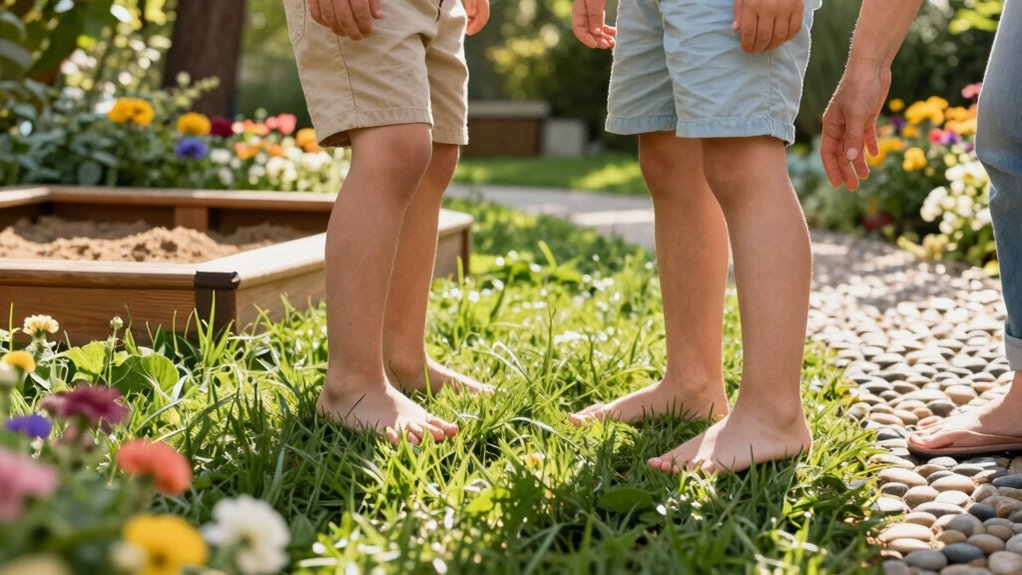
Playing barefoot outside can boost your child’s sensory development and strengthen their connection with nature. When you encourage barefoot play, you’re helping your child explore textures, temperatures, and different surfaces directly with their skin, which is essential for developing their senses. You might worry about safety, but there are several footwear alternatives that allow for comfortable, safe barefoot-like experiences. For example, soft, flexible shoes like water socks or minimalist footwear provide protection without hindering sensory input. These options serve as a bridge, giving your child a sense of security while still engaging with the natural environment.
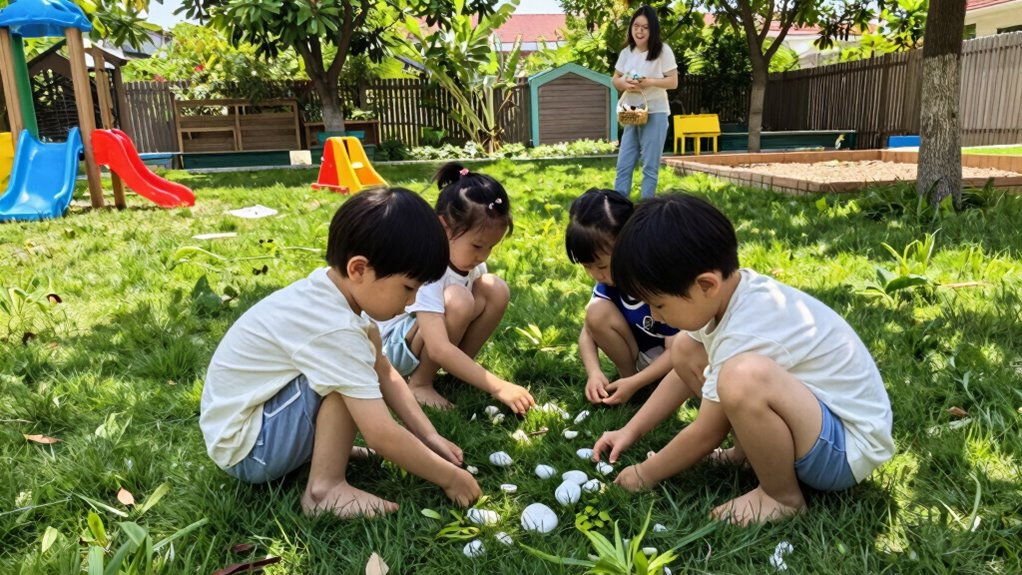
To promote safe barefoot play, start by choosing appropriate outdoor spaces—grassy lawns, sandy beaches, or smooth trails—where hazards are minimal. Before letting your child go barefoot, inspect the area for sharp objects, broken glass, thorns, or anything that could cause injury. Establish boundaries, so your child understands where they can play safely and avoid risky spots. You can also introduce the idea gradually; initially, let your child walk barefoot for short periods, then increase the time as they become more familiar with the sensation and environment. This gradual approach helps build confidence and reduces the risk of discomfort or injury. Additionally, understanding the importance of biodiversity in outdoor ecosystems can motivate children to appreciate and respect different environments while playing barefoot. Recognizing the benefits of sensory development can further inspire mindful exploration and curiosity during outdoor activities. Developing an understanding of environmental awareness can also help children develop a deeper respect for nature and its delicate balance. Incorporating supervised exploration not only ensures safety but also encourages children to learn more about their surroundings in a controlled way.
Encouraging sensory development through barefoot play isn’t just about physical safety; it also involves fostering curiosity and confidence. Engage your child by pointing out different textures—cool grass, rough bark, soft leaves—and encourage them to touch and explore. It’s also helpful to educate them about potential hazards in a gentle way, so they understand why certain areas are off-limits. As they become more comfortable, they’ll naturally seek out new textures and surfaces, enriching their sensory experience.
kids water socks for outdoor play
As an affiliate, we earn on qualifying purchases.
As an affiliate, we earn on qualifying purchases.
Frequently Asked Questions
Are There Specific Age Groups Best Suited for Barefoot Outdoor Play?
You’ll find that young children, especially toddlers and preschoolers, are best suited for barefoot outdoor play. At this age, barefoot benefits support their sensory development, helping them explore textures and temperatures naturally. Young children naturally seek sensory input, and barefoot play enhances this. As they grow older, you can still encourage safe barefoot activities, but always monitor their environment to prevent injuries and guarantee they enjoy the sensory benefits safely.
How Can I Transition My Child to Barefoot Outdoor Activities Safely?
To shift your child safely to barefoot outdoor activities, start gradually, offering footwear alternatives like soft shoes or socks with grips. Choose familiar, clean, and safe play areas, inspecting for hazards like sharp objects or debris. Encourage short barefoot sessions, gradually increasing duration as your child’s comfort and confidence grow. Always supervise closely, ensuring the environment remains safe, clean, and inviting for barefoot play, making the experience enjoyable and secure.
What Footwear Options Are Best if My Child Is Hesitant to Go Barefoot?
If your child hesitates to go barefoot, choose footwear that prioritizes comfort and safety considerations. Opt for soft, flexible shoes with good grip and breathable materials, like minimalist sneakers or barefoot-style sandals. These options protect their feet from rough surfaces, sharp objects, and hot or cold ground, while still allowing natural foot movement. Ensuring proper fit and supportive soles will help your child feel more confident and comfortable during outdoor play.
How Do I Identify and Avoid Potential Hazards in Outdoor Play Areas?
You should actively inspect outdoor play areas for hazardous debris like broken glass, sharp objects, or trash, and clear them out before letting your child play barefoot. Check for uneven terrain that could cause falls or twisted ankles, and smooth or level these spots if possible. Regularly supervise your child, ensuring they avoid risky areas, and teach them to recognize and steer clear of potential hazards for safe barefoot fun.
Are There Recommended Outdoor Surfaces That Are Safer for Barefoot Play?
You should definitely seek out surfaces like artificial turf or rubber mulch—these are like the superheroes of barefoot play areas, offering a soft, cushioned shield against sharp rocks and splinters. These surfaces dramatically reduce the risk of injury, making your outdoor space safer and more inviting. With artificial turf or rubber mulch, you create a gentle, protective environment where kids can explore freely without fear of cuts or bruises.
Conclusion
By embracing barefoot play outside, you’re nurturing curiosity and independence in a natural way. Remember, it’s just like the days of old when children ran free and explored unshod — a true “Renaissance” of outdoor fun. So, equip your yard with safe surfaces, keep an eye out for hazards, and let your kids rediscover the joy of feeling the earth beneath their feet. After all, sometimes the simplest pleasures are the most timeless.
Fall Picks
fall essentials
As an affiliate, we earn on qualifying purchases.