
To add more whole-body play to indoor days, create a safe space with open areas for jumping, climbing, and balancing activities like obstacle courses or dancing to music. Use textured surfaces for tactile fun, incorporate movement during daily routines, and encourage imitation of animal movements or sensory exploration with colorful objects. Adding mirrors helps build body awareness, while variety keeps play engaging. Keep exploring ways to make indoor play active—there’s plenty more to discover to boost your child’s development.

Turn the school run and nap time into listening time
- Thousands of audiobooks, podcasts and originals
- Listen on your phone, tablet or Echo — also offline
- Cancel anytime
Key Takeaways
- Incorporate obstacle courses with cushions, tunnels, and balance beams to encourage climbing, crawling, and balancing activities.
- Use music and movement games, like dance or animal imitations, to promote rhythmic movement and spatial awareness.
- Create textured surfaces and sensory stations to stimulate multiple senses through tactile engagement.
- Transform daily routines into active play, such as jumping during dressing or moving to songs during chores.
- Ensure a safe, open space with mirrors and varied textures to foster confidence and facilitate active exploration.

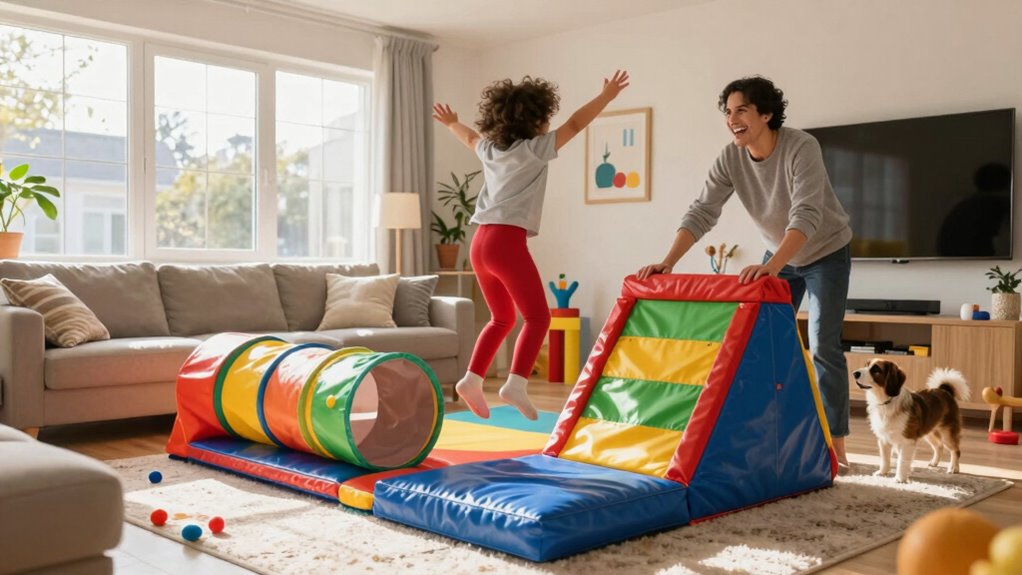
When staying indoors for extended periods, it’s easy for kids to become passive and sedentary, but incorporating whole-body play can keep them active and engaged. Whole-body play not only boosts their physical activity but also enhances sensory engagement, which is crucial for their overall development. You want to create an environment that encourages movement and exploration, so your child can develop motor skills while having fun. Think about activities that require jumping, climbing, crawling, or balancing—these actions stimulate multiple senses and help refine motor development. For example, setting up an obstacle course with cushions, chairs, and tunnels invites your child to crawl, jump, and maneuver through different textures and obstacles, engaging their senses in the process.
Encourage indoor fun with activities like jumping, climbing, and crawling to boost motor skills and sensory engagement.
To make these activities more effective, focus on providing varied sensory inputs. Use soft mats or textured rugs to create different surfaces to walk or jump on, stimulating tactile senses. Incorporate colorful scarves or balls to encourage reaching and grasping, which enhances hand-eye coordination and fine motor skills. When your child interacts with these objects, they’re not just moving—they’re also processing sensory information, which supports neural connections and overall sensory integration. Including sensory processing activities can deepen their sensory engagement and improve their ability to respond to different stimuli. Additionally, introducing specific sensory integration techniques can help children better adapt to diverse sensory experiences in daily life.
You can also turn everyday routines into opportunities for whole-body play. Dancing to music, for instance, is a fantastic way to promote motor development while engaging multiple senses. As your child moves to the rhythm, they’re refining their sense of timing and spatial awareness. You could also encourage them to imitate animal movements—like crawling like a bear or hopping like a frog—which naturally develop strength, balance, and coordination. These actions involve both gross motor skills and sensory feedback, making the activity beneficial on multiple levels. Incorporating movement-based activities can also boost their confidence in trying new physical challenges and exploring their environment more freely. Developing motor skills through playful activities not only supports physical growth but also enhances cognitive and emotional development.
Creating a space that invites movement is key. Clear a safe, open area where your child can stretch out and experiment with different motions. Incorporate mirrors so they can observe their movements, which helps develop body awareness and proprioception—another vital component of motor development. Reinforcing positive experiences with movement builds confidence and encourages more active play.
Incorporating whole-body play into indoor days doesn’t require elaborate equipment or routines. It’s about encouraging your child to explore their environment actively, prompting them to use their senses and refine their motor skills through engaging, playful activities. By doing so, you help them stay physically active, develop essential sensory processing skills, and enjoy their indoor time to the fullest.
As an affiliate, we earn on qualifying purchases.
Frequently Asked Questions
How Can I Ensure Indoor Activities Are Safe for My Child?
You can guarantee indoor activities are safe for your child by supervising play at all times and using appropriate safety gear like helmets, knee pads, or elbow pads. Set clear boundaries to prevent accidents, and choose age-appropriate toys and equipment. Keep the play area clutter-free, and regularly check for hazards. By staying attentive and prepared, you create a safe environment that encourages active, whole-body play while minimizing risks.
What Are Some Budget-Friendly Indoor Play Equipment Options?
Think of your space as a treasure chest waiting to be opened. You can craft DIY obstacle courses with cushions, ropes, and chairs, turning your living room into a playful jungle. Add sensory play ideas like homemade slime or textured bins for engagement. These budget-friendly options transform ordinary items into exciting indoor play equipment, fostering whole-body activity without breaking the bank. Your child’s adventure begins with a little creativity and resourcefulness.
How Do I Motivate Reluctant Children to Join Active Play?
To motivate reluctant children, try using creative incentives like small rewards or extra playtime for participation. Incorporate playful challenges, turning activities into fun competitions or quests that spark their interest. Offer choices to give them a sense of control, and praise their efforts enthusiastically. When kids see play as enjoyable and rewarding, they’re more likely to join in willingly and stay engaged during active indoor play.
Are There Specific Activities Suitable for All Age Groups?
Think of universal activities as a bridge connecting different ages, making playtime a family symphony. Age-inclusive games like relay races, balloon volleyball, or Simon Says work well indoors. You can adapt rules or equipment to suit all ages, turning play into a lively dance that everyone can join. These activities keep everyone engaged, fostering laughter and bonding, no matter their age, creating a joyful rhythm in your home.
How Can I Track My Child’s Activity Levels Indoors?
You can track your child’s activity levels indoors using tracking apps or activity charts. Download a kid-friendly app that logs movement and encourages active play, or create a colorful chart to mark daily activities. Encourage your child to record their efforts, making tracking fun and motivating. Regularly review progress together to celebrate achievements, helping them stay engaged and active throughout indoor days.
Conclusion
By incorporating activities like indoor obstacle courses or dance sessions, you can turn quiet days into lively, full-body fun. For example, imagine setting up a mini gym with cushions, chairs, and tunnels—your kids will burn energy while building strength and coordination. Soon, indoor play becomes not just a way to pass time but a chance to boost fitness and creativity. So, get creative, and watch your indoor days transform into energetic adventures!
Fall Picks
fall essentials
As an affiliate, we earn on qualifying purchases.