


Choose educational toys for a preschooler by checking safety and age guidance, matching toys to the child’s interests and abilities, and setting them up for open-ended play. This guide is for caregivers, family members, and preschool staff. Allow 30-60 minutes to review what the child already has, compare options, and prepare a small play area.

BEESTECH Alphabet ABC Learning Educational Toys for Toddlers
- ✔ Target age: 3–4 years
- ✔ Material: Wood
- ✔ Components: 28 flash cards and 52 wooden letters

Wooden Magnetic Fishing Game with Alphabet and Numbers
- ✔ Brand: NASHRIO
- ✔ Recommended age: 36 months–3 years
- ✔ Description age reference: Also refers to children ages 3–5
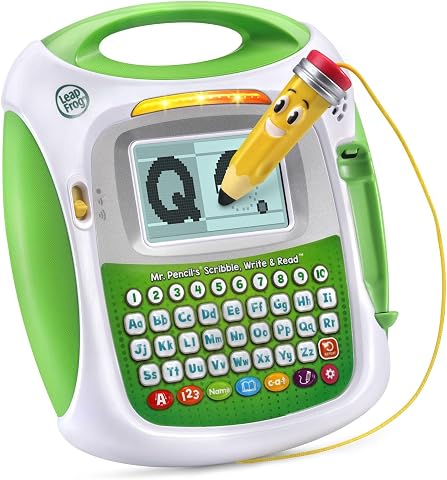
LeapFrog Mr. Pencil’s Scribble, Write and Read
- ✔ Brand: LeapFrog
- ✔ Age range: 3 years and up
- ✔ Writing tool: Stylus
Difficulty: Beginner | Time: 30-60 minutes
What You’ll Need
Tools & Materials:
- A list or photo of the child’s current toys
- Measuring tape if you need to check toy or storage dimensions
- Access to toy labels or product details
Knowledge:
- The child’s age and any relevant safety needs
- A general sense of the child’s interests and current abilities
Use the age guidance and safety warnings on the toy packaging. If the child has a developmental, sensory, or physical support need, consider advice from their caregiver, teacher, or clinician when selecting toys.
BEESTECH Alphabet ABC Learning Educational Toys for Toddlers
For a preschooler beginning to connect printed letters with words, BEESTECH keeps the activity clear and tactile. Children match wooden letters to flash cards, so the learning task is easy to understand and can be repeated without a screen or electronic prompts. Its 28 cards and 52 letters offer more matching material than a very small starter activity, and the included storage bag helps keep the pieces together between sessions.Compared with the fishing game, this set puts letter and word matching ahead of movement; it does not add the same fishing challenge or explicit number play. Compared with LeapFrog, it is also narrower: there is no described guided writing, sound-it-out activity, or animated feedback. That focus is its advantage when a child is ready to recognize letters, but it may lose appeal once basic matching feels familiar.The polished wooden letters are described as having no sharp corners, which helps make handling more comfortable. Still, the pieces are small, so caregivers should follow age guidance and supervise children who may mouth objects. We rank it first for its direct fit with early alphabet practice and straightforward, repeatable play—not for covering every preschool skill.
Pros:
- Pairs 28 flash cards with 52 wooden letters for repeat matching play.
- Supports early letter recognition and vocabulary practice.
- Polished letters are described as having no sharp corners.
- Includes a storage bag and gift box.
Cons:
- Activities focus on basic alphabet matching rather than advanced phonics.
- Small wooden pieces require attention to age suitability and supervision.
Best for: Preschoolers ages 3–4 who are beginning letter recognition and enjoy matching activities with screen-free materials.
Not ideal for: Children who need guided handwriting, a wider mix of number and movement activities, or toys without small loose pieces.
Bottom line: We recommend BEESTECH for focused, screen-free letter practice when a child is ready to handle small matching pieces.
“We recommend BEESTECH for focused, screen-free letter practice when a child is ready to handle small matching pieces.”
Wooden Magnetic Fishing Game with Alphabet and Numbers
The fishing game is the most physical choice in this lineup. Preschoolers use a magnetic pole to catch fish marked with letters and numbers, turning recognition into a small coordination challenge. That extra action gives this set a different appeal from BEESTECH’s card-and-letter matching: children practice aiming and picking up pieces while they identify symbols, and the description also points to counting, colors, imagination, and problem-solving.Against LeapFrog, the fishing game offers hands-on wooden play without batteries, but it does not describe guided letter writing, name practice, spelling, or animated instruction. It is best viewed as a playful way to revisit early concepts, rather than a writing tool. Its polished wood and water-based, non-toxic dye are stated material details, though caregivers should still check the product and supervise play as appropriate for the child.We place it second because its blend of movement and early learning is appealing, but its age guidance needs scrutiny. The recommended range is listed as 36 months–3 years, even though the description also refers to ages 3–5. That inconsistency makes it less straightforward to choose than BEESTECH’s stated 3–4 range. Check the packaging and suitability details before buying, especially for an older preschooler.
Pros:
- Combines fishing play with letter and number recognition.
- Can support counting, color recognition, and hand-eye coordination.
- Uses polished wood with smooth edges.
- The description specifies water-based, non-toxic dye.
Cons:
- The recommended age range and broader age description do not match.
- Does not offer the described guided writing or spelling activities found in LeapFrog.
Best for: A preschooler around age three who enjoys pretend play, magnetic games, and learning letters and numbers through movement.
Not ideal for: Families seeking clear age guidance, structured handwriting practice, or an activity centered on vocabulary and card matching.
Bottom line: Choose the fishing game when active, tactile play is the priority and you have checked its age suitability.
“Choose the fishing game when active, tactile play is the priority and you have checked its age suitability.”
LeapFrog Mr. Pencil’s Scribble, Write and Read
When a preschooler is moving from recognizing letters toward making them, Mr. Pencil shifts the focus to guided practice. A stylus is used to work on uppercase and lowercase letters, numbers, and the child’s name. Sound-it-out activities, early spelling and counting, animated transformations, and free drawing broaden the activity beyond tracing, making this the most varied learning program in the group.That range distinguishes it from both wooden options. BEESTECH gives children physical letters to match with cards, while the fishing set adds a playful coordination task; LeapFrog puts more emphasis on instruction and mark-making. The stylus and animated feedback may help hold attention during structured practice, but the toy’s electronic approach will not suit families who prefer open-ended, screen-free materials. It also requires three AA batteries, and the included batteries are for demonstration, so regular play may call for fresh ones.We rank it third overall because its broader curriculum is useful for children ready to practice writing, but it is less direct as a simple first alphabet toy and brings battery upkeep. For that particular learning stage, however, it is the clearest match in the lineup. Its listed age range is 3 years and up, which is broader than the age guidance on BEESTECH and more consistent than the fishing set’s mixed description.
Pros:
- Guides practice with uppercase and lowercase letters and numbers.
- Includes name-writing, spelling, and counting activities.
- Animated feedback and free drawing add variety.
- Listed for ages 3 and up.
Cons:
- Requires three AA batteries; included batteries are for demonstration.
- More structured and electronic than either wooden matching game.
Best for: Preschoolers aged 3 and up who are ready to practice letter formation, numbers, name writing, and early spelling with guided feedback.
Not ideal for: Families looking for screen-free wooden play, minimal setup, or a toy that does not depend on batteries.
Bottom line: Pick Mr. Pencil when guided writing and a wider mix of early literacy and counting activities matter more than screen-free play.
“Pick Mr. Pencil when guided writing and a wider mix of early literacy and counting activities matter more than screen-free play.”
As an Amazon Associate we earn from qualifying purchases.
Before You Start
Set a budget and decide where the toys will be used and stored. Check the ages of children who may share the play area; small parts can pose a choking risk to children under three. For online purchases, read the full product description, age label, materials information, and return policy before ordering.
Step-by-Step Instructions
Step 1: Review the child’s current toys
Gather the toys the child uses most, then sort them into broad types such as building, pretend play, art, movement, puzzles, and books. Note which ones hold the child’s attention, which seem too easy or frustrating, and which are broken, incomplete, or rarely used.
Tip:Ask the child what they enjoy playing with, or observe their play for a few minutes. Their choices give you a better starting point than a toy’s marketing claims.
Check: You have a short list of favorite activities and can identify at least one play type that is missing or needs a fresh challenge.
Step 2: Choose a learning goal
Pick one or two skills you want the toy to invite the child to practice, such as sorting and counting, hand control, language, imagination, problem-solving, or balance. Keep the goal broad: a set of blocks can support counting, construction, storytelling, and cooperation without requiring a single correct result.
Tip:Preschoolers learn through play across several areas at once. Choose toys that allow the child to make decisions and try different approaches.
Check: You can describe what the child might do with the toy in a simple sentence, such as “build and rebuild a bridge” or “pretend to run a shop.”
Step 3: Match the toy to the child
Look for a toy that connects with the child’s interests and offers a manageable challenge. Check whether the child can handle the pieces, understand how to begin, and play with some independence. Choose toys that allow more than one way to play, such as play food, dress-up items, large building pieces, simple musical instruments, or open-ended art materials.
Tip:If a toy is too easy, the child may lose interest; if it is too difficult, they may need frequent adult help. When possible, let the child try a similar toy at a library, preschool, or toy-lending program before buying.
Check: The child can start an activity with the toy and has room to change, repeat, or extend the play.
Step 4: Check safety and durability
Read the age label, warnings, and care instructions. Inspect the toy for sharp edges, loose parts, accessible batteries, strong magnets, long cords, and pieces small enough to choke on. Choose sturdy materials that suit the child’s use and can be cleaned as needed. For secondhand toys, check for recalls and missing or damaged components before offering them.
Tip:Age labels are safety guidance as well as play guidance. Keep toys with small parts away from children under three and from any child who mouths objects.
Check: The toy is suitable for the child and everyone who shares the play space, has no visible damage, and comes with the information needed for safe use.
Step 5: Compare options before buying
Compare two or three choices against your learning goal, safety needs, budget, and available storage. Check what is included, whether replacement parts are available, and whether the toy needs batteries or extra supplies. Prefer a useful, sturdy toy over a large set with pieces the child is unlikely to use.
Tip:Simple household materials, such as cardboard boxes, large containers, or washable drawing supplies, can support rich play when they are safe for the child and used with appropriate supervision.
Check: You have chosen an option that fits the child, play space, budget, and safety requirements.
Step 6: Prepare the play area
Clear a stable surface or floor space, remove unrelated clutter, and place only the needed pieces within reach. Store extra pieces in a labeled container if that helps the child start and tidy up. Check that the play area has enough room for the activity and is away from hazards such as stairs, hot surfaces, or breakable objects.
Tip:For scissors, art tools, or other items that need supervision, set them out only when an adult can stay nearby.
Check: The child can reach the toy safely, begin playing without searching for missing items, and return the pieces to a suitable storage place.
Step 7: Introduce the toy and observe
Show the child how to begin with one brief demonstration, then let them explore. Ask open prompts such as “What could you build?” or “Who might visit your pretend shop?” Avoid directing every move or turning play into a quiz. Watch for signs of enjoyment, concentration, frustration, or a need for help.
Tip:Some children need time to watch before joining in. Give them space to approach the toy in their own way.
Check: The child engages with the toy, explores at least one idea independently or with suitable support, and remains safe during play.
Step 8: Adjust the challenge and routine
Review the child’s interest and experience after a few play sessions to decide whether the toy is too easy, too difficult, or a good fit. Add a small challenge, such as sorting pieces by color or building a taller structure, if the child wants one. Put the toy away or rotate it if interest fades, and check it periodically for damage or missing parts.
Tip:Follow the child’s cues. Repeating a favorite activity can be valuable practice; a toy does not need a new instruction each time.
Check: You know whether to keep the toy available, change how it is used, store it for later, or replace it because it is damaged or no longer suitable.
Common Mistakes to Avoid
- Choosing a toy only because its package lists many educational benefits. — Match the toy to the child’s interests and a play activity they can actually do. Check that it invites hands-on exploration rather than relying on claims alone.
- Buying toys with pieces that are unsafe for a younger sibling or playmate. — Consider the ages and mouthing habits of every child who shares the space. Store small parts separately and supervise their use.
- Offering too many toys at once. — Set out a few well-chosen options, then rotate them. A less cluttered area makes it easier for the child to choose and finish tidying.
- Taking over the play or expecting one right result. — Demonstrate how to start, then give the child time to experiment. Offer help when asked or when safety requires it.
Troubleshooting
Problem: The child ignores the new toy.
Solution: Put it away for a while, then try it alongside a familiar activity or favorite toy. Demonstrate one simple use without insisting that the child join in.
Problem: The child becomes frustrated and stops playing.
Solution: Check whether the task has too many steps or pieces. Simplify the setup, show one starting move, or choose an easier version. Add challenge gradually when the child is ready.
Problem: Pieces keep getting lost or scattered.
Solution: Use a container sized for the pieces, set out only what is needed, and make cleanup part of the routine. Keep small parts out of reach of younger children.
Problem: You are unsure whether a toy is safe or suitable.
Solution: Check the manufacturer’s age guidance, warnings, and recall information. Do not offer a damaged toy or one with loose small parts; ask the child’s caregiver or teacher about specific support needs.
What Success Looks Like
You have selected toys that are safe for the child and shared play space, connect with the child’s interests, and invite active play. The child can access the play area, begin exploring with an appropriate level of help, and use the toys in ways that support learning through practice and imagination. The toys remain in good condition and can be stored safely after use.
Next Steps
Observe which toys the child chooses over the next week and note what keeps them engaged. Rotate toys when interest changes, inspect them regularly for wear, and remove damaged items. As the child’s abilities and interests grow, add a new challenge or activity rather than replacing every toy at once.
Frequently Asked Questions
How many educational toys does a preschooler need?
There is no required number. A small range of safe toys for different kinds of play can be enough. Focus on whether the child has useful choices and space to use them.
Do educational toys need to teach letters or numbers?
No. Building, pretend play, drawing, music, movement, and puzzles can support language, early math, coordination, creativity, and problem-solving through play.
Should adults show children how to use each toy?
Give a short demonstration when a child needs help starting, then let them explore. Follow the toy’s safety instructions and supervise activities that involve tools, small pieces, or other hazards.
What should I do with toys the child has outgrown?
Check the toy’s condition and whether it is suitable for another child. Store, donate, or recycle it according to its materials and local guidelines. Keep toys with small parts away from young children.