
📊 Full opportunity report: Recovery-percentile tracker for orthopedic surgery patients on IdeaNavigator AI — validation score, market gap, and execution plan.
TL;DR
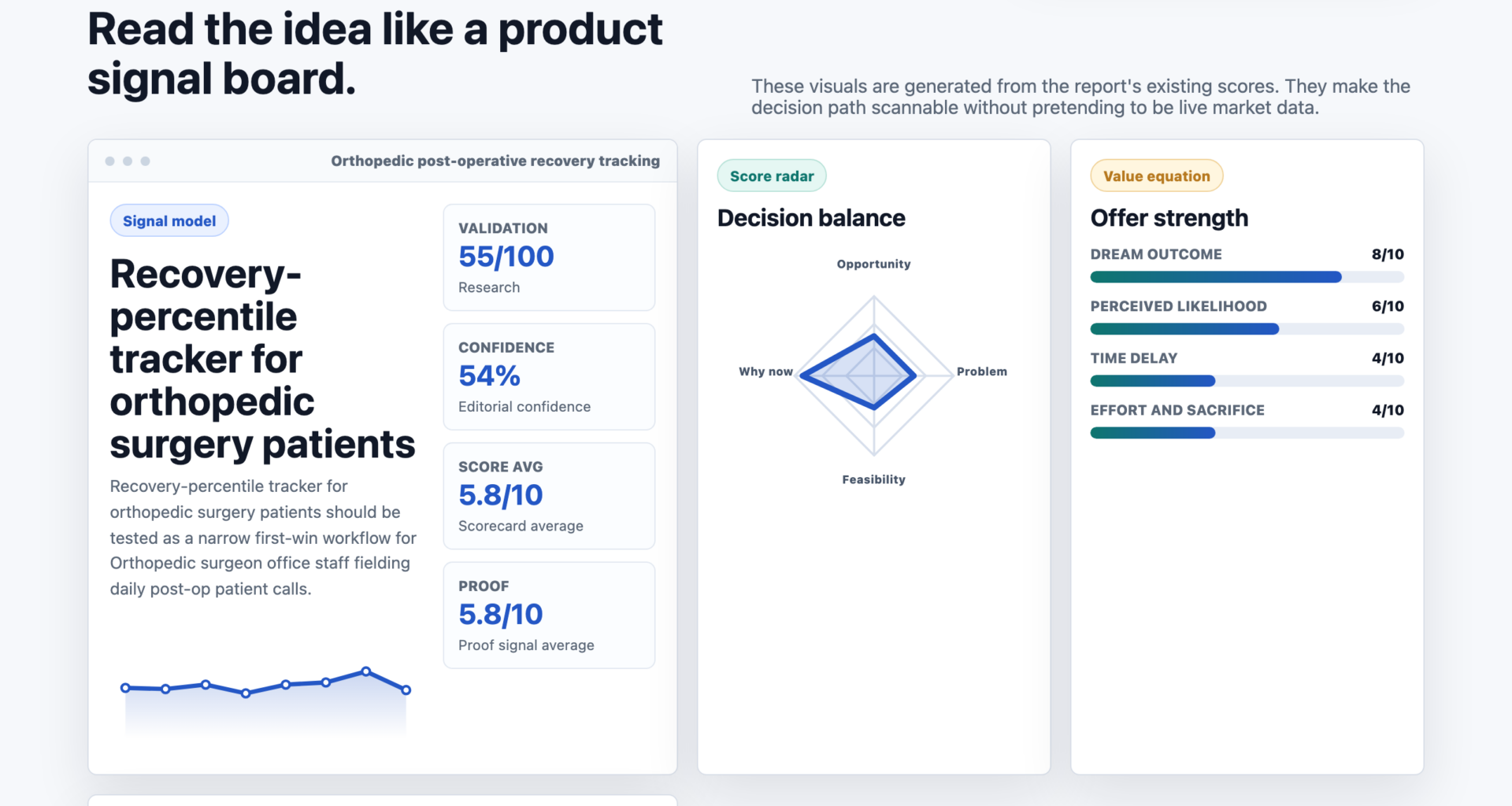
A pilot program is testing a recovery-percentile tracker for orthopedic surgery patients to help patients monitor their progress and reduce unnecessary calls to clinics. The initiative aims to provide data-backed reassurance and streamline post-op care.
A new recovery-percentile tracker for orthopedic surgery patients is being tested in a pilot study to help patients assess their recovery progress and reduce the volume of post-operative calls to clinics. The initiative targets outpatient procedures like knee replacements and aims to provide objective benchmarks for patients and staff.
The tracker allows patients to log daily data on pain, swelling, range of motion, and walking milestones after surgery. These data points are then plotted against anonymized recovery curves for similar procedures, providing patients with a percentile ranking of their recovery status.
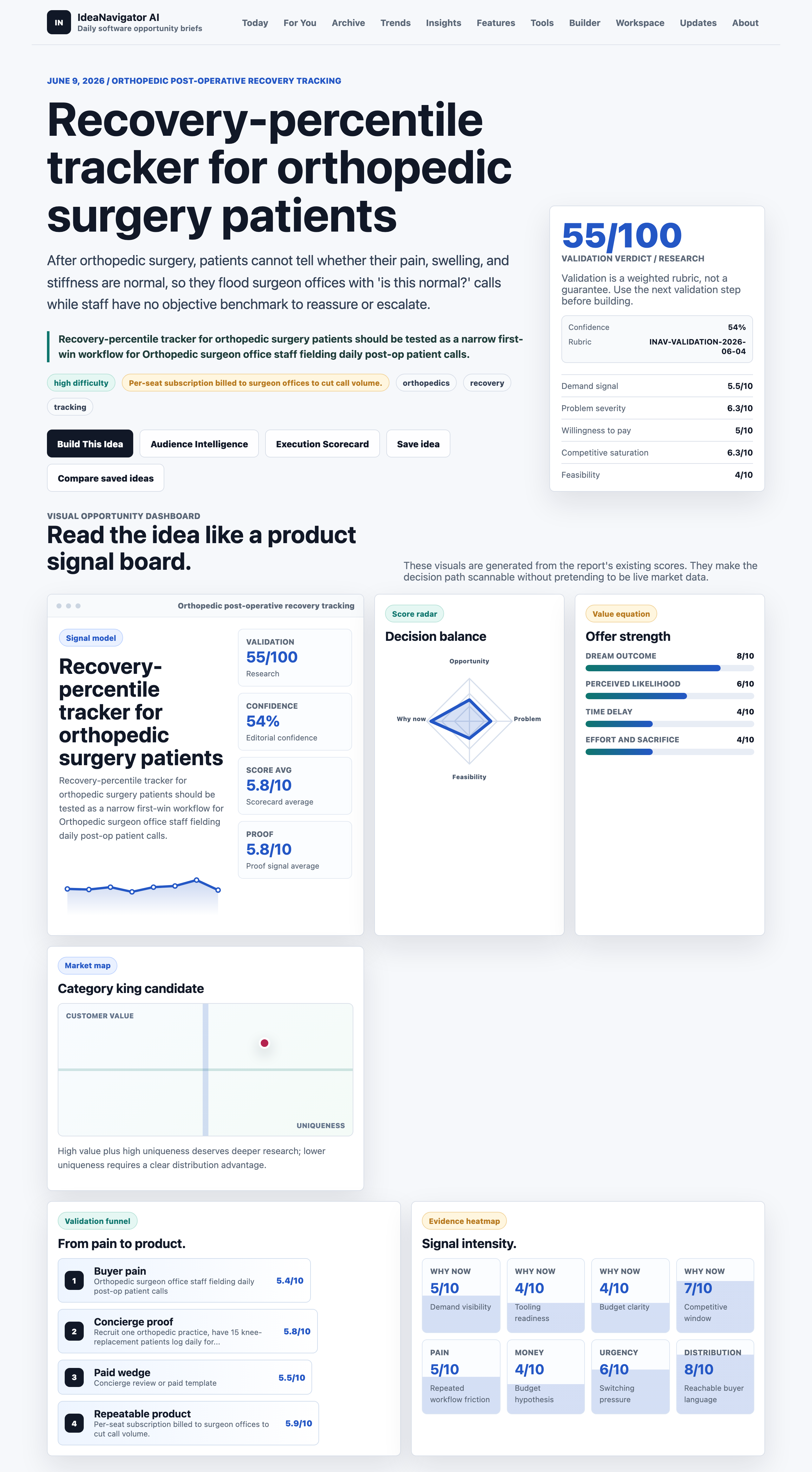
In the pilot, 15 knee-replacement patients at one orthopedic practice will use the tracker for two weeks. The goal is to determine whether this approach reduces the number of ‘is this normal?’ calls compared to a control group not using the tool. The concept is designed to be a first step in a broader effort to develop objective, data-driven post-op recovery management tools.
Potential Impact on Post-Operative Patient Support
If successful, the recovery-percentile tracker could significantly reduce the workload for orthopedic office staff by providing patients with objective, data-backed reassurance about their recovery. This could lead to fewer unnecessary calls, better patient engagement, and more efficient post-operative care management. The approach also represents a step toward integrating digital health tools into routine orthopedic practice, potentially improving outcomes and patient satisfaction.

The Total Knee Replacement Recovery Journal: A Gentle 12-Week Post-Op Tracker for Pain Management, Physical Therapy & Healing | Beautiful Care Package Gift for Women
As an affiliate, we earn on qualifying purchases.
As an affiliate, we earn on qualifying purchases.
Growing Need for Objective Post-Op Recovery Monitoring
As outpatient orthopedic procedures like knee replacements continue to rise, clinics face increasing demands to support recovering patients remotely. Currently, many patients call clinics with concerns about pain, swelling, and stiffness, often without clear benchmarks to assess whether their recovery is on track. This leads to high call volumes and strains on staff, especially in understaffed practices. The development of a recovery-percentile tracker aims to fill this gap by providing patients with real-time, personalized recovery data, which could streamline post-op support and improve patient confidence.
“The goal is to give patients an objective way to understand their recovery progress, which could reduce unnecessary calls and improve overall care.”
— an anonymous researcher
Effectiveness and Adoption of the Recovery Tracker
It is not yet clear whether the tracker will significantly reduce patient calls or improve recovery outcomes. The pilot study is limited in scope, involving only 15 patients over two weeks, and results are still pending. Broader adoption will depend on the effectiveness demonstrated in this initial test, as well as integration into existing clinical workflows and patient acceptance.
Next Steps for Validation and Broader Implementation
Following the pilot, researchers plan to analyze the data to assess whether the tracker reduces call volume and supports better recovery management. If results are positive, plans include expanding the study to more practices and procedures, refining the tool based on user feedback, and exploring monetization strategies such as per-seat subscriptions for clinics. Further validation will be necessary before wider deployment becomes standard practice in orthopedic care.
Key Questions
How does the recovery-percentile tracker work?
Patients log daily data on pain, swelling, range of motion, and walking milestones. The system plots these against anonymized recovery curves, providing a percentile ranking of their recovery compared to similar patients.
What types of surgeries are included in the initial testing?
The pilot focuses on knee replacement procedures, with potential expansion to other outpatient orthopedic surgeries in the future.
Will this tool replace in-person follow-ups?
Currently, it is designed as an adjunct to standard care, providing data to support clinical decisions and potentially reducing unnecessary calls, but not replacing scheduled follow-up visits.
When will the results of the pilot study be available?
The study is planned for two weeks, with initial data analysis expected shortly after completion. Broader conclusions will depend on these initial findings.
How will clinics pay for this tracking tool?
The proposed model involves per-seat subscriptions billed to surgeon offices, aiming to offset call volume and improve efficiency.
Source: IdeaNavigator AI