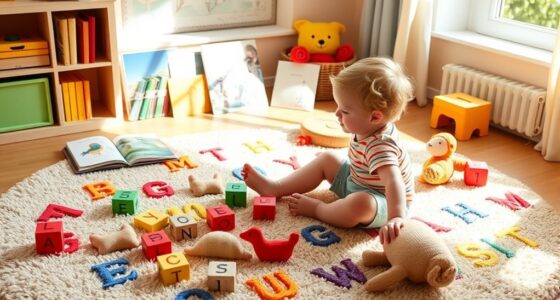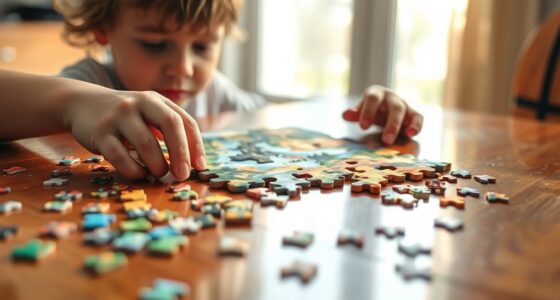
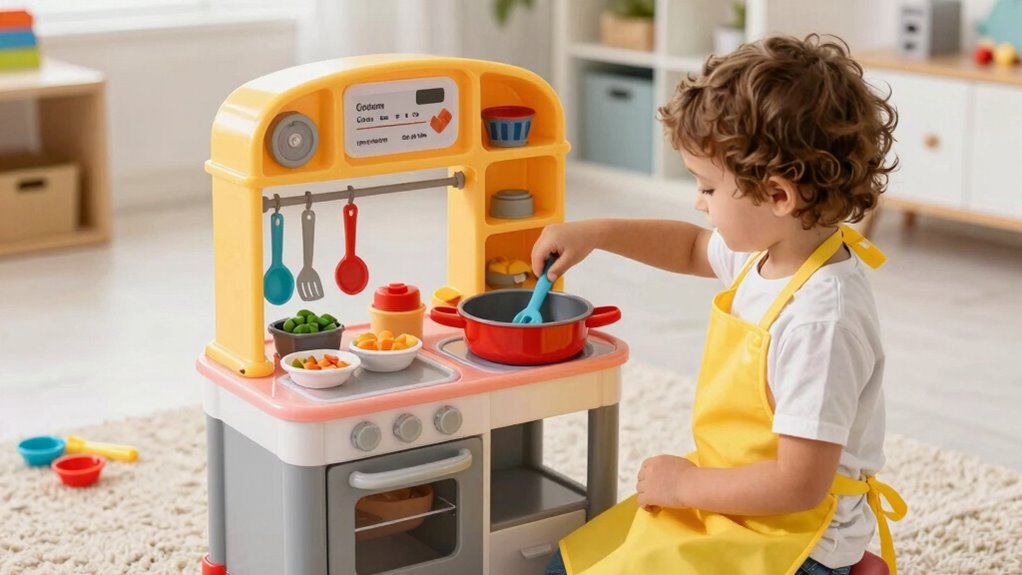

When choosing pretend play toys for preschoolers, focus on safety, making sure they’re made from non-toxic materials with smooth edges and the right size to prevent choking. Look for versatile toys that encourage open-ended play, like dress-up sets or kitchen playsets, which spark imagination and social skills. Bright colors and engaging designs attract interest and promote storytelling. If you want to discover more tips on selecting the perfect pretend play toys, keep exploring to find helpful insights.

Turn the school run and nap time into listening time
- Thousands of audiobooks, podcasts and originals
- Listen on your phone, tablet or Echo — also offline
- Cancel anytime
Key Takeaways
- Ensure toys are safe, non-toxic, and have smooth edges suitable for preschoolers’ handling.
- Choose open-ended, versatile toys that encourage imagination and social role-play.
- Opt for bright colors and engaging designs to capture interest and inspire storytelling.
- Select appropriately sized, lightweight toys for easy grasping, portability, and active play.
- Prioritize durability to withstand enthusiastic use and promote long-term safety and value.
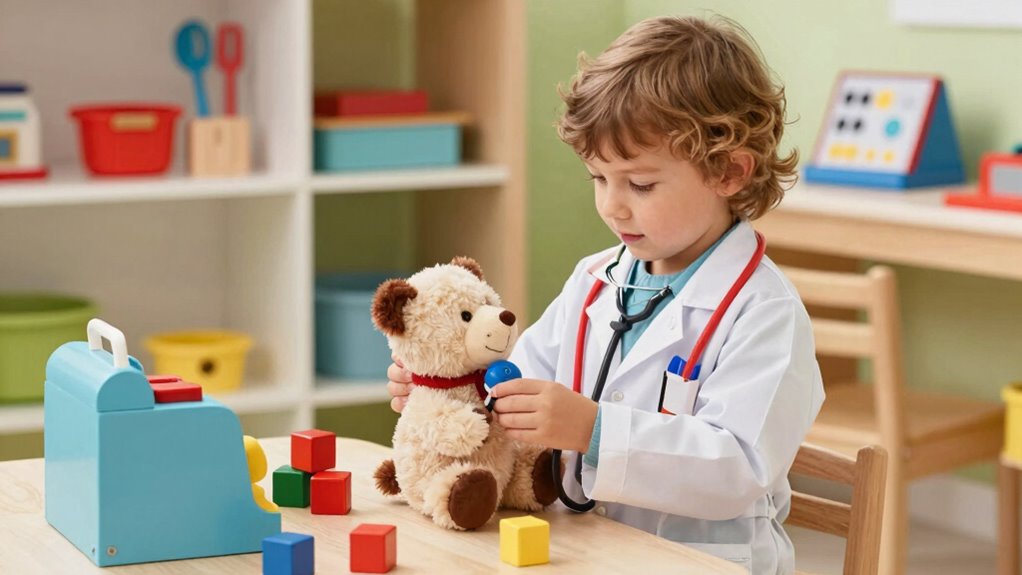
Pretend play toys are indispensable for preschoolers because they foster creativity, social skills, and problem-solving abilities. When you choose the right toys, you’re giving your child the tools to create imaginative scenarios that stimulate their mind and encourage storytelling. Look for toys that invite open-ended play, such as dress-up clothes, kitchen sets, or dollhouses. These items let children invent different roles and scenarios, promoting their ability to think creatively and flex their imagination. The more versatile the toy, the more your child can explore various roles and narratives, which keeps their interest high and helps them develop a rich inner world.
Pretend play toys boost creativity, social skills, and imagination through open-ended, versatile play experiences.
As your child engages in pretend play, they learn how to navigate social interactions. Toys that support social skill development often involve multiple pieces or encourage group play, so your child can practice sharing, cooperating, and communicating. For example, a play supermarket with cash registers and food items allows children to role-play as shopkeepers and customers, fostering understanding of social norms and turn-taking. When you choose toys that facilitate collaborative play, you’re helping your preschooler build essential skills like listening, negotiating, and resolving conflicts—all indispensable for their social development. Incorporating social-emotional development into your toy selection can further enhance these learning opportunities.
Safety is another key factor to bear in mind. Pretend play toys should be made from non-toxic materials, with smooth edges and sturdy construction to withstand active play. Since preschoolers tend to put toys in their mouths or throw them, guarantee that small parts are avoided or securely attached to prevent choking hazards. Durability matters because it means the toy can withstand enthusiastic use, saving you money and reducing the need for frequent replacements. Additionally, choosing toys with appropriate size and design ensures they are safe and easy for your preschooler to handle comfortably.
Size and ease of handling are important, too. Toys should be appropriately sized for preschoolers, allowing them to grasp, carry, and manipulate easily. Lightweight options help with portability, so your child can carry their pretend scenarios wherever they want. Also, look for visually appealing toys with bright colors and engaging designs, as these can attract your child’s interest and inspire them to imagine new stories. Incorporating educational value into pretend play toys can further enhance their developmental benefits by supporting early learning concepts. Moreover, toys that combine safety and educational features can maximize both security and developmental growth.
Ultimately, the best pretend play toys strike a balance between open-endedness, safety, and engagement. They should invite your child to explore different roles and scenarios, helping them develop essential social skills and creative thinking. When you pay attention to these qualities, you’re supporting your preschooler’s growth in a fun, meaningful way that nurtures their imagination and social abilities for years to come.
pretend play dress-up costumes for preschoolers
As an affiliate, we earn on qualifying purchases.
As an affiliate, we earn on qualifying purchases.
Frequently Asked Questions
How Do Pretend Play Toys Support Preschoolers’ Social Development?
Pretend play toys help preschoolers develop social skills by encouraging them to role-play and share ideas, which boosts emotional intelligence. As you observe their interactions, you’ll notice how they practice empathy and understanding others’ feelings. These toys also support language development, as children communicate more during imaginative scenarios. By engaging with pretend play toys, your preschooler learns cooperation, negotiation, and expressing emotions effectively, laying a foundation for healthy social relationships.
Are There Safety Concerns With Small Pretend Play Accessories?
Yes, there are safety concerns with small pretend play accessories. You should watch out for small parts that can easily become choking hazards for preschoolers. Always check the age recommendations and inspect toys regularly for loose or broken pieces. Keep small accessories out of reach of young children who might put them in their mouths, and choose toys with larger, secure parts to guarantee safe pretend play.
What Are Budget-Friendly Options for Pretend Play Toys?
You might think quality toys cost a lot, but DIY crafts and role-playing games prove otherwise. You can create pretend play toys using household items or inexpensive materials, making playtime both fun and budget-friendly. Kids love imaginative scenarios, and DIY crafts encourage creativity. Role-playing games with simple props or costumes spark their imagination without breaking the bank. These options guarantee safe, engaging pretend play without overspending.
How Can Parents Encourage Imaginative Play With These Toys?
You can encourage imaginative play by setting up opportunities for creative scenarios and role switching activities. Join your preschooler in pretending, ask open-ended questions, and suggest new roles or settings to explore. Provide props that inspire different scenarios, and praise their creativity. This active engagement helps them develop social skills and boosts their imagination, making pretend play more fun and meaningful for your little one.
When Should Parents Introduce New Pretend Play Themes or Roles?
Think of your child’s pretend play as a garden—adding new themes is like planting fresh seeds. You should introduce new roles or themes when they show interest or master current ones, encouraging role shift and play scenario variety. For example, if your little one loves playing ‘doctor,’ gently introduce a new role like ‘veterinarian.’ Timing is key; it keeps their imagination blossoming without overwhelming them.
Conclusion
When choosing pretend play toys for preschoolers, remember to prioritize versatility and safety to encourage creativity. These toys boost social skills and imagination, making playtime both fun and educational. Did you know that children who engage in pretend play tend to develop better problem-solving skills? By selecting the right toys, you’re helping your little one grow smarter, more confident, and more imaginative every day. So go ahead—pick toys that inspire endless adventures!
Halloween Picks
halloween
As an affiliate, we earn on qualifying purchases.