
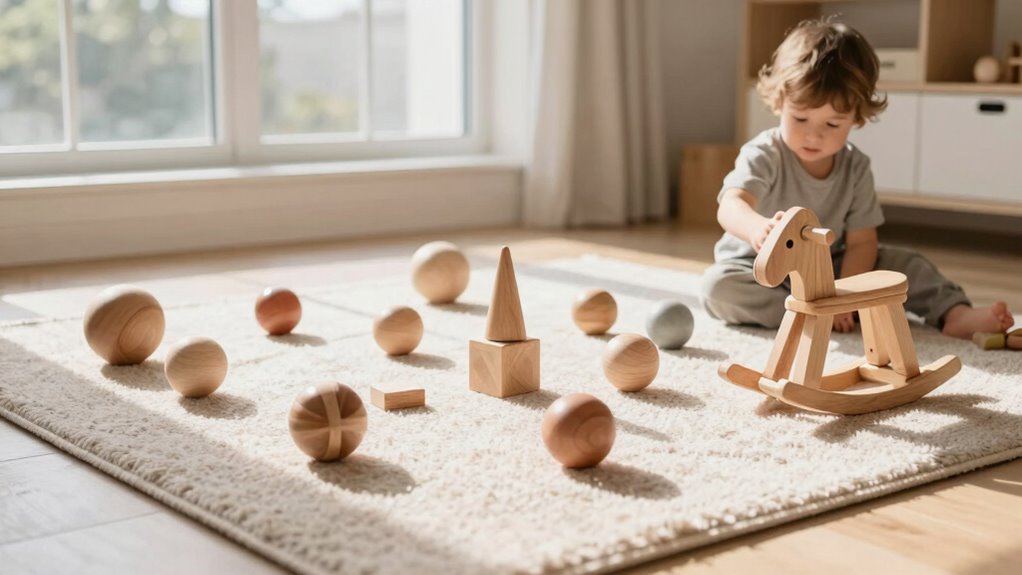
Having fewer high-quality toys helps you create a calmer play environment, allowing your child to focus and explore more deeply. With less distraction, they can develop their creativity, problem-solving skills, and emotional resilience. Thoughtfully chosen toys encourage inventiveness and patience while fostering sustainable habits. This approach supports meaningful, developmentally appropriate play that builds lifelong skills. If you want to discover how fewer, better toys make play more enriching, keep exploring.
Key Takeaways
- Fewer toys reduce distractions, enabling children to focus deeply and engage more meaningfully in play.
- High-quality, versatile toys encourage creativity and exploration, fostering inventive and adaptable thinking.
- Limited toy choices promote patience and perseverance as children master each item’s potential.
- Curated collections support emotional regulation and calmness through less overstimulation.
- Sustainable, durable toys teach environmental responsibility and promote long-term play value.
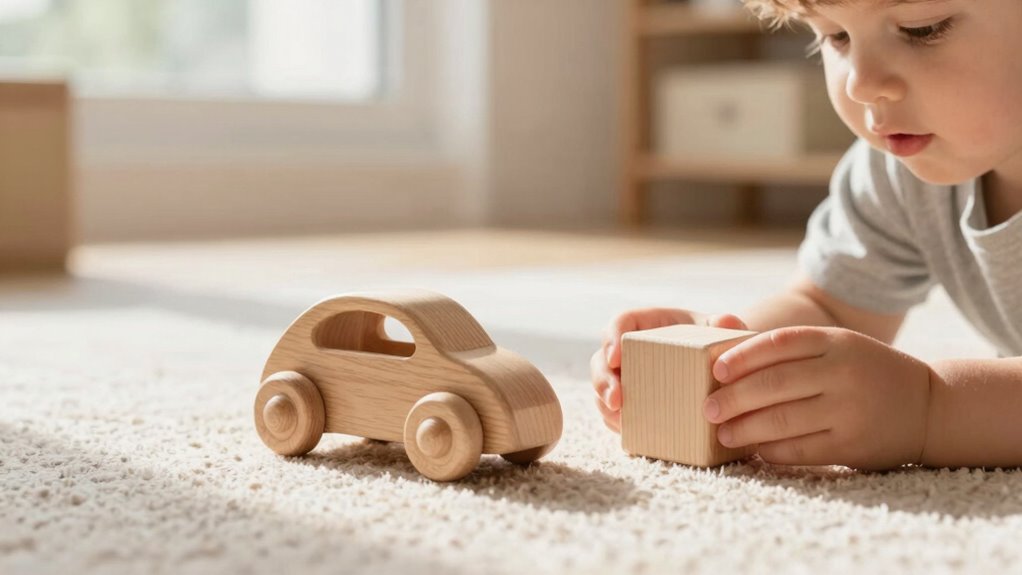
Toys with innovative design are crafted to inspire curiosity and critical thinking. They often feature open-ended elements that can be used in multiple ways, allowing your child to invent their own games rather than follow predetermined instructions. This kind of play nurtures their ability to think independently, adapt to new challenges, and develop a stronger sense of creativity. When your child isn’t distracted by flashing lights or noisy buttons, they can focus their attention on the task at hand, fostering concentration and patience.
Having fewer toys also means that your child has the space and mental capacity to truly engage with each one. Instead of skimming through a mountain of toys, they spend more time exploring the depth and versatility of each item. This deep engagement promotes better problem-solving skills and helps develop fine motor skills, as your child manipulates and experiments with their toys in meaningful ways. Additionally, fewer toys can reduce overstimulation, allowing your child to enjoy a calmer, more focused play experience that supports emotional regulation and resilience. A well-curated collection of toys can also help promote sustainable habits by emphasizing quality and longevity over quantity. Moreover, intentionally choosing sustainable toys teaches your child early on about environmental impacts, fostering ecological awareness from a young age.
Furthermore, reducing the number of toys can contribute to environmental sustainability by decreasing waste and the demand for plastic production, aligning with principles of biodiversity and conservation. From your perspective, curating a small collection of high-quality toys isn’t just about simplifying your home; it’s about intentionally fostering your child’s developmental benefits. Well-designed toys with thoughtful features can challenge your child just enough to promote growth without overwhelming them. This approach encourages patience, perseverance, and satisfaction as they master new skills, all while honing their imagination. Incorporating sustainable design principles into toy selection can encourage your child to appreciate and understand environmental impacts from an early age. Recognizing the importance of developmentally appropriate toys ensures that each item effectively supports growth and learning.
Over time, you’ll notice how your child becomes more inventive and self-directed in their play, traits that are essential for lifelong learning. In essence, choosing fewer toys with innovative design isn’t about limiting your child’s fun—it’s about enriching their playtime with meaningful, developmentally beneficial experiences. When you focus on quality over quantity, you create an environment where your child can thrive, grow, and discover their potential through play that’s engaging, thoughtful, and truly beneficial.
high quality open-ended wooden toys
As an affiliate, we earn on qualifying purchases.
As an affiliate, we earn on qualifying purchases.
Frequently Asked Questions
How Do Fewer Toys Impact a Child’s Creativity?
Fewer toys boost your child’s creativity by encouraging imaginative freedom and resourcefulness development. With fewer options, your child can focus more deeply, inventing new scenarios and stories using the toys available. This limited environment pushes them to think outside the box, transforming simple objects into endless possibilities. As a result, they develop problem-solving skills and confidence, fostering a richer, more meaningful play experience that nurtures their creative growth.
What Age Groups Benefit Most From Fewer Toys?
Imagine a cozy corner where a child, surrounded by just a few toys, explores with focused curiosity. You’ll find that toddlers and preschoolers benefit most from fewer toys, as it enhances their developmental focus and sparks imagination. With limited toy variety, they can dive deeper into play, fostering creativity and problem-solving skills. This simple setup helps young children develop concentration and independence, making play both meaningful and enriching at these formative ages.
Can Fewer Toys Help Reduce Childhood Screen Time?
Yes, fewer toys can help reduce childhood screen time by encouraging kids to engage in more imaginative play and physical activities. When there are fewer digital distractions, children are less likely to develop screen dependency and become reliant on screens for entertainment. This shift allows them to explore creative ways to play, fostering healthier habits and reducing the temptation to turn to screens whenever they seek stimulation.
How Do Parents Choose the Best Toys for Quality Over Quantity?
You should prioritize toy durability and brand reputation when choosing the best toys. Look for well-made, sturdy toys that can withstand active play, ensuring longevity. Trust reputable brands known for quality and safety standards. Avoid cheap, flimsy options that break easily. By selecting durable toys from trusted brands, you foster better play experiences, reduce clutter, and encourage more meaningful, imaginative play rather than constant replacement.
Are Fewer Toys Effective for Children With Special Needs?
Fewer toys can be highly effective for children with special needs, as it allows for focused sensory exploration and reduces overwhelming toy variety. When you limit options, your child can develop deeper engagement and skills with each toy, fostering better play outcomes. This approach helps them concentrate, explore textures, sounds, and visuals more thoroughly, making playtime both meaningful and enjoyable. Sometimes, less truly is more for nurturing growth.
Conclusion
By choosing fewer, better toys, you open a world where your child’s imagination soars to new heights—like reaching the stars! Less clutter means more focus, deeper engagement, and richer play experiences. When you simplify, you give your child the gift of true creativity and meaningful exploration. Remember, sometimes less is more—your child’s potential is limitless when they have the right tools. So, embrace quality over quantity and watch their playtime transform into something truly extraordinary!