
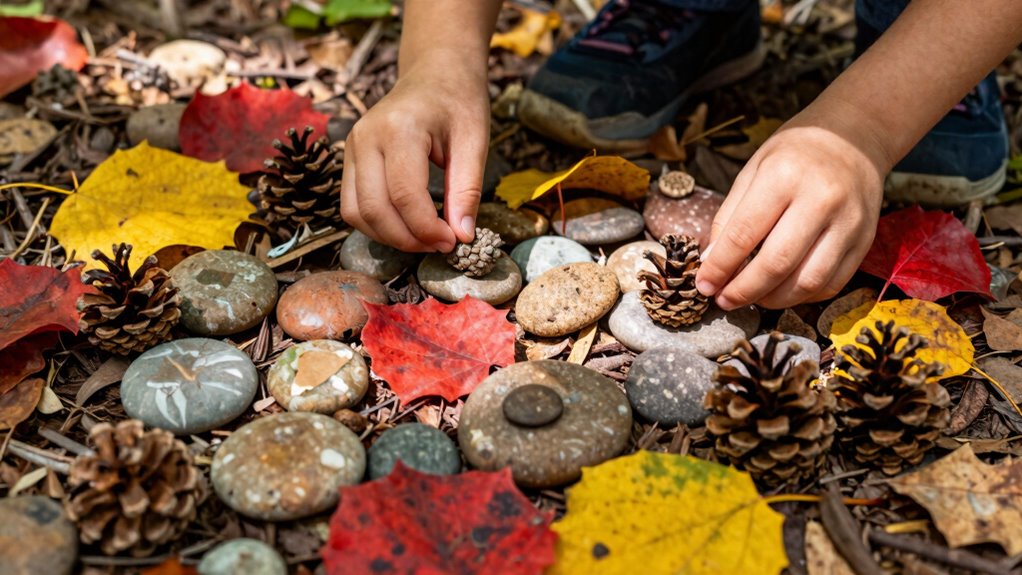

You can turn nature finds into fun, creative materials by collecting items like leaves, stones, pinecones, and flowers during outdoor adventures. Use these to create art projects, sculptures, and storytelling props, encouraging imaginative play. Sort and organize your treasures by shape or color to inspire different crafts. Incorporate natural objects into role-playing games or decorate them for additional fun. Keep exploring ways to transform nature’s gifts and reveal endless creative possibilities, if you continue exploring further.
Key Takeaways
- Collect a variety of natural materials like leaves, stones, and pinecones, ensuring safety and respect for the environment.
- Organize and sort finds by size, color, or type to inspire different creative projects.
- Use natural items to create art, such as collages, painted rocks, or decorated leaves.
- Incorporate natural objects into storytelling, role-playing, or imaginative scenes.
- Store and display completed crafts to encourage ongoing creative exploration with nature materials.

Have you ever wondered how a simple walk in nature can spark your child’s imagination? When you take your child on outdoor exploration, you open the door to countless opportunities for creative play using nature finds. One of the most exciting ways to do this is through seasonal foraging. As the seasons change, so do the treasures you can discover—bright leaves in fall, smooth stones in spring, pinecones in winter, and colorful flowers in summer. By collecting these items, you’re not just gathering objects; you’re creating a toolkit for imaginative adventures. These natural materials become the foundation for storytelling, art projects, and role-playing games, enriching your child’s engagement with the environment.
The key is to encourage your child to see the potential in what they find. For example, a fallen branch could become a magic wand or a sword during their imaginative battles. Acorns and pinecones can be painted and turned into tiny creatures or fairy houses. Leaves with unique shapes can serve as masks or costume pieces for dress-up play. When you introduce the idea of seasonal foraging, you’re helping your child develop an appreciation for nature’s cycles and the changing landscape. It also sparks curiosity about different plants, animals, and natural textures, fostering a deeper connection to the outdoors. Recognizing the importance of biodiversity in these natural environments can further enhance their understanding and appreciation.
To make the most of these nature finds, you don’t need fancy supplies—just your enthusiasm and a sense of adventure. Bring a small basket or cloth bag for collecting items and set gentle guidelines to ensure safety and respect for the environment. Once home, you can organize a creative session where your child sorts their treasures by size, shape, or color. Use these materials as the basis for art projects, like collages, painted rocks, or nature-inspired sculptures. You might also set up a storytelling corner, where your child invents tales inspired by their collection, turning natural objects into characters and settings. Exploring nature-based play can inspire new ideas and foster a lifelong love of the outdoors.
Outdoor exploration combined with seasonal foraging encourages your child to observe, compare, and imagine. It’s a simple yet powerful way to foster creativity, problem-solving, and environmental awareness. Plus, it turns a regular walk into an adventure packed with endless possibilities. As your child learns to see the beauty and potential in nature’s everyday offerings, they develop a sense of wonder and resourcefulness that can last a lifetime. So next time you head outside, remember that even the smallest find can become the start of a creative story or craft—your outdoor exploration is a treasure trove waiting to be discovered.

Arts & Crafts Supplies Kits & Materials Set for Kids, Toddler – Carl & Kay
- All-Inclusive Craft Kit: Complete set of craft supplies
- Extensive Material Variety: Includes pipe cleaners, sticks, buttons, and more
- Easy Storage and Portability: Neatly packed in zipper bags for travel
As an affiliate, we earn on qualifying purchases.
As an affiliate, we earn on qualifying purchases.
Frequently Asked Questions
How Do I Ensure Safety When Using Natural Materials for Play?
To guarantee safety when using natural materials for play, you should always follow safety precautions and conduct hazard identification beforehand. Check for sharp edges, splinters, or toxic substances, and avoid using items that could break easily or cause choking. Clean and sanitize materials when needed, and supervise children closely during play. Educate them about safe handling, and regularly inspect your natural play materials to maintain a safe environment.
What Are Some Eco-Friendly Ways to Collect Nature Finds?
You can practice sustainable harvesting by only taking a few items from each spot, ensuring nature thrives. Use responsible collection methods like gently picking fallen leaves or stones instead of uprooting plants or disturbing habitats. Carry a small basket or reusable bag to avoid waste. By respecting nature’s balance and limiting your impact, you turn a simple collection into an eco-friendly adventure that preserves the environment for future explorations.
How Can I Organize Natural Materials for Easy Access?
You can organize natural materials by using storage solutions like small bins, jars, or baskets. Categorization techniques help keep items sorted—group rocks, leaves, and pinecones separately. Label each container for quick access, and consider stacking or wall-mounted options to save space. Regularly review and tidy your collection to maintain order. This approach makes it easy to find what you need for creative play or projects whenever inspiration strikes.
Are There Age-Appropriate Ideas for Using Nature Finds?
Yes, there are age-appropriate ideas for using nature finds that foster nature art and sensory exploration. For young children, encourage them to create collages with leaves, flowers, and twigs, enhancing their fine motor skills. Older kids can experiment with natural sculptures or paint on rocks and bark, promoting artistic expression. These activities help children connect with nature, stimulate their senses, and develop creativity in a fun, engaging way.
How Can I Incorporate Nature Finds Into Educational Activities?
Think of nature finds as keys opening a world of learning. You can incorporate them into educational activities through outdoor exploration, guiding kids to observe and collect items like leaves, stones, or feathers. Use these for sensory activities, such as feeling different textures or smelling various scents. Encourage discussions about nature, shapes, and colors, helping children connect with their environment while developing their curiosity and cognitive skills.
Conclusion
By turning nature’s treasures into playful treasures, you unleash endless imagination and discovery. These natural materials aren’t just objects; they’re gateways to creativity, waiting for your unique touch. So, why not see nature’s bounty as a blank canvas, inviting you to paint stories, build worlds, and ignite wonder? After all, isn’t life itself just a grand, unfolding masterpiece—crafted one natural find at a time? Embrace the magic, and let your imagination run wild.