

To turn story time into creative play, start by using expressive voices, gestures, and exaggerated emotions to bring characters alive. Incorporate sensory activities like touching natural objects or playing with water to make story settings tangible. Create immersive environments with props and themes, and encourage children to act out scenes or add their own twists. This engages their imagination, emotional understanding, and confidence. Keep exploring more ideas to keep storytelling fun and interactive.
Key Takeaways
- Incorporate role-playing and dress-up activities to bring story characters and scenes to life.
- Use sensory objects and props related to the story to enhance tactile and visual engagement.
- Create themed play areas that reflect story settings, encouraging hands-on exploration.
- Encourage children to add their own twists or endings, fostering imagination and narrative skills.
- Use expressive voices, gestures, and pauses to deepen emotional connection and stimulate creativity.
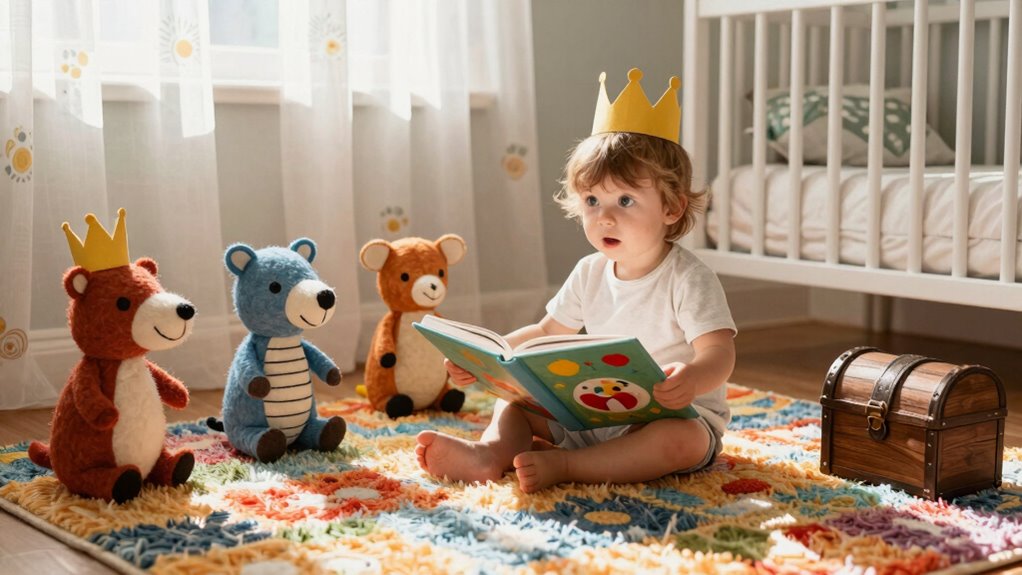
Story time isn’t just about reading; it’s a perfect opportunity to spark your child’s imagination and encourage creative play. To make this time truly engaging, you can incorporate storytelling techniques that bring stories to life. Use expressive voice changes, pauses, and gestures to make characters and scenes vivid. Envision different voices for each character, and don’t be afraid to exaggerate emotions—this helps your child connect more deeply with the story. When you use storytelling techniques like these, you turn a simple reading session into an interactive experience, inviting your child to participate actively and imagine themselves within the narrative.
Make storytime lively with expressive voices, gestures, and emotional exaggeration to spark your child’s imagination and active participation.
To further enhance this imaginative environment, integrate sensory activities that complement the story. For example, if the story involves a trip to the forest, bring in leaves, pinecones, or even the scent of pine to touch and smell. If your story takes place in the ocean, use water toys or a small basin to splash and feel. These sensory activities make the story tangible, helping your child engage multiple senses and deepen their understanding of the story’s setting and characters. They also turn passive listening into active exploration, encouraging your child to think creatively about what they’re experiencing. Incorporating sensory activities can also support a child’s cognitive development and emotional regulation. Additionally, creating a storytelling environment that stimulates their imagination can inspire their own storytelling efforts and boost confidence. Using symbols and storytelling techniques rooted in cultural and spiritual symbols can also add depth and meaning to their imaginative play, enriching their understanding of different worlds and ideas.
You can also encourage your child to participate in storytelling by acting out scenes or pretending to be the characters. For instance, after reading a story about a brave knight, invite your child to don a costume or hold a toy sword, then act out the adventure together. This type of creative play reinforces the story’s themes, making it more memorable and meaningful. Furthermore, incorporating imaginative play helps children develop their narrative skills and emotional understanding. Additionally, you can invite your child to add their own twists or endings to the story, fostering their imagination and confidence in storytelling.
Another way to turn story time into creative play is to set up themed play areas based on the story. If the story involves a jungle adventure, create a mini jungle with plush animals, green fabric, and jungle sounds. Let your child explore and interact with the environment, inspired by the story you just read. This approach helps bridge the gap between listening and doing, transforming story time into an immersive, hands-on experience.
storytelling props for kids
As an affiliate, we earn on qualifying purchases.
As an affiliate, we earn on qualifying purchases.
Frequently Asked Questions
What Age Is Best for Incorporating Creative Play During Story Time?
You can incorporate creative play during story time at any age, but it’s especially effective for young children between 3 and 6 years old. Use interactive props and sensory activities to engage their senses and imagination. At this age, children love exploring textures, sounds, and visuals. Incorporate simple crafts or role-playing to make storytime immersive. This approach helps develop their creativity, language skills, and love for reading.
How Can I Adapt Stories for Children With Different Learning Styles?
You can adapt stories for different learning styles by incorporating visual storytelling, like picture boards or story maps, for visual learners. For kinesthetic learners, include sensory activities such as feeling textured objects related to the story or acting out scenes. Auditory learners benefit from expressive reading or sound effects. Combining these approaches keeps all children engaged, making story time interactive and accessible for everyone.
What Materials Are Most Effective for Creative Storytelling Activities?
You should use storytelling props and visual aids like puppets, pictures, or felt boards to make your stories come alive. These materials engage children’s imaginations and help them visualize the story. If you worry about clutter, focus on portable, easy-to-store items. Incorporating colorful visuals and tactile props creates a multisensory experience, making storytelling more interactive and memorable. This approach keeps children captivated and encourages their active participation.
How Do I Encourage Shy Children to Participate in Creative Play?
You can encourage shy children to participate in creative play by using interactive puppetry and sensory storytelling. Gently invite them to choose puppets or props, making them feel involved without pressure. Create a safe, supportive environment where they can express themselves at their own pace. Incorporate sensory elements like textures or sounds to make storytelling engaging, helping shy kids feel comfortable and confident to join the fun.
Are There Specific Themes That Work Best for Creative Story-Based Activities?
You should choose story themes that spark imagination and relate to children’s interests, like fairy tales, animals, or adventures. These themes naturally inspire play ideas, encouraging kids to act out roles or create new scenarios. Opt for versatile story themes that can be expanded into various activities, helping shy children feel more comfortable participating. By aligning play ideas with engaging story themes, you create a fun, inclusive environment that promotes creativity.
kids dress-up costumes for storytelling
As an affiliate, we earn on qualifying purchases.
As an affiliate, we earn on qualifying purchases.
Conclusion
By turning story time into creative play, you’re planting seeds of imagination that bloom into endless adventures. When you encourage your child’s creativity, you’re opening a door to a world where stories leap off the pages and dance around like fireflies in a summer night. Remember, every story is a bridge—so step across it together, and watch their imagination take flight like a kite soaring high against a clear blue sky.

Super Z Outlet Liquid Motion Bubbler for Sensory Play, Fidget Toy, Children Activity, Desk Top, Assorted Colors (1 Piece)
The descending bubbles have a soothing and mesmerizing effect that will keep kids entertained for hours. Gravity will…
As an affiliate, we earn on qualifying purchases.
As an affiliate, we earn on qualifying purchases.
interactive storytelling kits
As an affiliate, we earn on qualifying purchases.
As an affiliate, we earn on qualifying purchases.