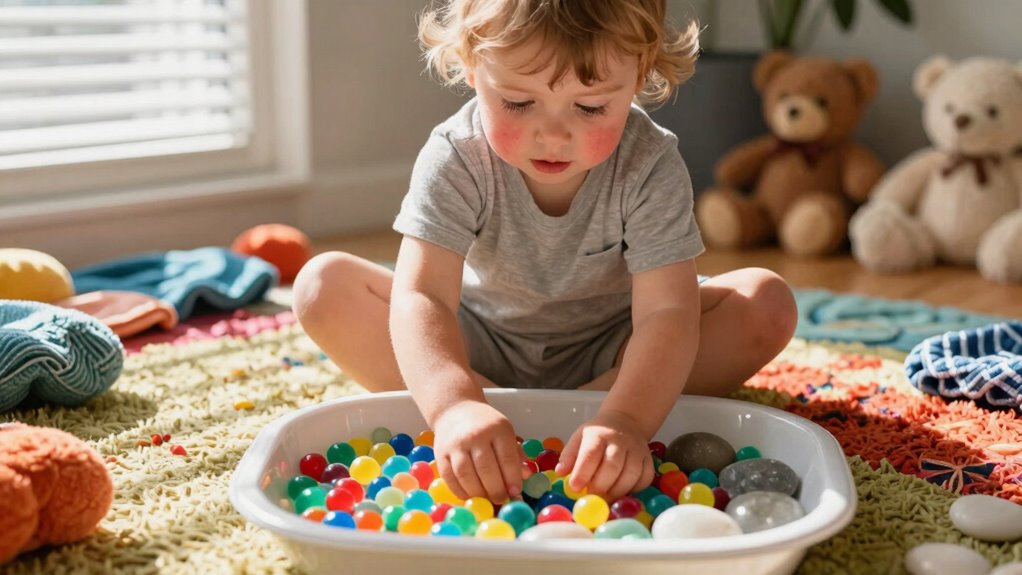

Sensory play helps some kids manage sensory input better by engaging their brain in processing textures, sounds, and sensations safely. It supports sensory integration, helping children stay calm and focused. Through activities like squeezing stress balls or feeling soft fabrics, kids learn self-regulation and emotional control. These experiences build their ability to pause, reflect, and respond appropriately. Keep exploring to discover how creating sensory-rich environments can make a meaningful difference in their emotional well-being.
Key Takeaways
- Sensory play enhances the brain’s ability to process and organize sensory input, improving self-regulation.
- Engaging in sensory activities helps children manage overwhelm and reduces anxiety.
- Sensory play promotes emotional resilience by providing calming and grounding experiences.
- It develops attention, patience, and behavioral control through focused, repetitive sensory exploration.
- Creating sensory-rich environments supports individual sensory needs and strengthens emotional regulation skills.
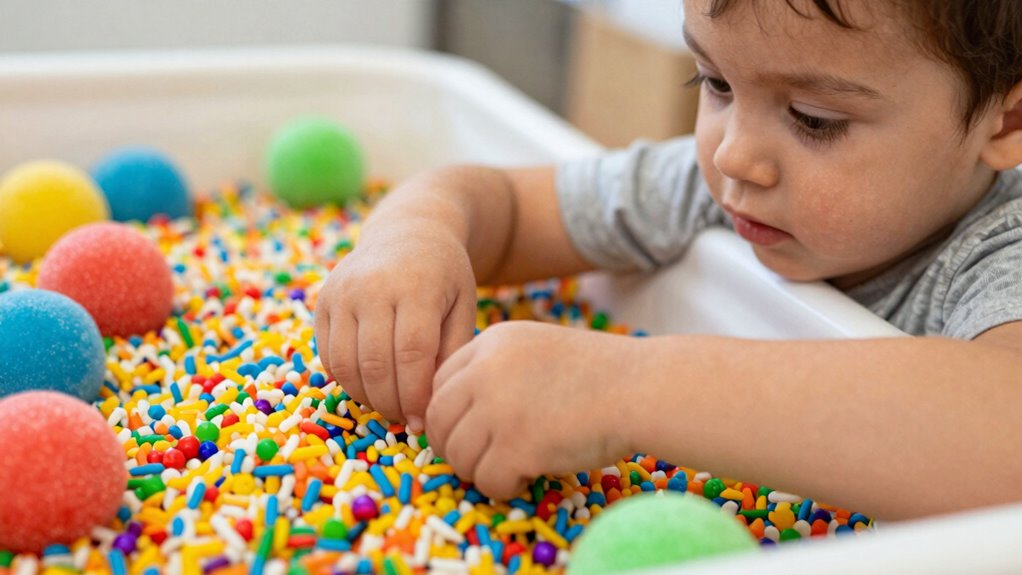
Have you ever wondered how to boost your child’s development while keeping them entertained? Sensory play offers a fantastic way to do just that, especially when it comes to helping kids regulate their emotions and behaviors. When children engage in sensory activities, they’re not just having fun—they’re also fostering essential skills through sensory integration and tactile development. Sensory integration is the brain’s ability to process and respond to incoming sensory information from the environment. For some children, this process can be challenging, leading to difficulties in self-regulation, attention, and emotional control. Sensory play provides a safe, controlled way for kids to experience and organize sensory input, helping to improve this indispensable process.
Through tactile development, children learn to interpret what they feel, which is fundamental for understanding their bodies and surroundings. When you introduce activities like playing with textured materials—such as sand, rice, or gel—they’re engaging their sense of touch in a way that promotes tactile processing. This kind of play enhances their ability to distinguish different textures, pressures, and temperatures, building a foundation that supports better sensory regulation. Kids who develop strong tactile skills often find it easier to settle down after overstimulation or to seek out sensory input when they need it, leading to improved self-control.
Engaging with textured materials boosts tactile processing and helps children develop self-control and sensory regulation skills.
Sensory play also helps kids develop a greater awareness of their body and environment, which is essential for emotional regulation. When children can manage sensory input effectively, they’re less likely to become overwhelmed or anxious. For example, if a child is sensitive to loud noises or bright lights, engaging in calming sensory activities like squeezing a stress ball or feeling soft fabrics can help them feel more grounded. This kind of play allows kids to experience sensory input at their own pace, giving them a sense of mastery and control that translates into better emotional resilience. Additionally, this process can support the development of sensory processing skills, which are crucial for overall emotional and behavioral regulation. Creating sensory-rich environments can further enhance these skills by providing diverse opportunities for sensory exploration. Recognizing the importance of sensory integration helps caregivers create supportive environments that cater to individual sensory needs. Incorporating appropriate sensory stimuli into daily routines can also promote consistent development of these essential skills.
Moreover, sensory play encourages focus and patience, which are key for behavior regulation. As children explore different textures or manipulate sensory materials, they learn to sustain attention and develop patience for completing tasks. These skills are directly linked to improved self-regulation in daily life, whether it’s waiting their turn or calming down after a frustrating moment. By integrating sensory activities into your child’s routine, you’re not just providing entertainment—you’re actively supporting their ability to process sensory information, regulate emotions, and navigate the world with greater confidence.

6 Set Squishy Sensory Stress Squeezing Balls forAdults: Best Calming Tool to Relieve Anxiety, Vent Mood and Improve Focus, Easter Basket Stuffers for Kids, Goodie Bag Stuffers
- Premium Stress Balls: Set of 3 soft, stress-relief balls
- Safe and Durable: Made with non-toxic, hypoallergenic materials
- Boredom Busters: Fun indoor activity for all ages
As an affiliate, we earn on qualifying purchases.
As an affiliate, we earn on qualifying purchases.
Frequently Asked Questions
Can Sensory Play Replace Traditional Behavioral Therapies?
Sensory play can’t fully replace traditional behavioral therapies, but it acts as a valuable behavioral alternative that supports sensory integration. You should incorporate sensory activities to help your child develop self-regulation skills alongside therapies like ABA or counseling. Sensory play can improve focus, reduce anxiety, and promote calming strategies, making it a beneficial supplementary approach. Combining both methods offers a more all-encompassing support system for your child’s emotional and behavioral development.
How Do I Know if My Child Needs Sensory Play?
You’ll know your child needs sensory play if they seem overwhelmed by daily sights and sounds, like their sensory processing is a storm they can’t weather alone. If they’re on the Autism spectrum and struggle with self-regulation, sensory activities can act as a calming anchor. Watch for signs like seeking intense sensory input or avoiding certain textures—these cues suggest engaging in sensory play could help your child find balance amidst chaos.
Are There Age Limitations for Sensory Play Activities?
There are no strict age limitations for sensory play; it’s adaptable to your child’s developmental stages. Younger kids enjoy simple textures and soft materials, while older children can handle more complex activities like sensory bins or fine motor tasks. Always consider your child’s individual interests and maturity. As long as the activity is safe and engaging, sensory play can be tailored to suit any age, fostering development and regulation at every stage.
What Are Some Common Sensory Play Tools for Beginners?
You might think sensory play tools are complex, but beginners often start with simple items like textured balls or colorful sorting trays. These tools make texture exploration and color sorting fun and accessible, helping kids develop fine motor skills and sensory awareness. Ironically, what seems basic—like finger paint or rice bins—can be the most effective in encouraging your child’s sensory regulation and curiosity.
How Can I Make Sensory Play Safe for My Child?
To keep sensory play safe for your child, always choose safe materials that are non-toxic and free from choking hazards. Watch for signs of sensory overload, like fussiness or withdrawal, and limit playtime if needed. Supervise closely, and set clear boundaries to prevent overstimulation. Incorporate calming activities if your child shows signs of sensory overwhelm, ensuring the experience remains enjoyable and safe.
Conclusion
Sensory play is like a magic key opening a child’s ability to navigate their world with ease. It’s a gentle dance of touch, sight, and sound that helps kids find their balance amid chaos. When you nurture these playful moments, you’re planting seeds of calm and confidence, guiding them through storms with the steady compass of their senses. Embrace sensory play, and watch your child’s inner orchestra find harmony and joy.