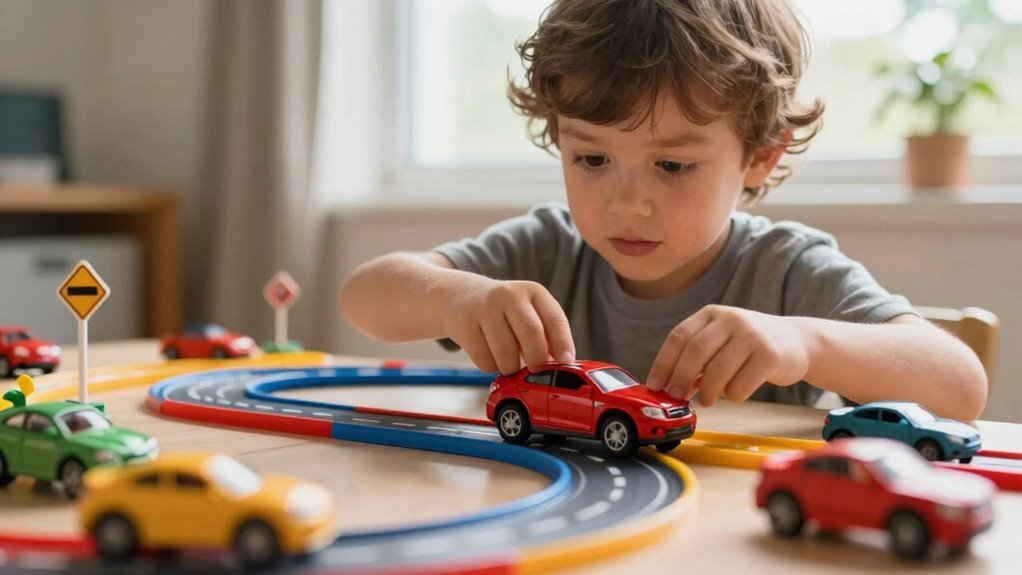

Your child plays the same game repeatedly because it helps them feel confident, safe, and in control. Repeating tasks allows them to master skills, build emotional resilience, and reduce anxiety about new situations. It also gives a sense of stability and comfort, making it easier for them to process emotions and develop focus. Keep exploring to understand more about why this behavior supports their growth and how you can encourage it positively.
Key Takeaways
- Repeating the game deepens understanding, mastery, and reinforces problem-solving and memory skills.
- It boosts confidence and helps internalize rules and strategies for success.
- Repetition creates a routine that provides emotional stability and reduces anxiety.
- Playing the same game fosters emotional resilience and perseverance through mastery.
- It offers a safe environment for emotional expression and supports cognitive and emotional growth.

If your child keeps playing the same game repeatedly, it’s natural to wonder why they’re so drawn to it. Kids often find comfort in routines, especially when they’re exploring their world and learning new skills. Replaying a game helps them understand it deeply, which supports their cognitive development. When they master a task or a challenge within the game, they get a sense of achievement and control. This steady repetition reinforces their understanding of cause and effect, problem-solving, and memory. It’s like giving their brain a chance to practice and refine skills in a safe, predictable environment. You might notice that your child becomes more confident and capable the more they play, because they’re internalizing rules and strategies that help them succeed. Repetition also encourages cognitive reinforcement, which is essential for long-term learning and skill retention. Additionally, engaging repeatedly with the same game can help children develop their focus and attention, allowing them to concentrate more effectively over time.
Beyond the cognitive benefits, playing the same game provides emotional comfort. Children thrive on routines because they create a sense of stability amid the chaos of growing up. When they repeatedly engage with a familiar game, it becomes a source of reassurance. They know what to expect, how to navigate the challenges, and how to feel in control. This predictability can reduce anxiety, especially if your child is sensitive or struggles with change. The game becomes a safe space where they can express themselves without fear of failure. It’s also a way for them to process emotions—whether they’re excited, frustrated, or proud—by acting out these feelings through gameplay. As they master the game, they develop a sense of mastery that boosts their emotional resilience. This repetition and mastery can also help children develop perseverance and patience, helping them learn that persistence is key to overcoming challenges. Recognizing and supporting their need for familiarity and mastery will help them grow both cognitively and emotionally.

School Zone Memory Match Farm Card Game: 56 Game Cards, Preschool, Kindergarten, Animals, Early Reading, Counting, Matching, Vocabulary, Ages 3+
As an affiliate, we earn on qualifying purchases.
As an affiliate, we earn on qualifying purchases.
Frequently Asked Questions
Could This Behavior Indicate an Underlying Developmental Issue?
Yes, this behavior could indicate an underlying developmental issue, especially if it persists beyond typical developmental milestones. Your child might be using repetitive play to process sensory information or seek comfort. If you notice other signs like difficulty adapting to change or sensory sensitivities, consider consulting a professional. Understanding their sensory processing and developmental progress can help you support their needs effectively.
How Can I Encourage My Child to Try New Games?
You can encourage your child’s curiosity by introducing new games that align with their interests, gradually expanding their preferences. Offer a variety of options and play together to make game diversity exciting rather than overwhelming. Praise their efforts and celebrate small successes, which boosts confidence. Over time, this positive reinforcement helps your child develop a broader range of preferences and enjoy exploring different games, making the experience fun and engaging.
Is This Behavior Normal for All Age Groups?
A common saying is “practice makes perfect,” and that applies here. Child preferences and play patterns vary across age groups, but repetitive play is normal for children of all ages. It helps them master skills, gain confidence, and feel secure. As they grow, their interests may shift, but this behavior remains a healthy part of development. So, yes, it’s typical, and it supports your child’s learning and emotional well-being.
When Should I Be Concerned About Excessive Repetition?
You should be concerned about excessive repetition if it starts to interfere with your child’s daily activities, learning, or social interactions. While habit formation and repetitive behaviors are normal in early childhood, persistent or intense behaviors might signal an underlying issue, like anxiety or a developmental delay. Keep an eye on whether your child’s behavior changes or worsens, and consult a professional if you notice these signs.
Are There Specific Games That Promote Better Learning?
Some games promote better learning based on your child’s game preferences and how they engage with the game. Look for educational games that challenge critical thinking, creativity, and problem-solving skills. Puzzle games, interactive storybooks, and building activities like LEGO encourage learning engagement and cognitive development. When your child enjoys these games, they’re more likely to stay motivated, absorb new concepts, and develop a lifelong love for learning.
Conclusion
Understanding why your child repeats the same game helps you support their development. Repetition boosts their confidence, hones skills, and provides comfort in a predictable world. Remarkably, studies show that around 70% of children engage in repetitive play, highlighting its importance in early learning. So, instead of seeing it as boredom, recognize it as a crucial part of their growth. Embrace their choices, and watch how it fosters both trust and resilience in their journey.