To make a calm-down corner work, keep the space inviting, organized, and easy for kids to access independently. Use soft lighting, calming colors, and sensory tools like textured fabrics and stress balls to create a soothing environment. Establish a consistent routine to encourage children to use the space when needed and model calm behavior yourself. When you set up a thoughtful, secure environment, children’ll feel more confident managing their emotions—stay tuned to learn how to build a successful calm-down corner.
Key Takeaways
- Ensure the space is inviting, comfortable, and easily accessible for children to encourage frequent use.
- Incorporate a variety of sensory tools that children can choose to help self-regulate.
- Maintain consistent routines and model calm behavior to reinforce the corner’s purpose.
- Use soothing colors, soft lighting, and gentle decor to create a calming atmosphere.
- Keep the area organized and clutter-free to promote independence and ease of use.
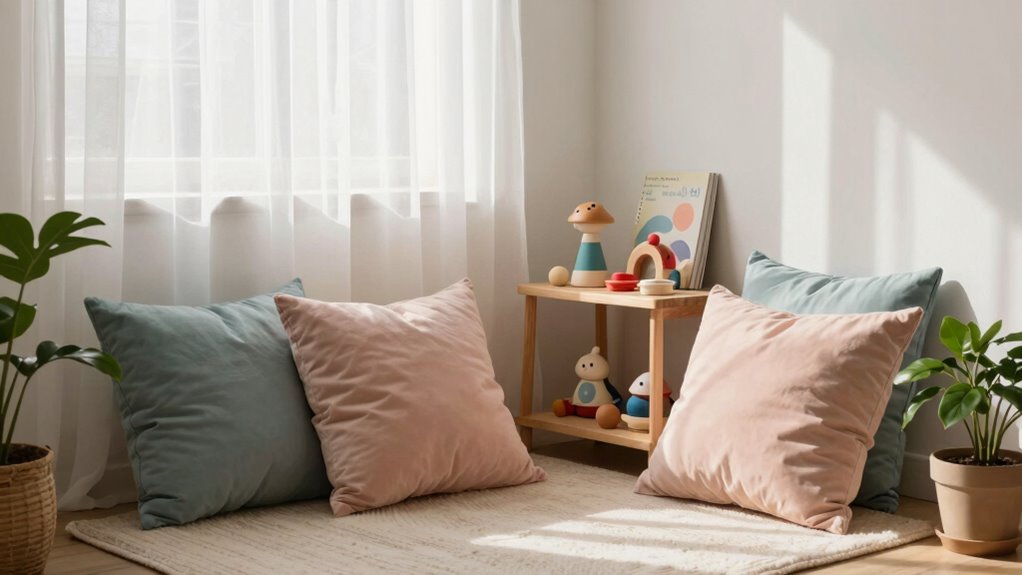
Calm-down corners have become a popular strategy in classrooms and homes for helping children manage their emotions effectively. When you set up a space that’s inviting and functional, it becomes easier for kids to recognize when they need a break and to use the corner as a safe place to self-regulate. One key to making these corners work is thoughtful space organization. You want to create a designated area that’s distinct from the rest of the room, free from clutter, and easy for children to access independently. Clear boundaries, whether through rugs, furniture, or visual cues, help children understand that this is their space for calming down. Keep the layout simple and inviting, with enough room for children to sit comfortably or lie down if needed.
A well-organized calm-down corner helps children recognize their space for self-regulation and emotional comfort.
In addition to space organization, incorporating sensory tools is essential. These tools serve as anchors for children to engage their senses in a calming way, helping them regain control of their emotions. Popular sensory tools include soft blankets, stress balls, fidget toys, or textured fabrics. When these tools are easily accessible, children can choose what feels best for them in the moment, fostering a sense of autonomy. The key is to keep these tools organized and within reach, so children don’t have to search for them or feel overwhelmed. Use small baskets, containers, or shelves to neatly store sensory items, making it quick and easy for kids to grab what they need. Additionally, understanding the importance of emotional regulation can motivate children to use the space proactively. Creating a consistent routine around the use of the calm-down corner helps reinforce these skills and builds emotional awareness.
The effectiveness of a calm-down corner hinges on consistency and routine. When children learn to recognize the corner as a safe space, they develop trust in their ability to self-regulate. Encourage children to use the corner whenever they feel overwhelmed, angry, or upset, rather than waiting until emotions escalate. Reinforce this by modeling calm behavior yourself and explaining that the corner is a tool they can use anytime they need a break. Over time, children will begin to associate the space with comfort and control, which reduces emotional outbursts and promotes self-awareness. Establishing a consistent routine can also help children internalize emotional regulation as a normal part of their daily life. Additionally, creating an environment that supports positive emotional habits can help children build resilience and confidence in managing their feelings.
Lastly, keep the environment warm and welcoming. Use soft lighting, calming colors, and gentle decor to make the space inviting. When children feel comfortable in their calm-down corner, they’re more likely to use it proactively, rather than as a last resort. By combining thoughtful space organization with sensory tools and a nurturing environment, you create a calm-down corner that truly supports children in managing their emotions effectively. A well-designed space also promotes a sense of security, making children more willing to explore and practice their emotional regulation skills.

Squishy Fidget Sensory Toys for Kids, Calming Down Sensory Tools for Autism Autistic Special Needs, Sensory Bin Squeeze Toys for Classroom Prize, Travel Toys,Easter Gifts for Kids Toddlers
- Patented Sensory Toy Design: Suitable for all ages, reduces stress
- Quiet Classroom Fidgets: Silent, non-distracting sensory tools
- Calming Autism Sensory Tools: Helps children focus and relax
As an affiliate, we earn on qualifying purchases.
As an affiliate, we earn on qualifying purchases.
Frequently Asked Questions
How Long Should a Child Stay in the Calm-Down Corner?
You should keep a child in the calm-down corner for about 5 to 10 minutes, following duration guidelines that suit their age and needs. Observe their behavior and wait until they seem calmer before guiding them back to activities. Effective implementation strategies include setting clear time limits, providing comforting items, and using gentle reminders. This approach helps children learn self-regulation without feeling overwhelmed or rushed.
Can Calm-Down Corners Be Effective for Teenagers?
Yes, calm-down corners can be effective for teenagers. You create a space that promotes teen mental health, emotional regulation, and self-awareness. By offering a dedicated area where teens can pause, breathe, and reflect, you help them develop coping skills. Teenagers benefit from a calm environment that supports their emotional growth, reduces stress, and encourages independence, making the calm-down corner a valuable tool for managing intense feelings.
What if a Child Refuses to Use the Calm-Down Corner?
If a child resists using the calm-down corner, you should first acknowledge their feelings and explore why they’re resistant. Child resistance can stem from feeling overwhelmed or misunderstood. Instead of forcing them, try alternative strategies like deep breathing exercises, a quiet activity elsewhere, or a quick walk outside. By offering options, you empower your child to find what works best, reducing resistance and helping them manage their emotions effectively.
Are There Specific Toys or Tools That Work Best?
You should choose sensory toys and calming tools that appeal to your child’s senses, like soft plush toys, fidget spinners, or textured objects. Items such as calming jars, scented playdough, or stress balls help your child self-regulate. Keep these tools within easy reach and rotate them regularly to maintain interest. The goal is to create a inviting space that encourages your child to use the calm-down corner independently.
How Do I Introduce the Calm-Down Corner to My Child?
You introduce the calm-down corner by engaging your child with warmth, patience, and consistency. Use simple language to explain its purpose, emphasizing parent involvement and emotional regulation. Show them how to use the space when upset, guiding them gently through calming activities. Encourage your child to see the corner as a safe place for emotional regulation, making it a familiar, comforting part of their routine. Over time, their independence will grow.
Conclusion
Creating a calm-down corner is like planting a gentle oasis amid chaos. When you set it up with soothing colors, soft textures, and calming tools, you craft a safe harbor where feelings can settle like leaves floating on still water. It’s your secret garden of peace, inviting children to breathe, relax, and regain their balance. With patience and care, this space becomes a lighthouse guiding little ones back to calm shores, one gentle wave at a time.