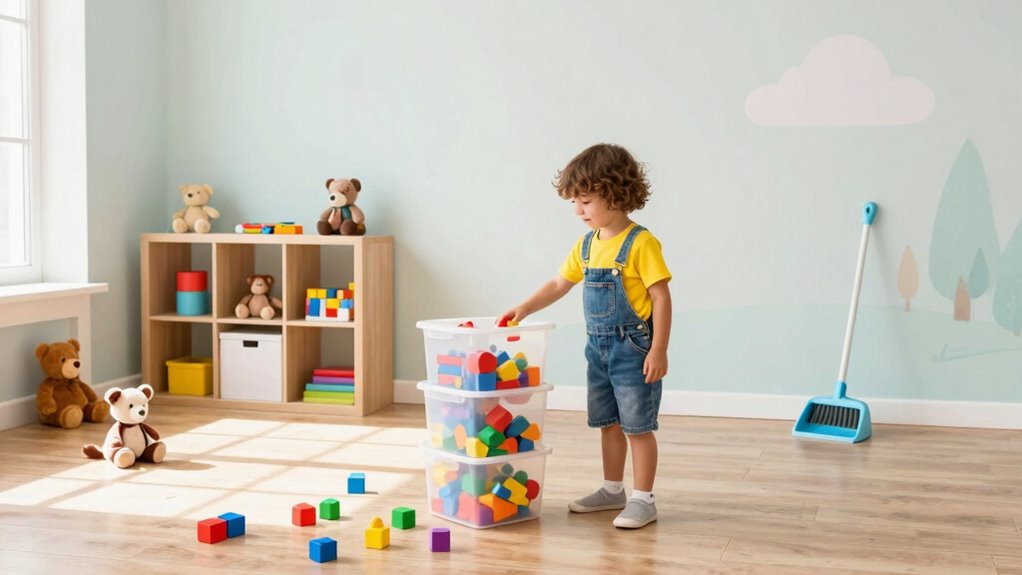

To make cleanup easier for young kids, use motivation like genuine praise and small incentives such as stickers or extra playtime. Turn the task into a fun game with upbeat music or timers, and give clear, simple instructions broken into manageable steps. Incorporate visual cues, like labeled bins or pictures to guide them, and establish a predictable routine. Keep these strategies in mind, and you’ll discover more ways to encourage responsible cleanup habits.
Key Takeaways
- Use visual cues and labeled bins to make sorting and tidying intuitive for children.
- Incorporate fun elements like music, timers, or games to motivate kids during cleanup.
- Break cleanup tasks into simple, manageable steps to prevent overwhelm.
- Offer genuine praise and small incentives to encourage cooperation and positive behavior.
- Establish consistent routines and specific times for cleanup to build responsible habits.
Cleaning up can be a challenge with young kids, but making the process easier is entirely possible with the right strategies. One effective way to encourage cooperation is to incorporate motivational strategies that resonate with your child. Kids respond well when they feel rewarded or recognized for their efforts. Praise them genuinely when they help clean up, and consider small incentives like stickers or extra playtime. These positive reinforcements can transform cleanup into a game rather than a chore, motivating your child to participate willingly.
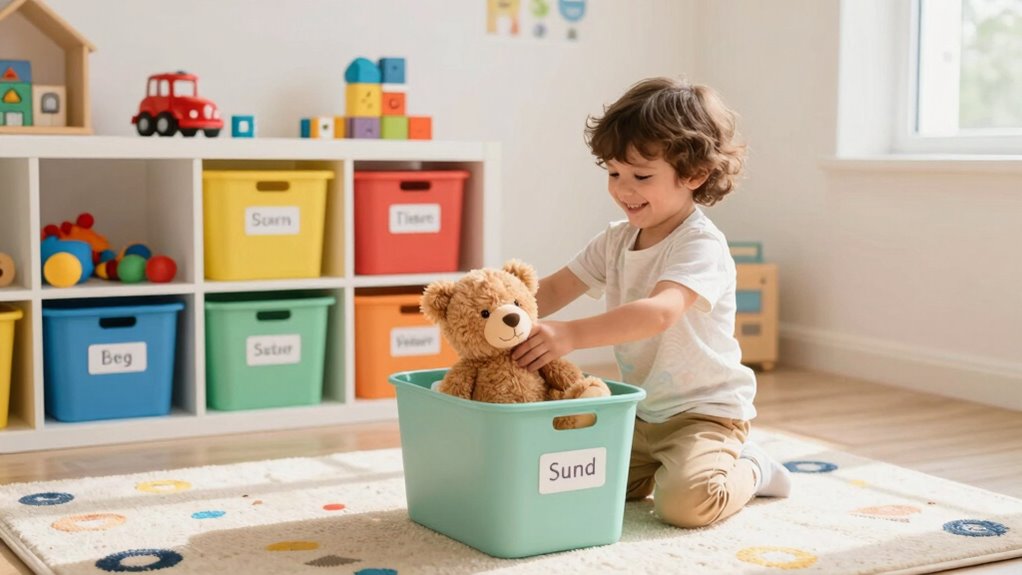
Another way to streamline cleanup is by using organizational tools that make tidying up straightforward and engaging. Clear, labeled bins for different toy categories help kids quickly identify where items belong, reducing confusion and frustration. Low shelves and accessible storage containers allow children to independently pick up their belongings without needing constant supervision. Visual cues, such as pictures on storage bins, can also guide your child in knowing exactly where each item goes, fostering independence and responsibility. Incorporating Visual cues and clear organization can further support your child’s understanding of their space.
Creating a routine is key. Set specific times for cleanup—like after playtime or before dinner—so it becomes a predictable part of the day. When you establish a consistent schedule, your child starts to expect and accept cleanup as a normal part of daily life. To make this routine even more effective, turn it into a fun activity. Use upbeat music or countdown timers to add an element of excitement, turning what might seem like a boring task into a lively event. This not only makes cleanup more enjoyable but also helps your child develop good habits that stick.
Keep the process simple and age-appropriate. Break down cleanup tasks into manageable steps, and give clear instructions. For example, instead of saying, “Clean your room,” try “Let’s put the blocks in the red bin and the books on the shelf.” This clarity prevents overwhelm and makes the task feel achievable. Consistency is essential—if your child knows what’s expected and sees you following the same routines, they’re more likely to adopt these habits themselves. Additionally, understanding biodiversity and its importance can inspire children to care about their environment and foster a sense of responsibility beyond their immediate space. Recognizing nature awareness and how ecosystems function can motivate children to keep their surroundings clean and appreciate their environment, creating a sense of pride and stewardship. Incorporating environmental responsibility into your teachings can further reinforce the importance of maintaining a clean and healthy space. Developing an understanding of ecosystems and how they depend on clean environments can deepen their appreciation for environmental care. Lastly, be patient and flexible. Some days will be easier than others, and that’s okay. Celebrate small victories and avoid punishment if cleanup isn’t perfect. By combining motivational strategies with practical organizational tools and creating a positive, predictable routine, you can considerably reduce the stress and resistance often associated with cleanup time. Over time, your child will learn to take responsibility for their space, making the process smoother for everyone involved.
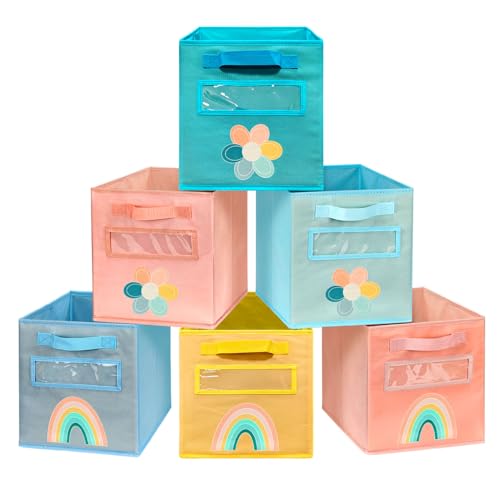
Cube Storage Bins, 6 Pack 11 Inch Fabric Storage Bins with Handle and Label Window, Foldable Storage Cubes, Colorful Fabric Bins for Kids Room, Classroom Organization and Storage, Clothes, Toys
Designed for Cube Storage: The collapsible storage bin a size of 10.6 x 10.6 x 11.2 inches, perfectly…
As an affiliate, we earn on qualifying purchases.
As an affiliate, we earn on qualifying purchases.
Frequently Asked Questions
How Can I Motivate My Child to Clean up Willingly?
You can motivate your child to clean up willingly by using positive reinforcement and creative incentives. Praise their efforts sincerely and offer small rewards when they complete tasks. Turn cleanup into a fun game or challenge, making it more engaging. When you recognize their achievements, they’re more likely to develop a positive attitude toward tidying up. Consistent encouragement and inventive incentives help foster independence and make cleanup time less of a chore.
What Tools Make Cleanup Faster for Young Kids?
Using tools like toy organization bins and labeled storage containers speeds up cleanup for young kids. Implementing consistent cleanup routines helps them understand what to do, making the process quicker and more manageable. Encourage your child to use a toy bin for each type of toy and set a timer to make cleanup fun. These tools and routines motivate them to tidy up independently, reducing your workload and fostering good habits.
How Do I Handle Resistance During Cleanup Time?
When resistance hits during cleanup, you handle it with firm, calm behavior management and positive reinforcement. Stay consistent, set clear expectations, and offer praise when they cooperate. Use gentle reminders rather than harsh words, and turn cleanup into a game or challenge to motivate them. By maintaining patience and focusing on encouraging behavior, you help your child develop a positive attitude toward tidying up and reduce resistance over time.
When Is the Right Age for Independent Cleaning?
You can start encouraging independent cleaning around age 3 or 4, as this aligns with typical age milestones when children develop better motor skills and understand routines. The right independence timing varies, so observe your child’s readiness—if they enjoy helping and can manage simple tasks, it’s a good sign. Gradually increase responsibilities, offering praise to build confidence and foster a sense of accomplishment.
How Can I Teach Kids About Cleaning Responsibilities?
Did you know kids as young as three can start learning cleaning responsibilities? To teach them, create simple cleaning routines they can follow daily. Make tasks fun and age-appropriate, like putting away toys or wiping surfaces. Encourage responsibility development with praise and consistency. Show them how cleaning helps everyone and turn chores into games, so they enjoy participating and build good habits early on.

Fun Magnetic Reward Chart for Kids at Home – Motivational Easy to Use Chore Chart w Stickers Encourages Good Habits – Unicorn Behavior & Responsibility Chart for Girls Creates a Fun Daily Routine
Make Routines Fun & Rewarding: ZICOTO’s beautiful chore chart for kids turns daily tasks into a game! Encourage…
As an affiliate, we earn on qualifying purchases.
As an affiliate, we earn on qualifying purchases.
Conclusion
Making cleanup fun and simple for your young kids not only teaches responsibility but also builds good habits early on. Remember, kids as young as three can start learning to tidy up, and studies show that children involved in chores are more likely to develop a sense of independence and confidence. By turning cleanup into a game or routine, you’ll foster a positive attitude toward chores, making the process smoother for everyone and helping your little ones develop lifelong skills.

HIPPIH Visual Timer for Kids – 60 Minute Pomodoro Timers for Classroom Kitchen Office, Countdown Kids Timer Clock with Rainbow Disk, Desk Time Management Tool for Toddler with Silent Operation, Blue
【Lively Rainbow Pomodoro Timer】Our visual timer boasts a rainbow pattern to capture kids' attention. Ease their reluctance and…
As an affiliate, we earn on qualifying purchases.
As an affiliate, we earn on qualifying purchases.

Comfy Cubs Kids Bookshelf 35.2 x 15.7 x 31.5 Inches – Sturdy MDF Montessori Book Shelf with Soft & Hard Shelves for Toys & Books – Child-Friendly, Easy Access Storage Organizer for Kids – Sage
Easy Access Kids Book Shelf: Designed at a child-friendly height, Comfy Cubs bookshelf for kids enables your little…
As an affiliate, we earn on qualifying purchases.
As an affiliate, we earn on qualifying purchases.