
To encourage independent play in busy families, create a safe, inviting outdoor space with clear boundaries where your child can explore freely. Establish routines by setting regular, predictable times for solo play, starting with short periods and gradually increasing. Support their independence by modeling activities like gardening or reading, and praise their efforts to build confidence. Consistent routines and accessible areas help your child feel secure and enthusiastic to explore — and if you keep going, you’ll find even more practical strategies.
Key Takeaways
- Designate safe, accessible outdoor spaces with engaging toys and nature objects for easy independent exploration.
- Establish predictable routines with short, regular periods of solo outdoor play to build confidence gradually.
- Model independent activities like gardening or reading to inspire children to explore on their own.
- Incorporate outdoor play into daily routines, reinforcing positive experiences through praise and encouragement.
- Keep adult supervision nearby for reassurance while encouraging children to explore independently.
In busy families, finding time for independent play can seem challenging, but it’s essential for your child’s development and your own peace of mind. Encouraging your child to play independently helps build confidence and fosters creativity, even amidst hectic schedules. One effective way to do this is by integrating outdoor activities into daily routines. Outdoor play naturally promotes independence because it allows your child to explore, make decisions, and engage with their environment without constant oversight. When you set up a safe, inviting outdoor space, your child learns to entertain themselves, which strengthens their ability to focus and problem-solve on their own.
Outdoor play encourages independence, exploration, and problem-solving in children, fostering confidence and creativity amidst busy routines.
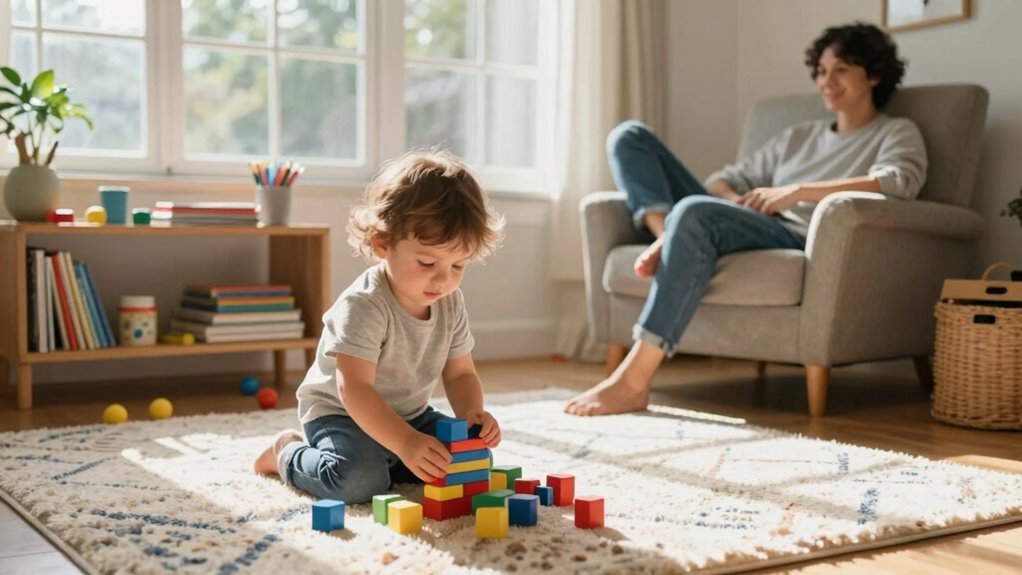
Parent-child bonding remains vital, but it doesn’t always have to come from direct interaction. Instead, you can create opportunities for your child to play independently while you’re nearby. For example, spend time together setting up a designated play area outdoors filled with toys, art supplies, or nature objects. Once everything is arranged, encourage your child to explore and play on their own while you relax nearby. This approach reassures them that you’re present, fostering trust and security, which are key for independent play to flourish. Over time, your child will learn to enjoy solo activities, and you’ll discover moments of peace to tend to your own tasks or relax.
You can also establish routines that promote independence by setting consistent times for solo play. For instance, after a shared activity or a family meal, suggest a period where your child can play alone while you prepare dinner or complete household chores. Keep these periods short initially—around 10 to 15 minutes—and gradually extend them as your child becomes more comfortable playing on their own. Praise their efforts to entertain themselves and show enthusiasm for their independent activities. This positive reinforcement encourages them to view independent play as a rewarding experience, not just a break from interaction. Incorporating structured routines can further support your child’s ability to develop independence and self-regulation in a busy household. Additionally, establishing a predictable environment helps children feel secure and more willing to engage in independent activities regularly. Creating a safe outdoor environment is also crucial, as it provides children with the space and confidence to explore freely without unnecessary risks. Furthermore, consistent boundaries can help children understand limits while still allowing room for exploration.
Additionally, incorporating small outdoor spaces into your daily routine can greatly enhance opportunities for independent play, as they provide a safe environment for children to explore freely. Creating a designated area that is easily accessible and clearly defined can encourage your child to spend more time playing on their own without feeling overwhelmed. Lastly, model independent behavior yourself. When you engage in outdoor activities like gardening, walking, or reading outside, let your child see you doing these things alone or in a self-directed way. Children learn a lot by observing, and your example helps them understand that independent play and activities are normal and enjoyable. By creating a safe, structured environment and showing patience, you help your child develop the skills to play independently, even in a busy household. The more you encourage outdoor activities and parent-child bonding through shared but independent experiences, the more your child will thrive in their ability to entertain themselves confidently.
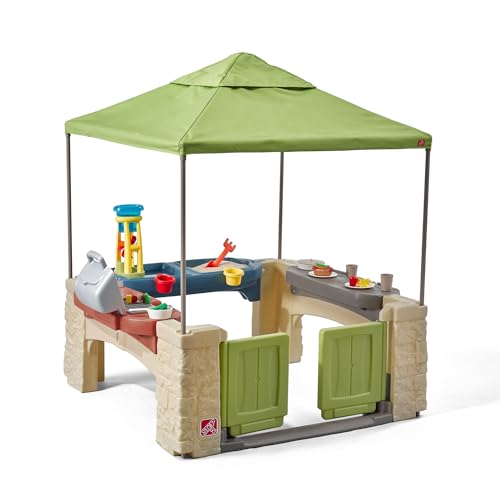
Step2 All Around Playtime Patio with Canopy Playset – Shaded Outdoor Playhouse for Kids with Realistic, Interactive Features, Room for Multiple Toddlers to Play – Dimensions: 60" H x 47.5" W x 47.5" D
- Fun Play Features: Pretend grill, countertop, water and sand table
- Interactive Play: Includes wheelchair access and 16-piece kitchen set
- Removable Canopy: Provides sun protection or indoor use
As an affiliate, we earn on qualifying purchases.
As an affiliate, we earn on qualifying purchases.
Frequently Asked Questions
How Can I Start Independent Play With a Very Young Child?
You can start independent play with your young child by creating a safe, inviting play environment setup that encourages exploration. Begin with short, supervised periods of independent play while engaging in parent-child bonding during changes. Use simple toys and accessible materials to build confidence. Gradually extend playtime, praising their efforts. This approach fosters independence, strengthens your bond, and helps your child feel secure exploring on their own.
What Are Some Signs My Child Is Ready for Independent Play?
You’ll notice your child’s curiosity sparks, and they happily engage in solo activities—this hints they’re ready for independent play. Signs include minimal sibling rivalry, as they’re confident exploring alone, and a keen interest in their play environment. When they can focus on tasks, show enthusiasm for solo activities, and return to play independently after interruptions, it’s a clear sign they’re comfortable and ready to explore on their own.
How Do I Handle Separation Anxiety During Independent Play?
When handling separation anxiety during independent play, start with short periods and gradually increase them. Reassure your child with comforting words and a familiar routine. Incorporate group activities or outdoor exploration to make playtime more engaging and less intimidating. Stay nearby initially, offering encouragement, and praise their independence. Over time, your child will feel more secure, making independent play a natural and enjoyable part of their routine.
What if My Child Refuses to Play Alone?
If your child refuses to play alone, start by establishing consistent family routines that include designated independent playtimes. Create an inviting playroom setup with age-appropriate toys and cozy spaces, making independence appealing. Gently encourage your child to explore on their own, gradually increasing playtime. Stay close initially, offering reassurance, and celebrate small successes. Over time, these routines and environment will help your child feel more comfortable and confident playing solo.
How Can I Incorporate Independent Play Into a Hectic Schedule?
You can incorporate independent play into your hectic schedule by practicing smart time management. Dedicate small blocks of time each day for your child to play alone, gradually increasing these periods. Guarantee a well-organized playroom setup with engaging, age-appropriate toys that encourage exploration. This way, your child learns to play independently while you manage your busy day, creating a balance between supervision and independence seamlessly.
Conclusion
By fostering independent play, you’re planting seeds of confidence and creativity in your little ones, even amidst your busy schedule. Think of it as giving them wings to soar on their own while you catch your breath. With patience and encouragement, you transform your home into a playground of possibilities where your kids learn to explore and grow independently. Remember, a little bit of space today nurtures a confident, capable child tomorrow.