

To create healthy toy boundaries without constant conflict, start by having open conversations about preferences and explain sharing as a way to let others enjoy toys temporarily. Establish routines for play and cleanup, making them fun and consistent. Clearly define which toys have special rules and reinforce these boundaries gently but firmly. Involving kids in decision-making and explaining the reasons behind limits helps foster respect. Keep boundaries clear and consistent to prevent confusion and build a respectful sharing environment—if you want to learn more, continue exploring tips for smoother toy management.

Get baby and family essentials delivered free — and shop member deals
- Fast, free delivery on millions of items
- Access to Prime Big Deal Days deals on October 6–7
- Prime Video, Amazon Music and more included
Key Takeaways
- Clearly define which toys are shareable and which are off-limits, explaining the reasons kindly and consistently.
- Involve children in setting rules and boundaries to promote understanding and ownership.
- Use routine and visual cues to reinforce boundaries and expectations around toy sharing.
- Communicate openly about the importance of respect and environmental awareness to foster cooperation.
- Address boundary violations calmly, reinforcing rules without leniency to maintain consistency and safety.
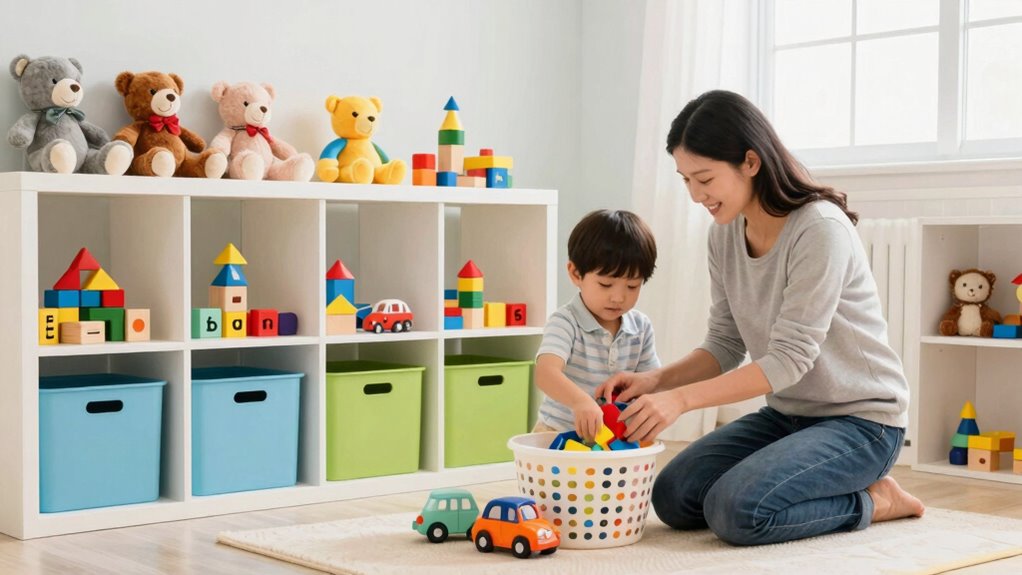
Ever wonder how to set healthy boundaries around your child’s toys? It’s a common challenge, especially when conflicts over sharing toy preferences often pop up. To make things smoother, start by having open conversations with your child about their favorite toys and why they feel attached to them. Help them understand that sharing doesn’t mean giving up what they love forever but rather allowing others to enjoy it too. When your child feels involved in the decision-making, they’re more likely to respect boundaries and develop a sense of ownership without feeling forced or resentful. Encourage them to express their preferences, but also remind them that respecting others’ choices is just as important.
Establishing clear, consistent routines around toy management can greatly reduce conflicts. One effective approach is creating designated times and places for play and cleanup. For example, you might set a routine where toys are put away before mealtime or bedtime, helping your child understand that tidying up is a part of the daily routine, not just a chore. Making cleanup a fun activity by singing a song or setting a timer can make the process feel less like a battle. When your child knows what to expect and understands that cleaning routines are a regular part of their day, they’re less likely to resist or argue. Additionally, understanding the importance of biodiversity and sustainable living practices can help foster respect for shared resources and belongings, promoting a more cooperative attitude about toy boundaries. Incorporating a sense of environmental awareness into your conversations can further reinforce the value of respecting shared items and resources. Recognizing how conservation relates to everyday choices can also help your child see the bigger picture beyond their immediate environment. Developing an understanding of ecosystem health can emphasize how individual actions impact the environment, encouraging responsible behavior. Creating awareness about environmental impact can foster responsible behavior and respect for shared belongings.
It’s also helpful to set boundaries around who can play with certain toys. For example, some toys might be off-limits for sharing or require special care, like fragile or expensive items. Explain these boundaries clearly and kindly, emphasizing safety and respect for belongings. If your child objects, listen to their concerns and validate their feelings, but keep the boundaries firm. Consistency is key — if you occasionally let things slide, your child might become confused about what’s acceptable. Reinforcing these rules gently but firmly helps your child learn that boundaries are in place to keep everyone happy and safe.
As an affiliate, we earn on qualifying purchases.
Frequently Asked Questions
How Early Should Boundaries Be Introduced to Children?
You should introduce boundaries early, around age one or two, when children start understanding social cues. Start with simple rules for toy sharing and clearly explain boundary enforcement. Consistently reinforce these boundaries, so your child learns respect and patience. By setting expectations early, you help prevent conflicts later, making toy sharing smoother. Keep boundaries consistent and age-appropriate, encouraging positive interactions and teaching your child healthy ways to navigate playtime.
What Are Signs Boundaries Are Being Respected?
When boundaries are respected, toy sharing flows smoothly like a gentle stream. You’ll notice your child patiently waits their turn, shows empathy when a peer is upset, and manages their emotions during conflicts. These signs indicate emotional regulation and understanding of boundaries. You’ll see cooperation, reduced tantrums, and mutual respect, telling you that healthy limits are in place and foster positive interactions without constant conflict.
How to Handle Boundary Violations Calmly?
When boundary violations happen, stay calm and use gentle words to remind your child about toy sharing and respecting limits. Take deep breaths to regulate your emotions and model emotional regulation for your child. If needed, step away for a moment before addressing the situation, helping your child understand boundaries without conflict. Consistent, calm responses teach your child that respecting boundaries is important and helps prevent future violations.
Are There Age-Specific Boundary Strategies?
Yes, age-specific boundary strategies work well. For younger kids, focus on simple rules about toy sharing and gentle reminders to respect each other’s space. As kids grow, encourage respectful communication to resolve conflicts, teaching them to express their feelings and listen. Tailor your approach to their developmental stage, reinforcing boundaries consistently. This way, you promote healthy toy sharing habits and minimize conflicts at every age.
How to Involve Children in Boundary-Setting?
Research shows children involved in boundary-setting develop better emotional understanding and cooperation. To involve your child, use open parental communication, asking for their input and explaining reasons behind boundaries. Encourage them to express feelings and listen actively, making them feel valued. When kids participate in these discussions, they’re more likely to respect boundaries, reducing conflicts and fostering a sense of ownership and responsibility over shared spaces and toys.
Conclusion
By setting clear, gentle boundaries around toys, you’re planting seeds of respect and understanding in your child’s world. Imagine a peaceful playground where shared laughter echoes, and everyone knows their space. With patience and consistency, those boundaries become a sturdy fence—protecting innocence while encouraging kindness. As you nurture this harmony, you’ll watch conflicts fade like shadows at dawn, replaced by the bright glow of trust and cooperation lighting the way for a joyful, balanced playtime.
Cold & flu season Picks
humidifiers
As an affiliate, we earn on qualifying purchases.