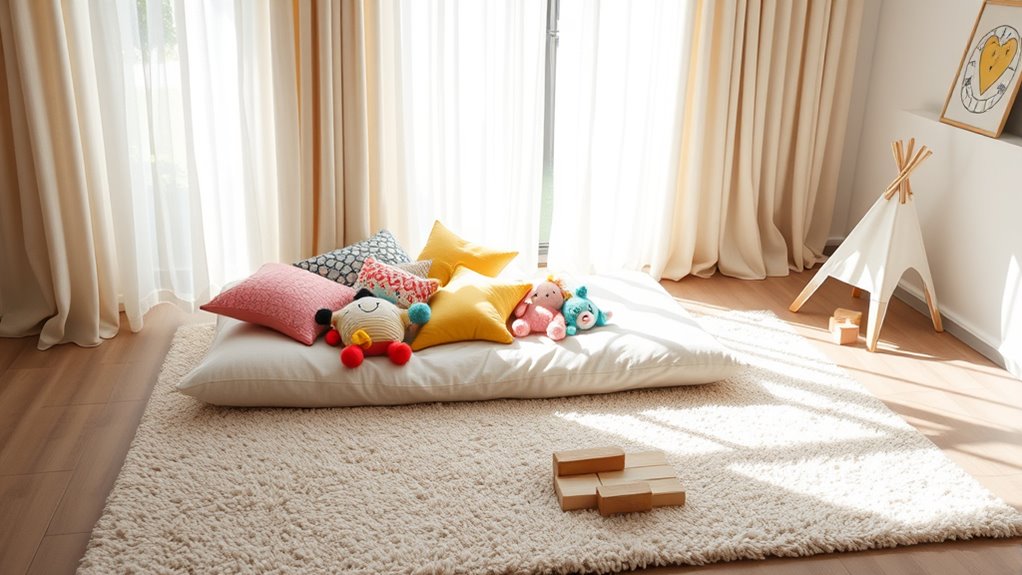

When setting up a floor bed for play, prioritize safety by choosing sturdy, non-toxic materials and ensuring the area is free from sharp edges or heavy objects. Keep the surroundings clutter-free, add soft rugs for cushioning, and consider safety features like corner protectors. A low bed promotes independence, encourages creative play, and supports healthy sleep routines. For more tips on creating a safe and fun space, keep exploring helpful strategies.
Key Takeaways
- Ensure the bed is sturdy, low to the ground, and free of hazards for safe climbing and easy supervision.
- Use soft rugs or mats around the bed to cushion falls and create a cozy play zone.
- Select non-toxic, child-friendly materials for bedding and furnishings for safety and health.
- Keep the surrounding area clutter-free to prevent accidents and facilitate safe exploration.
- Incorporate safety features like corner protectors and good ventilation to promote a secure environment.
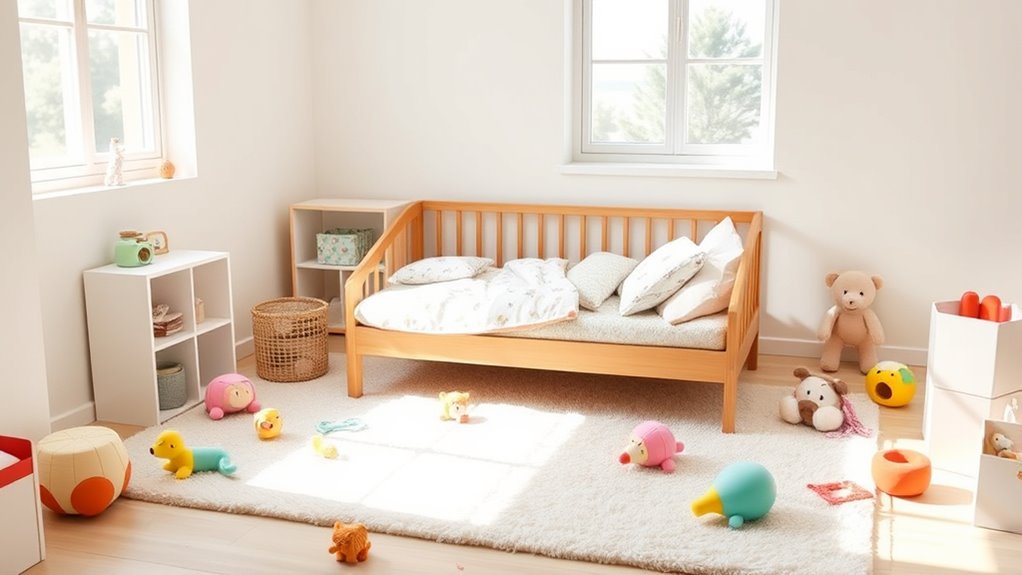
Have you ever considered how a floor bed can transform your child’s play and sleep routines? This simple yet versatile furniture choice encourages independence, creativity, and comfort, but it also requires careful thought to guarantee it’s a safe and beneficial addition to your home. Safety considerations are paramount when choosing and setting up a floor bed. You want to make sure the area is free from sharp edges, heavy furniture, or objects that could pose a risk if your child rolls or moves around at night. Using soft rugs or mats around the bed can cushion falls and create a cozy play zone. It’s also essential to verify that the bed itself is sturdy, with no loose parts or splinters, and that it’s low enough to prevent injury if your child gets out of bed unsupervised. Regularly checking the bed’s stability and the surrounding space helps maintain a safe environment. Additionally, selecting non-toxic and child-friendly materials for bedding and furnishings enhances safety and health. Beyond safety, a floor bed offers numerous developmental benefits that support your child’s growth. Because it’s close to the ground, it allows your child to freely explore their surroundings, promoting motor skills and spatial awareness. They can crawl, climb, and step in and out of bed independently, which fosters confidence and a sense of control over their environment. This setup encourages imaginative play, as children often see their space as a blank canvas for creativity. They might turn the bed into a fort, a spaceship, or a cozy nook, which boosts their cognitive and emotional development. The open design also facilitates better parent-child interaction, as you can easily supervise and engage with them during play or bedtime routines. Choosing a floor bed aligns with developmental milestones, especially for toddlers and preschoolers. It supports their natural desire for autonomy while providing a safe space for rest and exploration. Since they can get in and out without assistance, it reduces frustration and promotes independence. This setup can also help establish healthy sleep habits, as children often feel more comfortable and secure in a familiar, inviting environment. When considering a floor bed, think about the materials, size, and layout to optimize both safety and developmental benefits. Keep the area clutter-free and ensure the bedding and surroundings are non-toxic and child-friendly. Incorporating safety precautions such as corner protectors and ensuring adequate ventilation can further create a secure environment. In essence, a thoughtfully chosen and properly arranged floor bed can be a game-changer, creating a safe haven for your child’s sleep and a stimulating space for play. By paying attention to safety considerations and embracing the developmental benefits, you help foster a nurturing environment where your child can thrive physically, emotionally, and creatively.
Frequently Asked Questions
What Safety Features Should I Look for in a Floor Bed?
When choosing a floor bed, look for a sturdy bed frame with smooth, rounded edges to prevent injuries. make certain the mattress height is low enough so your child can get in and out safely without falling. Check that the bed frame is stable and free of sharp corners or splinters. A secure, well-designed frame helps create a safe sleeping environment, giving you peace of mind as your child explores their space.
How Can I Encourage Safe Play on a Floor Bed?
To promote safe play on a floor bed, you should set clear boundaries and keep an eye on your child at all times. Use soft, age-appropriate toys to encourage active play and avoid sharp or small objects that could be hazardous. Regularly inspect the floor bed for safety and guarantee it’s free of clutter. Creating a safe, inviting environment helps your child explore confidently while minimizing risks.
Are There Specific Materials Best for a Child’s Floor Bed?
You should choose natural, hypoallergenic materials like organic cotton or wool for your child’s floor bed, ensuring comfort and safety. These materials blend seamlessly with your bedroom decor and promote better sleep training by creating a cozy, inviting space. Avoid synthetic fabrics that may cause allergies or discomfort. Prioritize breathable, soft textiles to encourage safe play and restful sleep, making the room both functional and soothing for your little one.
How Do I Transition My Child to a Floor Bed?
You can shift your child to a floor bed by establishing consistent sleep routines and keeping their bedroom organized. Start by introducing the bed during daytime, letting them explore it comfortably. Keep bedtime routines predictable, like reading a story or singing a song. Make sure the bedroom is clutter-free and inviting, so they feel secure. With patience and consistency, your child will adapt to their new sleep space more easily.
What Are the Biggest Safety Hazards Associated With Floor Play?
Imagine your child’s play area as a treasure island—you want it safe and free of hidden dangers. Hazardous objects like sharp toys or small choking risks can turn this adventure into a peril. Keep a vigilant eye for choking hazards and remove hazardous objects that could cause injuries. Regularly inspect the space to guarantee no small items or sharp edges remain, creating a safe playground where your child can explore freely and securely.
Conclusion
Choosing a floor bed and creating a play space is like planting a seed of independence and imagination. As you lay the foundation, you’re nurturing a safe ground where your child can explore freely, grow strong, and dream big. Remember, this simple setup becomes a symbol of trust and adventure—an open field where curiosity blossoms and every day offers new discoveries. Embrace this space, and watch your child’s confidence flourish like a garden in full bloom.