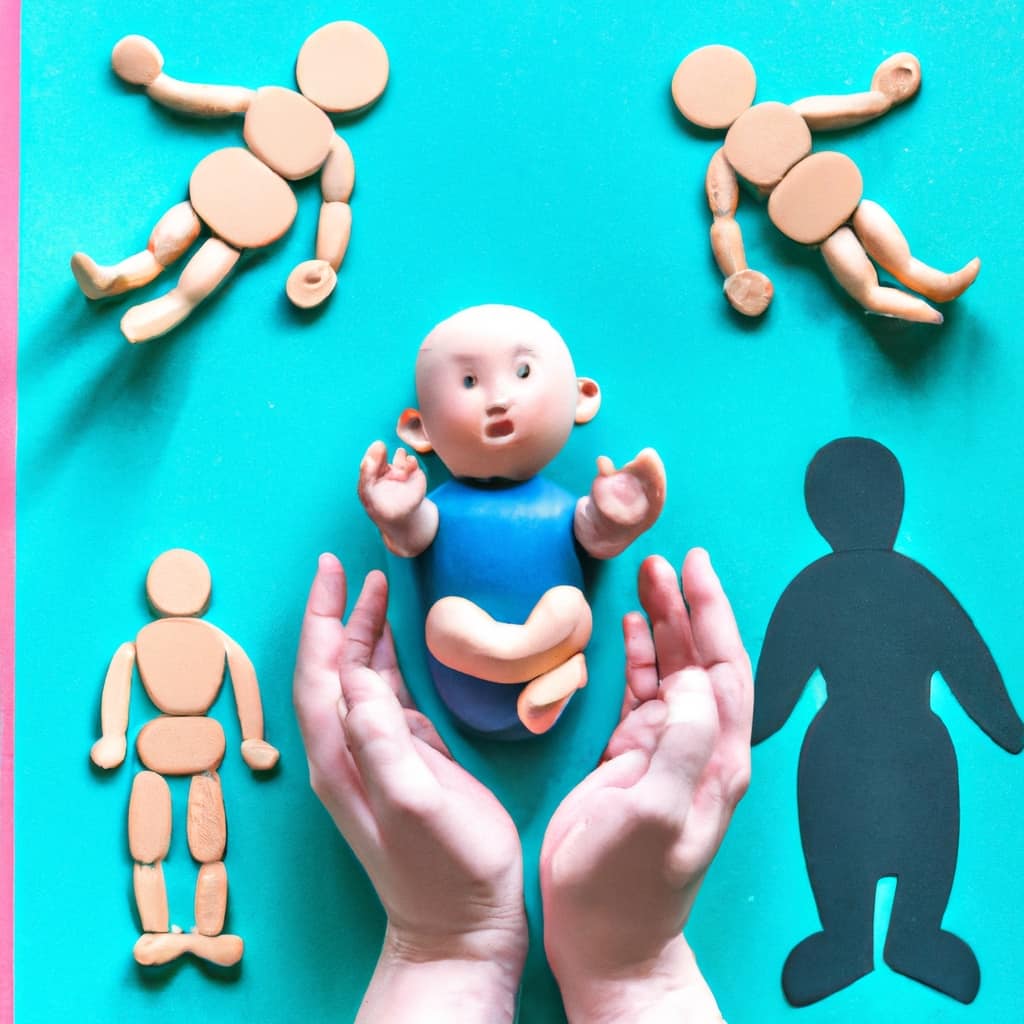
Between birth and age five, your child develops key gross motor skills like sitting, crawling, standing, and walking with increasing confidence. In the first year, they push up, shuffle, and pull to stand; by ages one to two, they take unassisted steps and climb. Safe environments and active play support their progress, helping build strength, coordination, and confidence. Keep exploring these milestones as you help your child grow stronger every day.
Key Takeaways
- Infants develop muscle control for sitting, crawling, and standing between birth and 1 year.
- Between ages 1 and 2, children take their first unassisted steps and improve walking confidence.
- Safe, age-appropriate play environments promote active exploration and milestone achievement.
- Regular active play enhances coordination, strength, and supports healthy physical growth.
- Supervised practice and safe surfaces build confidence and help monitor progress toward gross motor milestones.
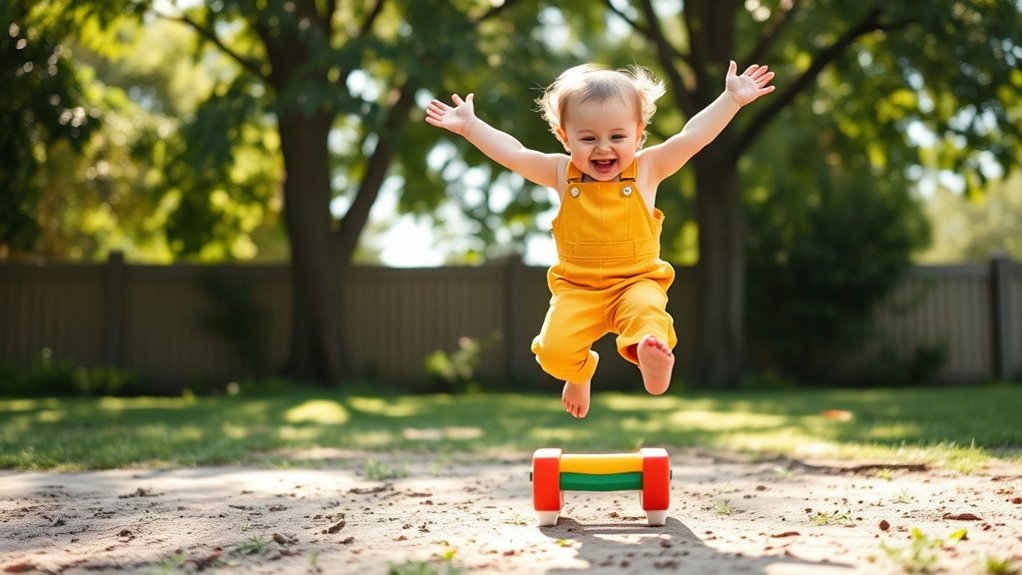
Gross motor milestones are key indicators of your child’s physical development. As your little one grows, you’ll notice them reaching important stages that show their muscles and coordination are developing properly. These milestones help you track their progress and ensure they’re on the right path. It’s also a good reminder to keep an eye on how they play, especially when it comes to playground safety. A safe environment encourages active play, which is essential for hitting these milestones. Playgrounds filled with age-appropriate equipment inspire kids to crawl, walk, and run while reducing the risk of injuries. Additionally, promoting physical activity through safe play can help combat childhood obesity, a growing concern in many communities. When your child learns to navigate playground structures safely, they build strength and confidence while staying active.
From birth to around one year, your baby will start developing the muscles needed for sitting and crawling. You might see them push up on their hands during tummy time or shuffle forward on their belly. These early movements are foundational and set the stage for walking. As they grow, their leg muscles strengthen, and they begin to pull themselves up to stand, often using furniture or your hands for support. Watching them stand with assistance is a big step, and practicing these movements under supervision on safe surfaces helps ensure they’re comfortable and confident. During this stage, incorporating play that encourages reaching and stretching can boost their coordination. Engaging in tummy time and supervised crawling on safe surfaces supports muscle development and prepares them for walking.
Between ages one and two, your toddler will likely take their first unassisted steps. Walking steadily, they start exploring their environment more independently. You’ll notice them climbing onto furniture or stepping over small obstacles. At this point, playground safety becomes even more critical. Keep an eye on their surroundings to prevent falls or injuries. Active play at this stage not only helps improve their balance and coordination but also encourages healthy habits that can curb childhood obesity over time. Providing opportunities for your toddler to run, jump, and climb in safe, supervised areas promotes muscle development and helps establish a love for physical activity early on.

TFDER Baby Gym Play Mat, 8-in-1 Tummy Time Mat & Activity Gym, Washable Ball Pit, Infant Play Mat with Detachable Toys for Sensory Exploration and Motor Skill Development
- Versatile 8-in-1 Baby Play Mat: Supports tummy time and early development
- Includes Sensory Toys and Mirror: Engages baby with sound and visual stimulation
- Safe, Soft, and Non-slip Material: Ensures safe exploration and easy cleaning
As an affiliate, we earn on qualifying purchases.
As an affiliate, we earn on qualifying purchases.
Frequently Asked Questions
How Can I Encourage My Child’s Gross Motor Development?
You can encourage your child’s gross motor development by creating a safe environment with playground safety in mind, allowing them to explore and practice climbing, jumping, and running. Incorporate tummy time routines to strengthen their core muscles, which helps with crawling and balance. Always supervise their activities closely, and offer plenty of encouragement. These steps will boost their confidence and support their physical growth during these vital early years.
What Are Signs of Delayed Gross Motor Milestones?
Think of your child’s development as a growing tree; if some branches lag, it’s noticeable. Signs of delayed gross motor milestones include difficulty sitting, crawling, or walking by age norms. Regular motor skill assessments and developmental screenings can spot these delays early. If your child struggles with balance or coordination, seek guidance from a healthcare professional to guarantee timely support and foster healthy growth.
Are There Specific Activities for Different Age Groups?
Yes, you should choose age-appropriate activities to support your child’s gross motor development. For infants, tummy time and gentle crawling help, while toddlers benefit from supervised walking, climbing, and jumping. Always prioritize activity safety by ensuring a safe environment, using appropriate equipment, and closely supervising your child. As your child grows, adapt activities to match their abilities, encouraging development while keeping safety a top priority.
How Do Gross Motor Skills Impact Overall Development?
You’ll find that strong gross motor skills boost overall development by enhancing sensory integration and fine motor abilities. Research shows that kids who develop these skills early are more likely to succeed academically and socially. When you support activities that improve coordination and balance, you’re helping your child build confidence, which positively influences their emotional growth and future learning opportunities. Strong gross motor skills truly lay the foundation for well-rounded development.
When Should I Consult a Specialist for Motor Delays?
You should consult a specialist if you notice persistent delays in your child’s gross motor skills, such as not crawling by 12 months or not walking by 18 months. Early intervention is vital, so schedule a developmental screening with a pediatrician if concerns arise. Prompt assessment can help identify underlying issues and guarantee your child gets the support they need to develop motor skills effectively.
Conclusion
By understanding these gross motor milestones, you can better support your child’s development. Did you know that most children learn to walk independently by around 12 months? Watching their progress is truly amazing. Remember, every child develops at their own pace, so celebrate each new skill they achieve. Staying engaged and encouraging movement helps foster confidence and strength. Keep exploring their abilities—you’ll be amazed at how quickly they grow and thrive!