
Magnet play involves exploring how magnets attract or repel each other, helping you understand fundamental physical principles in a fun way. You should always supervise children during play because small magnets can be a choking hazard or cause internal injuries if swallowed. Keep magnets away from electronic devices and cards to prevent damage. Choosing the right magnet type makes activities more exciting and safe. If you keep exploring, you’ll discover even more safe and engaging ways to enjoy magnetism.
Key Takeaways
- Magnets attract opposite poles and repel like poles, enabling engaging exploration of physical forces.
- Supervise children during magnet play to prevent swallowing or pinching hazards.
- Use appropriate magnets for activities, and keep electronic devices and credit cards away to avoid damage.
- Different magnet types (permanent, electromagnets, flexible) suit various educational and creative projects.
- Proper safety precautions enhance fun and learning while minimizing risks during magnet-based activities.
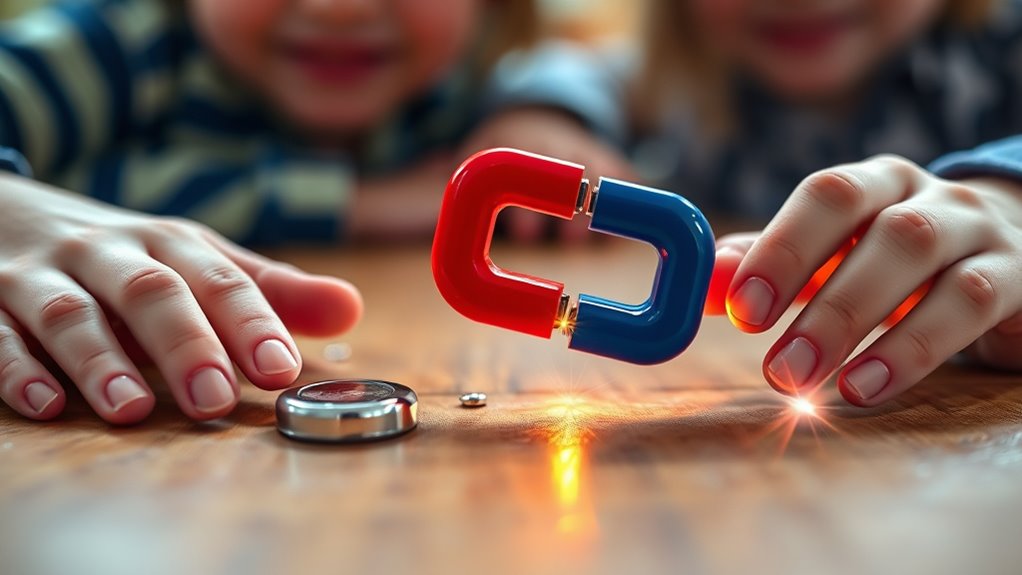
Have you ever wondered how magnets can turn simple materials into exciting playthings? The magic lies in their ability to attract and repel, creating engaging interactions that spark curiosity. As you explore magnet play, it’s essential to understand magnet safety and the different types of magnets involved. Magnet safety means being cautious about small parts that could pose a swallowing risk, especially for young children. While magnets are fascinating, swallowing multiple magnets can cause serious internal injuries, so supervision is vital. Also, avoid placing magnets near electronic devices or credit cards, as strong magnets can damage sensitive equipment. By keeping safety in mind, you can enjoy the wonders of magnet play without worry.
When it comes to types of magnets, you’ll find a variety to experiment with. The most common are permanent magnets, like those made from neodymium or ferrite, which retain their magnetic properties over time. These are powerful and perfect for building projects or creating magnetic art. Then there are electromagnets, which generate magnetic fields when an electric current flows through a coil. While not as straightforward for play, understanding electromagnets helps you see how magnetism works in real-world applications. Additionally, you’ll encounter flexible or sheet magnets, often used on refrigerators or whiteboards, which can be cut into different shapes for creative arrangements. Each type offers unique properties, so choosing the right magnet depends on your goals—whether building, experimenting, or simply playing. Furthermore, understanding magnetic properties can deepen your appreciation for how different magnets function and their applications. As you play, you’ll notice how magnets attract or repel objects based on their poles. When two opposite poles come close, they pull together; when like poles face each other, they push apart. This simple principle allows for countless fun activities like magnetic puzzles, levitating objects, or creating magnetic sculptures. Understanding the different types of magnets and their safety considerations ensures you can experiment freely while minimizing risks. Always check the strength of your magnets, especially if you’re working with small or delicate parts, and keep an eye on children to prevent accidental swallowing or pinching. With proper precautions, magnet play becomes not only entertaining but also a safe way to learn about physics and magnetism. By exploring these fundamentals, you’ll deepen your appreciation for how magnets can turn everyday objects into fascinating, hands-on experiences.

10Pcs Magnetic Travel Toys, Magnets Men for Kids, Cute Magnetic People
- Set of 10 Magnetic Toys: Vibrant colorful magnetic figures
- Strong Magnetic Connections: Built-in 4 sturdy magnets per toy
- Portable and Lightweight: Upgraded plastic case for easy carrying
As an affiliate, we earn on qualifying purchases.
As an affiliate, we earn on qualifying purchases.
Frequently Asked Questions
Are There Age Restrictions for Safe Magnet Play?
Yes, there are age restrictions for safe magnet play. Magnet safety and age guidelines recommend that children under age 14, especially those under age 8, should not handle small magnets alone. Young children might swallow or choke on magnets, risking serious health issues. Always supervise children during magnet play, follow manufacturer recommendations, and keep magnets out of reach of young kids to prevent accidents and guarantee safe, enjoyable play.
Can Magnet Toys Be Swallowed by Children?
Yes, magnet toys can be swallowed by children, especially younger ones who might put toys in their mouths. This can lead to serious health risks like magnetic interference inside the body, which can cause internal damage. To prevent accidents, choose durable toys with secure magnets and always supervise playtime. Keep small magnet pieces out of reach of children under age six, and make sure that toys are designed with safety in mind.
What Materials Are Safest for Magnet Toys?
You should choose magnet toys made from non-toxic, durable materials like high-quality plastics or coated metals. These materials withstand wear and tear, preventing small pieces from breaking off, which enhances safety. While stronger magnets aren’t always safer, select toys with moderate magnet strength to reduce risks. Visualize a sturdy plastic casing protecting the magnets inside—this guarantees durability, minimizes breakage, and keeps children safe during play.
How Do I Prevent Magnets From Attracting Unintended Objects?
To prevent magnets from attracting unintended objects, you should consider using magnet shielding and magnetic field containment. Place a magnetic shield, like a thin metal or specialized material, around the magnets to block their magnetic field. Additionally, keep magnets separated from other metal items by storing them in a designated container. This minimizes accidental attraction and keeps play safe and controlled, ensuring magnets only interact with intended objects.
Are There Health Risks Associated With Strong Magnets?
You might think magnets are harmless fun, but strong magnets can pose health risks. Magnet poisoning is rare, yet magnetic field exposure from powerful magnets can cause injury or interfere with medical devices. Ironically, what seems like a playful toy could lead to unexpected health issues if mishandled. Always handle strong magnets with care, keep them away from electronics and medical implants, and follow safety guidelines to prevent harm.
Conclusion
Now that you understand how magnets attract, repel, and the importance of safety, you’re ready to explore their fascinating world. Imagine a classroom experiment where students build a simple magnetic maze, feeling the thrill of guiding a metal ball without touching it. By respecting safety guidelines, you make certain fun and learning go hand in hand. So, go ahead—discover the magic of magnets and watch your curiosity stick!