
As a little builder, your biggest challenge is choosing safe, lightweight, and durable materials that can support your structures without breaking. You need to follow safety precautions like wearing goggles and gloves to stay injury-free. It’s also important to contemplate how weather affects your materials, especially outdoors. Making smart choices now will help you create safe, long-lasting projects. Keep exploring to discover more tips that will help you build stronger, safer structures.

Turn the school run and nap time into listening time
- Thousands of audiobooks, podcasts and originals
- Listen on your phone, tablet or Echo — also offline
- Cancel anytime
Key Takeaways
- Selecting lightweight, durable materials that are safe and easy for children to handle.
- Ensuring structural stability and safety in designs built by young builders.
- Teaching proper safety precautions to prevent injuries during construction activities.
- Addressing environmental factors like weather exposure to maintain project longevity.
- Guiding material interactions and adhesion techniques suitable for novice builders.
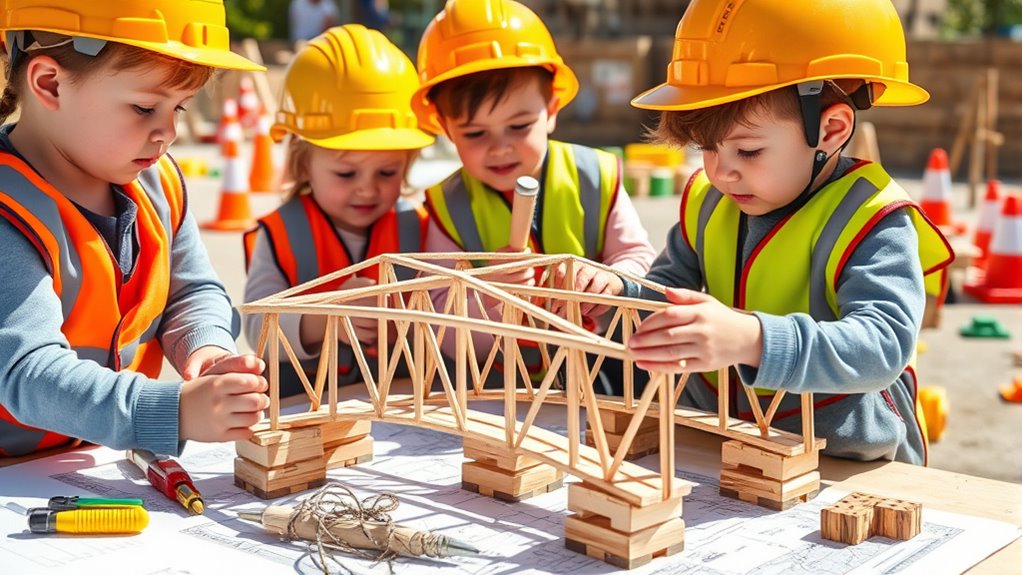
Building things is exciting, but it also comes with its own set of engineering challenges, especially for little builders just starting out. One of the most important aspects to weigh early on is safety precautions. When you’re working on a project, whether it’s a simple tower or a vehicle, you need to think about how to keep yourself safe. Wearing protective gear like goggles, gloves, and even masks can prevent injuries from sharp tools or small parts. Always make sure your workspace is tidy and free of hazards, and never rush through a step just to finish faster. Taking your time and following safety rules ensures that your building experience remains fun and injury-free.
Material selection is another critical challenge that you’ll face as a young engineer. Choosing the right materials influences the strength, durability, and safety of your creations. For example, using lightweight but sturdy materials like foam or plastic can make your projects easier to handle and safer to build with. If you’re constructing something that needs to support weight or withstand pressure, you’ll want to pick materials with good strength-to-weight ratios, like certain woods or plastics. It’s important to avoid materials that are too brittle or prone to breaking, as these can cause accidents or damage your project over time. When selecting materials, think about what purpose your creation serves, and choose accordingly. This way, your project will not only be safe but also last longer and perform better.
As you plan your build, always research the properties of your chosen materials and how they interact with each other. For example, some glues work best with certain plastics, while others are better suited for wood. Understanding these details helps you avoid mistakes that could compromise safety or project integrity. Additionally, consider the environment where your creation will be used. Will it be outdoors where it might get wet or exposed to the sun? Picking weather-resistant materials can help prevent deterioration and ensure your project remains safe to use.
Frequently Asked Questions
What Safety Measures Are Necessary for Young Children Working on Engineering Projects?
You should guarantee young children wear protective gear like goggles and gloves to prevent injuries. Create a safe workspace by removing sharp objects, securing tools, and keeping hazardous materials out of reach. Supervise their activities closely, and teach them safety rules before starting projects. By maintaining a safe environment and emphasizing protective gear, you help young builders enjoy learning while staying safe during their engineering adventures.
How Can Parents Effectively Supervise Little Builders Without Limiting Creativity?
Sure, you can supervise little builders without stifling their creativity by practicing creative supervision. Encourage independence by setting safe boundaries and offering guidance only when needed. Use hands-on involvement strategically—be present but not overbearing, so they feel trusted to explore. Ironically, stepping back just enough allows their imagination to flourish, while your watchful eye guarantees safety. Balance is key, turning supervision into an empowering experience for their developing skills.
What Age-Appropriate Tools Are Recommended for Beginner Engineers?
For beginner engineering, you should choose age-appropriate tools that match your child’s skills. Look for safety-tested screwdrivers, plastic hammers, and simple building kits designed for little hands. These tools help foster curiosity and confidence without risking injury. As your child progresses, you can introduce more complex tools. Always supervise to make certain of safe use, and encourage hands-on exploration to develop their engineering skills effectively.
How Do Engineering Challenges Differ Across Various Age Groups?
You might think engineering challenges stay simple for everyone, but in reality, they evolve with child development. Younger kids love basic tasks that boost their confidence, while older children can handle complex problems that stretch their skill progression. It’s a little ironic—what’s easy today becomes a challenge tomorrow, encouraging growth at every age. Tailoring tasks to their developmental stage keeps them engaged, learning, and building those essential engineering skills over time.
What Are Some Common Mistakes to Avoid During Children’s Engineering Activities?
To avoid common pitfalls during children’s engineering activities, always consider developmental considerations and guarantee tasks are age-appropriate. Don’t underestimate the importance of safety protocols or rush through instructions, which can lead to frustration. Keep activities engaging and adaptable, avoiding overly complex projects that might discourage young learners. Remember to supervise closely, provide encouragement, and emphasize fun over perfection to foster a love for engineering and learning.
Conclusion
As you tackle these engineering challenges, remember that every mistake is just a stepping stone, much like a tiny brick falling into place. When your little builders’ creations come to life, it’s as if the universe itself is celebrating your effort, aligning perfectly like stars in a clear night sky. Keep building, keep dreaming, because sometimes, the greatest innovations happen when you least expect it—right in the midst of your playful chaos.
Fall Picks
fall essentials
As an affiliate, we earn on qualifying purchases.