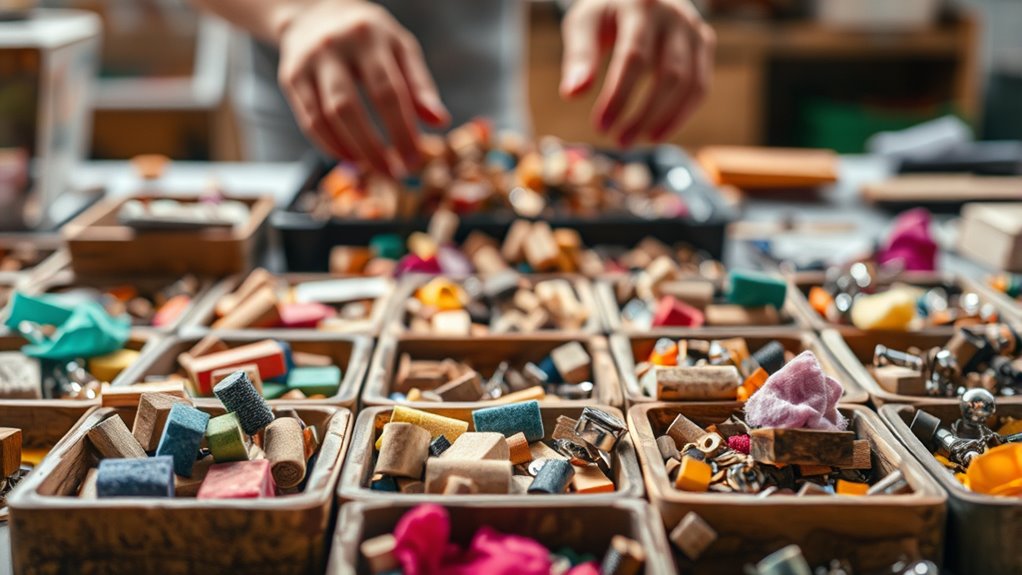

Tinker trays are all about curating diverse materials that invite exploration, not focusing on fixed results. You select items based on curiosity, letting hands-on discovery lead the way. This approach encourages experimentation, sensory engagement, and confidence to try new ideas without fear of mistakes. By emphasizing the process over the outcome, you’ll create a relaxed space for creativity to flourish—if you keep exploring, you’ll find even more ways to inspire curiosity and learning.
Key Takeaways
- Focus on selecting materials based on curiosity and sensory appeal rather than for creating specific final products.
- Emphasize exploration and process, encouraging experimentation without the pressure of outcomes.
- Curate diverse, meaningful supplies that inspire creativity and tactile engagement.
- Prioritize open-ended play to foster confidence, innovation, and a love of discovery.
- Recognize that the value lies in the experience and learning, not in achieving predetermined results.
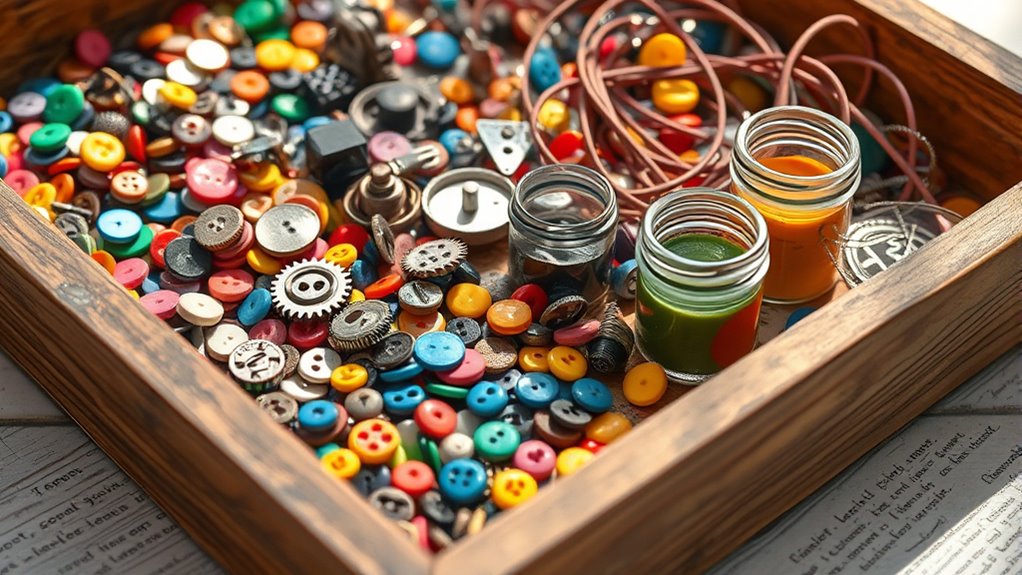
Tinker trays are versatile organizers designed to keep small parts, tools, and craft supplies neatly in one place. They’re perfect for fostering an environment where creative exploration can flourish without the chaos of scattered materials. When you use a tinker tray, you’re providing yourself or others with a dedicated space to experiment freely, encouraging a hands-on approach that’s rooted in curiosity. This setup invites you to explore different combinations, textures, and ideas without the pressure of a final product. Instead of focusing on predetermined outcomes, you learn to enjoy the process itself, which makes every session with your tinker tray a unique journey of discovery. This approach is especially effective for sensory engagement, allowing you to touch, feel, and manipulate various materials. The tactile experience heightens awareness of different textures, weights, and shapes, making each interaction more meaningful. As you pick up small parts or tools, you’re not just assembling a project—you’re engaging your senses and deepening your understanding of the materials at hand. This sensory engagement helps reinforce learning, especially for young children or anyone exploring new mediums. It cultivates patience, attention to detail, and an appreciation for the materials’ qualities.
Using a tinker tray shifts the focus from the end result to the process of creation. You’re encouraged to experiment without fear of making mistakes, which often stifles creativity in more structured environments. Instead, you get to observe how different objects interact, what happens when you combine colors or textures, and how small adjustments can lead to new ideas. This kind of open-ended play builds confidence and sparks innovation, as you realize there’s no “right” way to manipulate the materials. The act of curating your collection within the tray is itself an exercise in thoughtful selection. You choose what to include based on your current curiosity, not because you’re aiming for perfection. This mindful curation enhances your ability to focus and makes the process more intentional. You’re not just collecting supplies; you’re creating a personalized toolkit for exploration. Over time, you develop a deeper understanding of your preferences, which fuels further experimentation. Incorporating diverse materials from different sources, such as best beaches, can inspire new ideas and broaden your creative horizons.
Ultimately, tinker trays serve as a catalyst for creative exploration and sensory engagement, allowing you to discover new ideas and develop skills in a relaxed, uninhibited setting. They remind you that the joy of tinkering lies in the experience, not just in the finished product. By curating materials thoughtfully and engaging your senses fully, you foster a mindset that values curiosity, learning, and innovation at every step.

Baby Trend Expedition Double Jogger Stroller, Griffin
- Quick release wheels: Easy storage and travel
- Lockable swivel wheel: Enhanced maneuverability
- Ratcheting shade canopy: Adjustable sun protection with peek-a-boo window
As an affiliate, we earn on qualifying purchases.
Frequently Asked Questions
How Do Tinker Trays Support Different Age Groups?
You can support different age groups with tinker trays by selecting age-appropriate choices that match their developmental benefits. For younger children, include simple, safe materials to foster fine motor skills and curiosity. For older kids, add more complex items to challenge problem-solving and creativity. This approach helps everyone develop at their own pace while encouraging exploration, making tinker trays a versatile tool for nurturing growth across all ages.
What Materials Are Best for Tinker Trays?
Choose open-ended materials that inspire creativity, curiosity, and problem-solving. Think of loose parts, recycled items, natural objects, and craft supplies that encourage exploration. These materials invite open-ended questions and allow children to invent, experiment, and discover freely. By curating versatile items, you support a wide range of interests and developmental stages, fostering a space where imagination flows and learning happens naturally through play and inquiry.
How Can Tinker Trays Be Integrated Into Classroom Lessons?
You can integrate tinker trays into classroom lessons by encouraging open-ended exploration with diverse materials. Present students with trays containing various items like gears, fabric scraps, or magnets, prompting them to experiment and innovate. This approach fosters creativity and critical thinking as students manipulate different textures and shapes. By emphasizing material diversity, you support a hands-on learning environment where students discover solutions and develop their problem-solving skills naturally.
Are Tinker Trays Suitable for Remote or Home Use?
Did you know 85% of parents find DIY setups like tinker trays boost kids’ creativity at home? Tinker trays are indeed suitable for remote or home use, provided you prioritize safety considerations. You can customize materials for different age groups and supervise activities. Keep small parts out of reach and choose age-appropriate items. This way, your child can safely explore and innovate with their own DIY tinkering tray.
How Do Tinker Trays Promote Creativity Over Structured Outcomes?
Tinker trays promote creativity by encouraging open-ended exploration and process-focused play. You’re free to experiment without fixed outcomes, which sparks imagination and problem-solving skills. Instead of aiming for a specific result, you focus on the experience, making each activity unique. This approach nurtures curiosity and resilience, allowing you to discover new ideas and methods naturally, fostering a mindset that values the journey of creation over the final product.
Conclusion
As you gather your tinker trays, imagine each material as a whisper of possibility, waiting to be shaped by your hands. Focus on curating the textures, colors, and shapes, not just the final outcome. Let the tray become a garden of exploration, where creativity blooms in the unexpected. In this space, the journey of discovery is more crucial than the end result, inviting you to embrace the beauty of process over perfection.