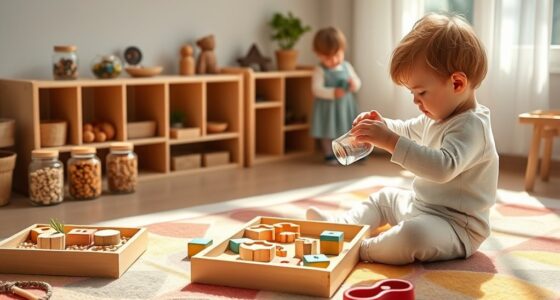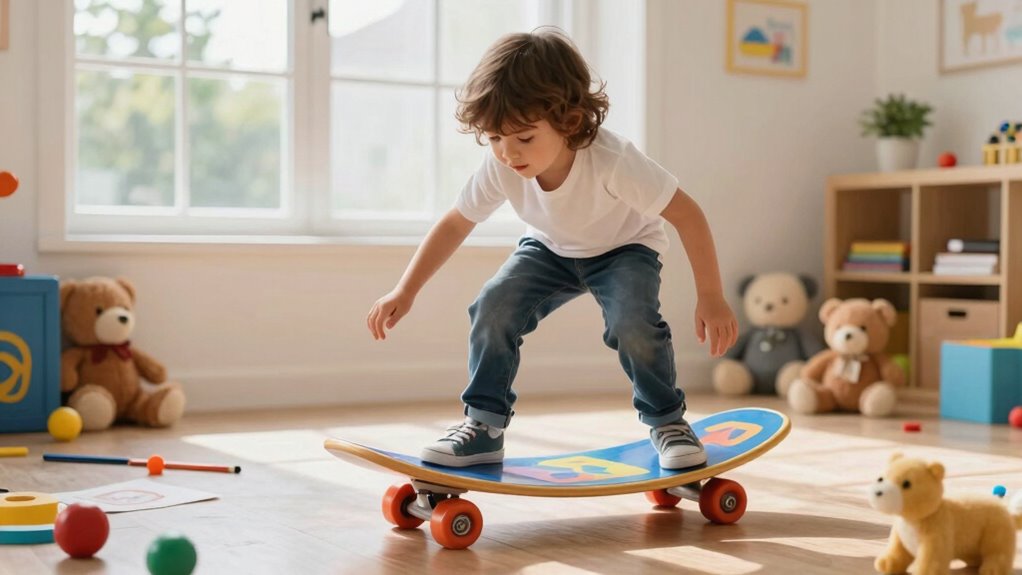

Wobble boards support your coordination by challenging your muscles and neural pathways, helping you improve balance, stability, and movement control. They stimulate sensory processing, enhancing your brain’s ability to interpret signals from your body and environment. Plus, you can get creative by imagining fun scenarios like tightrope walking or balancing on a boat, making your exercises playful and engaging. Keep exploring to discover even more ways wobble boards boost coordination and ignite your imagination.
Key Takeaways
- Wobble boards challenge balance, enhancing coordination through dynamic muscle engagement and neural pathway development.
- They stimulate sensory integration, improving the brain’s ability to process signals and coordinate movements effectively.
- The unstable surface encourages creative movement scenarios, fostering imagination and playful problem-solving.
- Incorporating pretend activities like tightrope walking promotes imaginative play while refining motor skills.
- Wobble boards strengthen proprioception, leading to better body awareness and smoother, more coordinated movements.
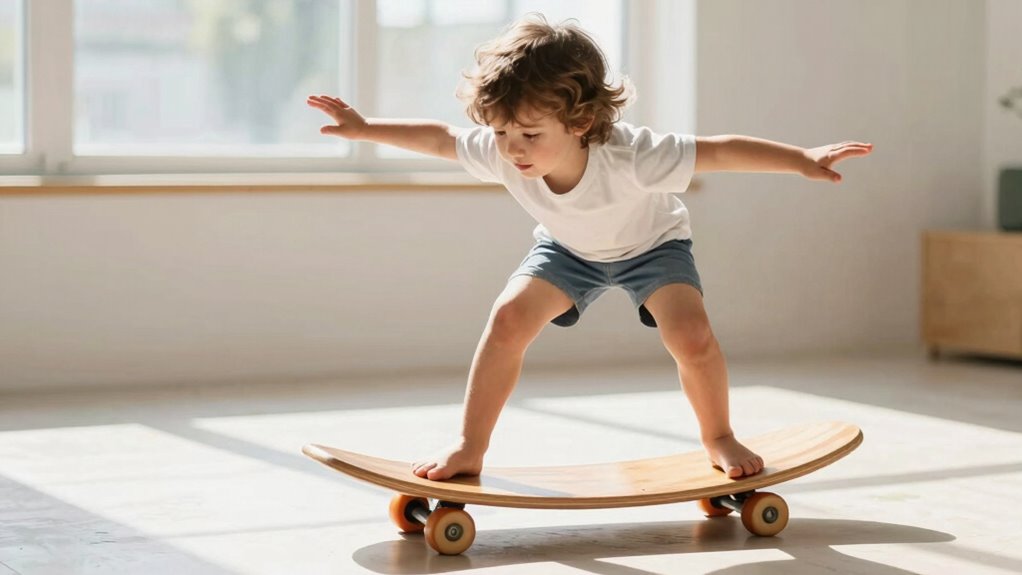
Wobble boards are an effective tool for improving balance and coordination, especially when incorporated into regular training or therapy routines. When you use a wobble board, you actively engage muscles and neural pathways that are essential for maintaining stability. This process helps you overcome balance challenges by strengthening the core, legs, and stabilizer muscles, making it easier to stay upright during everyday activities. More importantly, wobble boards stimulate sensory integration, which refers to your brain’s ability to process information from your senses and coordinate movement effectively. As you stand or move on the wobble board, your brain works to interpret signals from your feet, joints, and muscles, helping you develop a more seamless connection between sensory input and physical response. Incorporating these principles of design thinking can enhance your approach to training, encouraging innovative ways to improve coordination. The unpredictable tilt of a wobble board forces you to adapt quickly, sharpening your coordination skills. This dynamic challenge trains your nervous system to respond more efficiently, enabling smoother movements and better control. For children, this process is especially beneficial because it supports developing motor skills and encourages imaginative play. When you incorporate imaginative scenarios—like pretending to walk on a tightrope or balancing on a boat—the experience becomes more engaging. These mental exercises not only make training fun but also stimulate creativity, allowing your mind to think beyond just physical balance. As a result, you’re more likely to stay motivated and committed to regular practice.
Using wobble boards strengthens muscles and neural pathways, enhancing stability and sensory integration for better movement.
Using a wobble board regularly also enhances proprioception, which is your body’s awareness of its position in space. Improved proprioception helps you anticipate and correct your movements before losing balance, reducing falls and injury risks. When combined with sensory integration, this heightened awareness leads to more confident, fluid actions. You might notice that as your coordination improves, so does your ability to perform complex movements, whether in sports, dance, or daily tasks. Additionally, incorporating sensory processing strategies can further optimize your balance and coordination development. Engaging in multisensory activities with the wobble board can deepen the benefits by stimulating multiple senses simultaneously, which is crucial for comprehensive sensory integration. Recognizing the role of neural pathways emphasizes how these exercises strengthen the communication between your brain and muscles, leading to more precise movements. Furthermore, understanding how sensory input influences motor responses can help tailor training to individual needs. The playful aspect of imagining different scenarios adds an extra layer of challenge and enjoyment, transforming a simple balancing exercise into a creative activity that sharpens both body and mind.
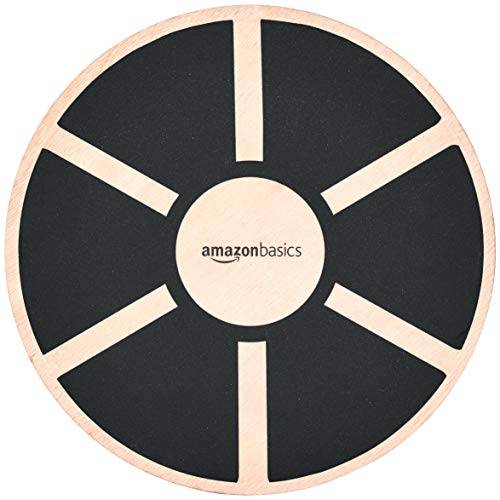
Amazon Basics Wood Wobble Balance Trainer Board, Slip Resistant, for Exercise and Core Strength, 265 lb Weight Capacity, Black
- Color: Black
- Purpose: Improve core strength and balance
- Exercise Compatibility: Suitable for various workouts
As an affiliate, we earn on qualifying purchases.
As an affiliate, we earn on qualifying purchases.
Frequently Asked Questions
Can Wobble Boards Improve Balance in Adults?
Yes, wobble boards can improve your balance as an adult. They promote balance enhancement by challenging your stability and encouraging you to make quick adjustments. Plus, they aid in core strengthening by engaging your abdominal and back muscles during use. Regularly practicing on a wobble board helps develop better proprioception, coordination, and overall stability, making daily activities easier and reducing the risk of falls.
Are Wobble Boards Suitable for Children With Developmental Delays?
Yes, wobble boards are suitable for children with developmental delays. Imagine a child’s tiny feet balancing on a gentle wave, fostering sensory integration and building motor skills through playful movement. These boards challenge and improve coordination, helping children develop confidence and stability. By engaging their senses and encouraging active play, wobble boards create a fun, supportive environment for growth, making them a valuable tool for children with developmental challenges.
How Long Should a Typical Wobble Board Session Last?
A typical wobble board session should last about 10 to 15 minutes, depending on your child’s age and attention span. You should aim for 2-3 sessions per week, gradually increasing as they build strength and confidence. Always follow safety guidelines, like supervising your child closely, checking the board’s stability, and ensuring a soft surface underneath. This helps prevent injuries and makes the experience enjoyable and beneficial.
Can Wobble Boards Help With Injury Rehabilitation?
Yes, wobble boards can assist with injury rehabilitation, especially for ankle sprains. They help improve proprioception, which is essential for balance and stability. By engaging in proprioception training on a wobble board, you strengthen the muscles and ligaments around your ankle, reducing the risk of future injuries. Incorporating wobble board exercises into your rehab routine can promote faster recovery and restore confidence in your movement.
What Materials Are Best for Wobble Board Durability?
Imagine a sturdy, medieval shield—your wobble board needs similar resilience. For durability, choose materials with high material longevity, like high-quality birch plywood or rigid plastic. These materials withstand frequent use, maintaining shape and strength. Additionally, look for a surface grip that prevents slipping during activity, ensuring safety. Such choices will keep your wobble board dependable, supporting your balance and coordination exercises for years to come.
Conclusion
So, next time you step onto a wobble board, remember you’re not just improving balance—you’re boosting coordination and sparking imagination, too. Studies show that children who engage with balance boards develop motor skills up to 30% faster than their peers. Imagine how such a simple tool can release your child’s potential, making playtime both fun and beneficial. Keep wobbling, and watch their confidence and creativity soar!