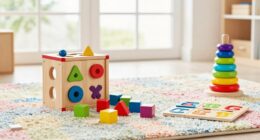

Waldorf toys feel more open-ended because their simple shapes and natural materials invite your child’s imagination to take over. They lack fixed functions, so your child can easily transform a wooden block into a car, rocket, or anything else they envision. This flexibility encourages curious exploration and creative storytelling, letting play evolve with your child’s ideas. Keep exploring to discover how these toys foster growth and endless possibilities for your child’s development.
Key Takeaways
- Their simple, natural designs lack fixed functions, allowing children to reinterpret and repurpose toys creatively.
- Open-ended shapes and textures encourage imaginative storytelling and diverse play scenarios.
- Use of versatile materials enables toys to adapt to different activities and developmental stages.
- Lack of predefined outcomes fosters independent exploration and problem-solving.
- Emphasis on sensory qualities and minimalism invites children to create their own play experiences.
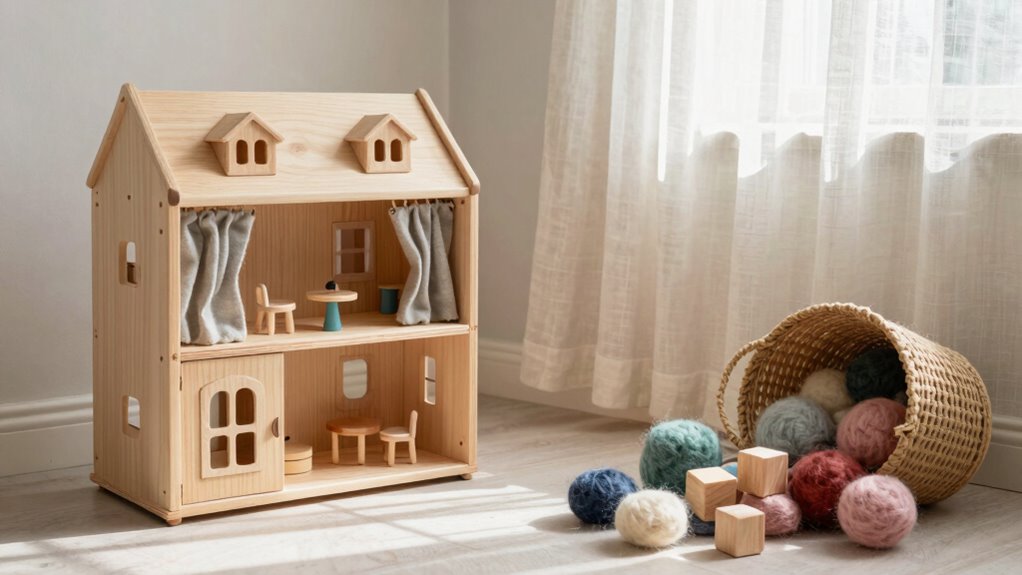
Waldorf toys are increasingly recognized as excellent open-ended toys that foster creativity and imagination in children. Their design emphasizes simplicity, natural materials, and a lack of fixed functions, which encourages kids to see them as versatile tools rather than limited objects. When you give a child a Waldorf toy, you’re inviting them to explore and shape their play experience freely. This openness is what makes these toys so effective at supporting sensory exploration and creative play. Unlike toys with predefined purposes, Waldorf toys serve as blank canvases, allowing children to imagine new roles, scenarios, and uses each time they play.
Waldorf toys inspire limitless creativity through simplicity, natural materials, and open-ended play.
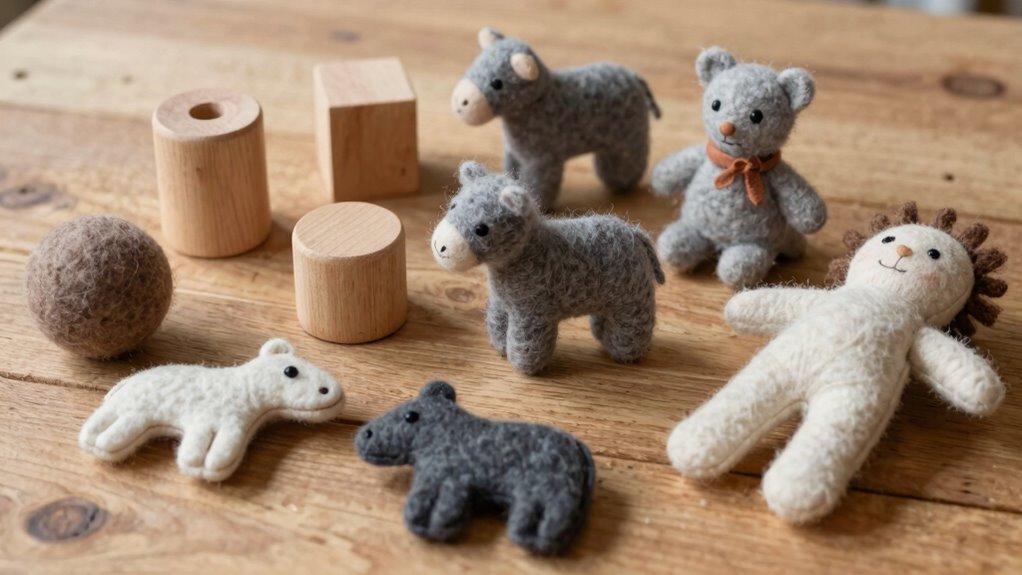
What truly makes Waldorf toys feel more open-ended is their focus on natural textures and simple forms. Wooden blocks, for example, can become anything from a castle to a spaceship, depending on your child’s imagination. Because these toys don’t impose a specific story or outcome, children are encouraged to experiment with different ways of interacting with them. They can stack, build, sort, or simply explore the tactile sensations of smooth, warm wood. This sensory exploration helps children develop fine motor skills and enhances their understanding of different textures, shapes, and sizes. The tactile qualities of natural materials draw children in, inviting them to use their senses and feel more connected to their play. Additionally, the simplicity of these toys allows children to focus on their own ideas rather than being guided by external instructions.
The beauty of Waldorf toys lies in their ability to adapt to your child’s evolving interests. As they grow, what once was a simple wooden cube can turn into a tool for storytelling, a building block for a grand structure, or even a piece in an imaginary game. This adaptability fuels creative play because your child isn’t confined by the toy’s design; instead, they determine its purpose. Their imagination takes the lead, and the toy becomes a medium for storytelling, problem-solving, or emotional expression. This open-ended quality means playtime remains engaging and meaningful over time, rather than becoming repetitive or predictable.
In essence, Waldorf toys foster a sense of curiosity and independent thinking. They don’t box children into specific roles or functions but instead invite exploration and innovation. When you choose Waldorf toys, you’re giving your child the gift of unstructured play that nurtures their ability to think creatively, use their senses, and develop problem-solving skills—all essential components of healthy development. By encouraging sensory exploration and creative play, Waldorf toys help children learn to see their environment as a world of possibilities waiting to be discovered. Understanding the natural materials and their benefits can deepen your appreciation for these versatile toys.
wooden open-ended toys for children
As an affiliate, we earn on qualifying purchases.
As an affiliate, we earn on qualifying purchases.
Frequently Asked Questions
How Do Waldorf Toys Promote Creativity Over Time?
Waldorf toys promote creativity over time by encouraging imaginative exploration and cognitive growth. You’ll notice that these toys are simple and versatile, allowing your child to transform them into anything they imagine. As your child plays, they develop problem-solving skills and expand their ideas, fostering a lifelong love of learning. Their open-ended nature keeps play fresh and engaging, supporting both creative expression and cognitive development at every stage.
Can Waldorf Toys Be Customized for Different Ages?
Yes, Waldorf toys can be customized for different ages through personalized designs and age adaptability. You can choose or create toys that suit your child’s developmental stage, ensuring they’re engaging and safe. As your child grows, these toys can evolve with them, offering new ways to explore and learn. This flexibility helps keep play meaningful and stimulating, making Waldorf toys a lasting, adaptable choice for every age.
Are Waldorf Toys Suitable for Children With Sensory Sensitivities?
Your child’s sensory sensitivities won’t stand a chance against Waldorf toys! These gentle, natural materials are perfect for sensory processing and tactile exploration, making them highly suitable for children with sensory sensitivities. The soft textures and simple designs encourage calming, open-ended play. With Waldorf toys, your child can explore safely and comfortably, helping them develop sensory awareness without feeling overwhelmed. They truly create a soothing world for sensitive little ones.
How Do Waldorf Toys Support Emotional Development?
Waldorf toys support your child’s emotional development by encouraging emotional awareness through open-ended play, allowing them to explore feelings and express themselves freely. These toys foster social skills as children collaborate, share, and negotiate during imaginative play. By offering natural, simple materials, Waldorf toys help your child develop empathy, patience, and self-regulation, creating a nurturing environment where emotional growth naturally unfolds as they engage in meaningful, creative activities.
What Materials Are Used to Ensure Long-Lasting Open-Ended Play?
You use sustainable materials like wood, wool, and cotton to guarantee long-lasting open-ended play. These natural textures invite imagination and tactile exploration, making the toys versatile for various creative scenarios. By choosing durable, eco-friendly materials, you create toys that stand the test of time and inspire endless hours of imaginative engagement. This approach supports both environmental sustainability and your child’s developmental needs, fostering a deeper connection with their play environment.
Conclusion
You’ll find that Waldorf toys stand out because over 70% of parents report their children engage in more imaginative play with them. Their simple designs and natural materials encourage creativity, allowing kids to transform a wooden block into a castle or a cloth doll into a storyteller’s character. When you choose open-ended Waldorf toys, you’re not just buying a toy—you’re fostering your child’s endless imagination and development. It’s a small change that makes a big difference in their growth.