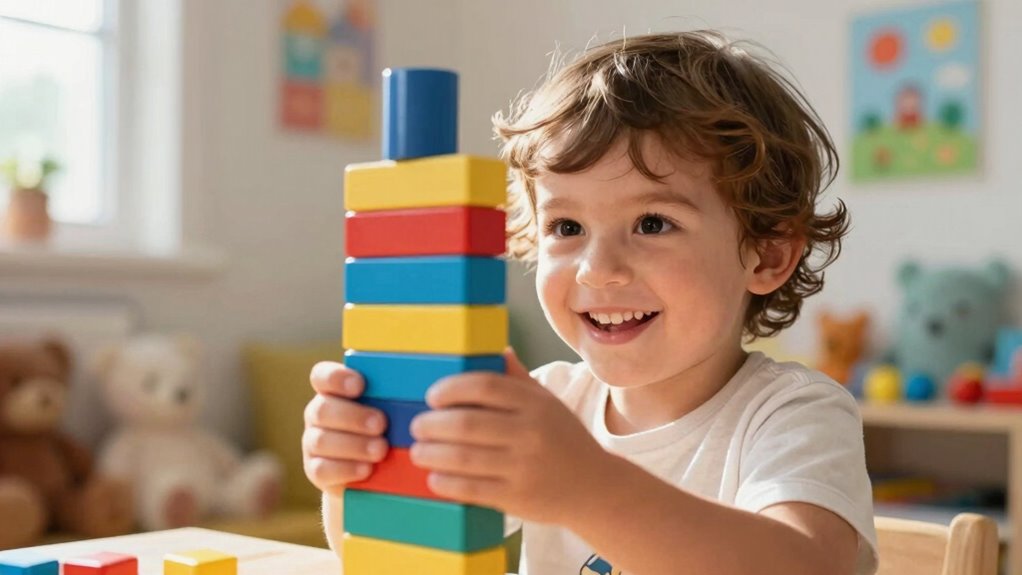

Instead of saying “good job,” try praising specific actions or efforts, like “I see you’re carefully stacking those blocks” or “You used a clever solution to solve that puzzle.” Focus on effort, progress, or creativity to make your encouragement more meaningful. Comments like “You’re really working hard” or “I love how you’re trying new strategies” help build confidence and motivation. Keep exploring different ways to support their growth as you discover more options.
Key Takeaways
- Highlight specific actions, like “You built a tall tower!” to acknowledge effort and skill.
- Praise problem-solving or creativity, such as “That’s a clever way you fixed it!”
- Focus on effort with comments like “You’re really concentrating on that puzzle.”
- Celebrate persistence, for example, “I see you’re trying different strategies.”
- Recognize positive behaviors, such as “You’re being gentle with your friends.”
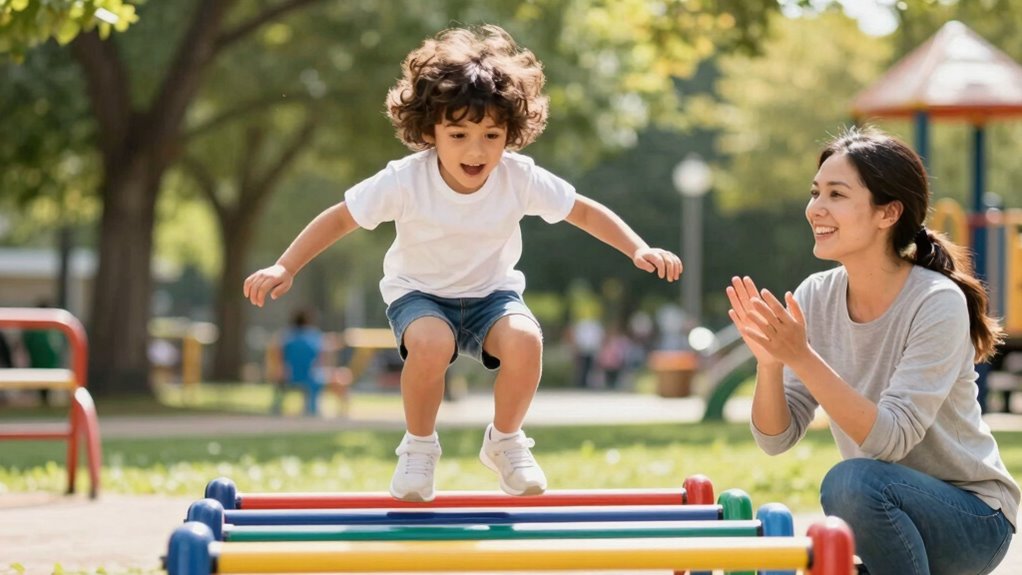
While saying “Good job” is a common way to praise children during play, it often becomes repetitive and can lose its impact. Kids hear it so often that it starts to feel hollow, making your words less meaningful. Instead, you can focus on offering motivational phrases and alternative praise that genuinely encourage and affirm their efforts. These alternatives help children recognize specific achievements, boosting their confidence and motivation.
When you want to praise a child’s effort, try highlighting what they did well with specific language. Instead of a generic “Good job,” say something like, “I love how you used your crayons to create such vibrant colors,” or “You really concentrated on building that tower, and it didn’t fall over.” These phrases acknowledge their skills and effort, making the praise more meaningful. They also help children understand what behaviors you value, guiding them toward more positive actions in the future.
Motivational phrases like “You’re really improving!” or “I can see you’re trying hard” emphasize growth and effort rather than just outcomes. This approach encourages children to keep trying, even when things are challenging. Alternative praise also includes celebrating the process, such as “You’re working so carefully,” or “That was a clever idea!” These types of feedback reinforce the importance of perseverance and creativity, which are essential during play. Recognizing positive reinforcement can be especially impactful because it helps children associate effort with success and satisfaction. Incorporating effective praise techniques can further enhance their motivation and self-esteem.
By focusing on efforts and strategies, you help children develop a growth mindset, where they see challenges as opportunities to learn. Another effective tactic is to use descriptive praise that guides children toward self-awareness. For example, “You’re being so gentle with your toy,” or “You figured out a new way to solve that puzzle.” This type of praise highlights specific behaviors, helping children become more aware of their strengths and how they can apply them in different situations. It also makes praise feel more sincere and tailored to their actions, which can be more motivating than a generic “Good job.”
Additionally, understanding the importance of specific praise can help you foster a more positive and encouraging environment during play. Incorporating these alternative praise techniques during play not only makes your feedback more impactful but also fosters a positive learning environment. Children thrive when they feel understood and appreciated for their unique efforts. So, next time you’re tempted to say “Good job,” consider a more specific, motivational phrase that recognizes their effort, strategy, or growth. These small changes can make a big difference in how children perceive their achievements and encourage them to keep exploring, creating, and trying new things.

DIGOBAY World Map Jigsaw Puzzle for Kids 4-8, 70 Piece Large Round Floor Puzzles for Kids Ages Toddler Puzzle Globe Geography Games Educational Toys Birthday for Children
- Puzzle Size: 22.8 x 22.8 inches with large pieces
- Piece Details: 70 uniquely shaped pieces for easy handling
- Material Quality: High-quality, durable, thickened cardboard
As an affiliate, we earn on qualifying purchases.
As an affiliate, we earn on qualifying purchases.
Frequently Asked Questions
How Can I Praise Without Using Generic Phrases?
You can praise your child with creative praise strategies that focus on their effort and process, like saying, “I love how you figured that out,” or “You really stayed focused on your project.” These phrases help build intrinsic motivation by emphasizing personal growth and effort rather than just outcomes. By being specific and genuine, you encourage your child to take pride in their abilities and develop a love for learning and exploring.
What Are Alternative Words to Say Instead of “Good”?
You’re on the right track by seeking creative praise instead of just “good.” Instead of saying “good,” try phrases like “That’s a clever idea,” or “You nailed it!” Use specific feedback to highlight what they did well, like “I love how you used bright colors,” or “Your story has a great beginning.” These words show you notice their effort, making praise more meaningful and encouraging their continued growth.
How Do I Encourage Effort Rather Than Achievement?
To encourage effort instead of achievement, focus on praising persistence and resilience. Say things like, “I love how you kept trying,” or “You really stuck with it,” to recognize their effort. Highlight their creativity by mentioning, “Your ideas are so imaginative,” or “I love how you thought outside the box.” This approach motivates children to value their effort and creative problem-solving, fostering a growth mindset.
What Are Some Non-Verbal Ways to Praise Children?
You can praise children using body language and facial expressions that shout your admiration! Smile broadly, give a thumbs-up, or nod enthusiastically to show approval. A gentle pat on the back or a warm hug can communicate pride without words. Your excited eyes and bright facial expressions can make children feel appreciated and motivated. These non-verbal cues are powerful, creating a magnetic energy that celebrates their effort and achievement without uttering a single word.
How Can I Praise Different Types of Play Activities?
You can use creative praise tailored to different play activities to boost child motivation. For example, when they build a tower, say, “Your engineering skills are impressive!” During role-play, praise their imagination with, “You’re really bringing this story to life!” By highlighting specific efforts and creativity, you encourage your child’s confidence and motivation, making play more engaging and rewarding. This personalized approach keeps them excited about exploring new activities.
Conclusion
Instead of simply saying “good job,” you can celebrate effort and progress with words like “You’re really trying,” or “That was creative.” Just as a flower blooms in its own time, a child’s confidence blossoms with genuine praise. When you choose your words thoughtfully, you nurture their growth. So, next time, think beyond the basic and embrace expressions that inspire, encouraging them to keep exploring, learning, and enjoying every moment of play.