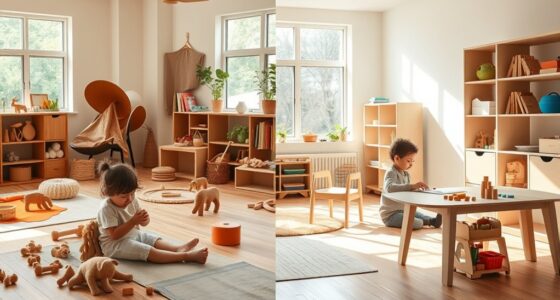
Wooden blocks the Waldorf way focus on natural, untreated materials that foster sensory and open-ended play. As you explore these blocks, you’ll notice their unique textures, smells, and imperfections, encouraging your child’s tactile engagement. This type of play sparks imagination, helping your child create everything from castles to spaceships. It also supports developmental skills like coordination, problem-solving, and emotional resilience. Keep going, and you’ll discover how these simple wooden blocks can nurture creativity and growth in many meaningful ways.
Key Takeaways
- Emphasize natural, untreated wood to engage children’s senses and foster a connection to nature.
- Promote open-ended, imaginative play that allows children to create freely without structured instructions.
- Support developmental skills like spatial awareness and fine motor skills through hands-on manipulation.
- Encourage patience, mindfulness, and respect for materials, nurturing emotional growth and environmental awareness.
- Focus on enriching, meaningful play that inspires curiosity, problem-solving, and lifelong resilience.

Wooden blocks are a timeless toy that, when used the Waldorf way, become a powerful tool for fostering creativity and developmental growth. These blocks are often crafted from natural materials, like smooth, untreated wood, which not only feels good to the touch but also encourages a deeper connection to nature. When children play with natural materials, they engage their senses more fully, noticing the textures, smells, and imperfections that make each piece unique. This sensory engagement helps build a foundation for meaningful, imaginative play, where the possibilities are limitless.
In Waldorf-inspired play, the focus isn’t on perfection or structured instructions but on allowing children to explore freely. You’ll find that children naturally gravitate toward wooden blocks because they can turn them into anything—a castle, a bridge, a spaceship—whatever sparks their imagination. The simplicity of the blocks invites open-ended play, where stories unfold and ideas flourish organically. As children stack, balance, and arrange the blocks, they develop spatial awareness, fine motor skills, and problem-solving abilities without feeling pressured to meet specific goals.
Using natural materials in your child’s play environment encourages patience and mindfulness. Unlike plastic toys that often come with predefined functions, wooden blocks invite children to imagine and create from their own inner worlds. You might notice how they experiment with different configurations, adjusting and reworking their structures with quiet concentration. This process nurtures perseverance and resilience, as they learn to work through challenges like balancing unstable towers or fitting pieces together. The tactile quality of wood also helps children develop their sense of touch and enhances their focus during play.
When you incorporate wooden blocks into your child’s daily routine, you’re offering more than just a toy—you’re providing a gateway to a richer, more meaningful kind of play. The natural feel of the blocks encourages children to handle them gently and thoughtfully, fostering respect for materials and the environment. This type of play also supports emotional development, as children often project stories and roles onto their constructions, building confidence and self-expression. Through imaginative play with natural materials, children learn to think creatively, solve problems, and develop their sense of wonder—all essential skills for lifelong growth.
Frequently Asked Questions
How Do Waldorf Wooden Blocks Support Early Childhood Development?
You can see how Waldorf wooden blocks support early childhood development through sensorial exploration and fine motor skills. As you guide children to touch, feel, and manipulate the blocks, they enhance their sensory awareness. Building with these blocks also encourages precise hand movements, strengthening fine motor skills. This hands-on play fosters creativity, concentration, and problem-solving, helping children develop essential skills naturally while enjoying open-ended, imaginative play.
Are Waldorf Wooden Blocks Suitable for All Age Groups?
You can definitely adapt Waldorf wooden blocks for all age groups, as they’re versatile toys. While they’re most suitable for young children to foster sensory exploration and develop motor skills, older kids can use them for creative building and problem-solving. Just remember, age appropriateness matters, and you should tailor activities accordingly. With a little creativity, these blocks can be a hit across different ages, proving that good things come in small packages.
What Safety Standards Do Waldorf Wooden Blocks Meet?
You’ll find that Waldorf wooden blocks meet strict safety standards, ensuring they’re safe for your child. They’re crafted from natural materials and finished with non-toxic finishes, so you don’t have to worry about harmful chemicals. These blocks are designed to be durable and safe for all ages, encouraging creative play while adhering to high safety criteria. Rest assured, they’re a responsible choice for your child’s development and safety.
How Can Parents Incorporate Waldorf Principles Into Block Play?
You can incorporate Waldorf principles into block play by encouraging imaginative storytelling, where your child creates stories with the blocks. Let them explore open-ended play, focusing on natural materials to foster a connection with nature. Support motor skill development by guiding them in stacking, balancing, and building, while allowing plenty of time for unstructured, creative play that nurtures their imagination and physical coordination.
What Are the Best Ways to Clean and Maintain Wooden Blocks?
Think of your wooden blocks as treasures that need gentle care. To keep them shining, use a damp cloth for cleaning and avoid soaking. Regular maintenance tips include sanding rough edges and applying a food-grade mineral oil to nourish the wood. This keeps them safe for little hands and preserves their beauty. With these cleaning methods and care, your blocks will remain timeless, inviting endless imaginative play.
Conclusion
By embracing wooden blocks the Waldorf way, you nurture creativity and develop essential skills naturally. As the saying goes, “A child’s play is their work,” reminding you that simple toys foster profound growth. When you allow children to explore, imagine, and build at their own pace, you’re guiding them toward a future of thoughtful, imaginative minds. So, trust in the power of wooden blocks to lay a strong foundation for lifelong learning and joy.