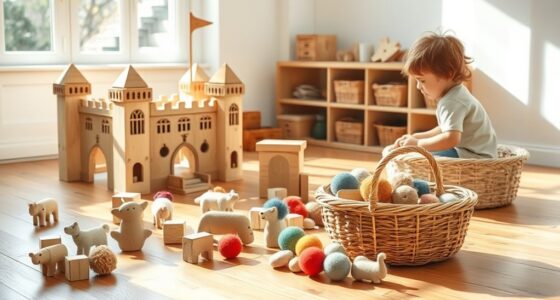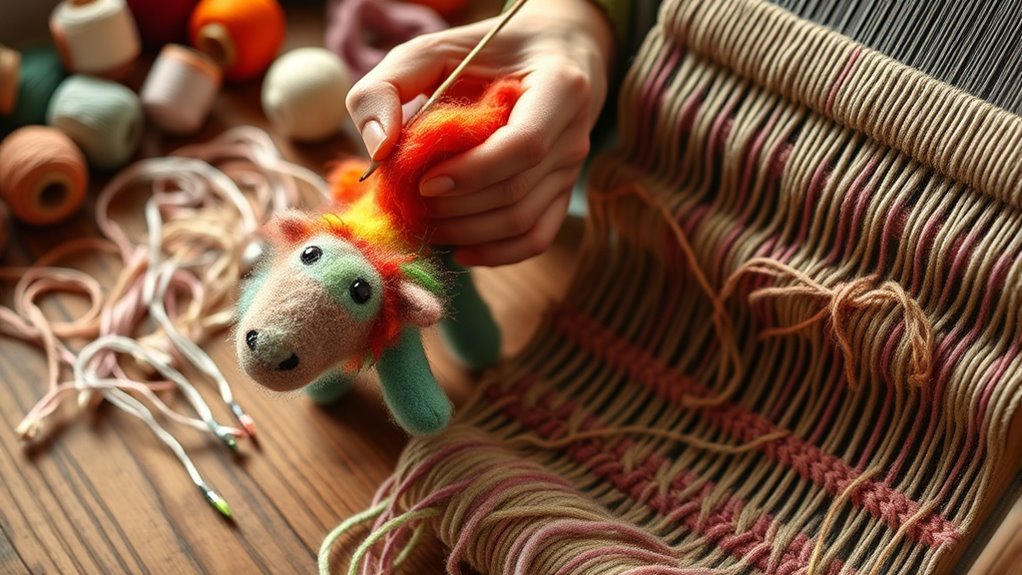

When handcrafting toys through felting, sewing, and weaving, it is crucial to choose safe, eco-friendly materials like natural wool, cotton, or silk to protect children’s health. Follow strict safety standards by avoiding small parts, using non-toxic dyes, and securing stitches well. Regularly test your creations for durability and smooth finishes. If you keep these practices in mind, you’ll craft beautiful, safe toys that children can cherish for years—and there’s more to discover as you go along.
Key Takeaways
- Select safe, non-toxic, natural fibers like wool, cotton, or silk for felted, sewn, and woven toys.
- Follow safety standards by avoiding small parts, ensuring secure stitches, and smoothing rough edges.
- Incorporate safety checks throughout the process, testing durability and finish before completion.
- Use eco-friendly, transparent sourcing practices to ensure material quality and sustainability.
- Combine craftsmanship with responsibility by creating durable, safe toys that meet industry safety benchmarks.
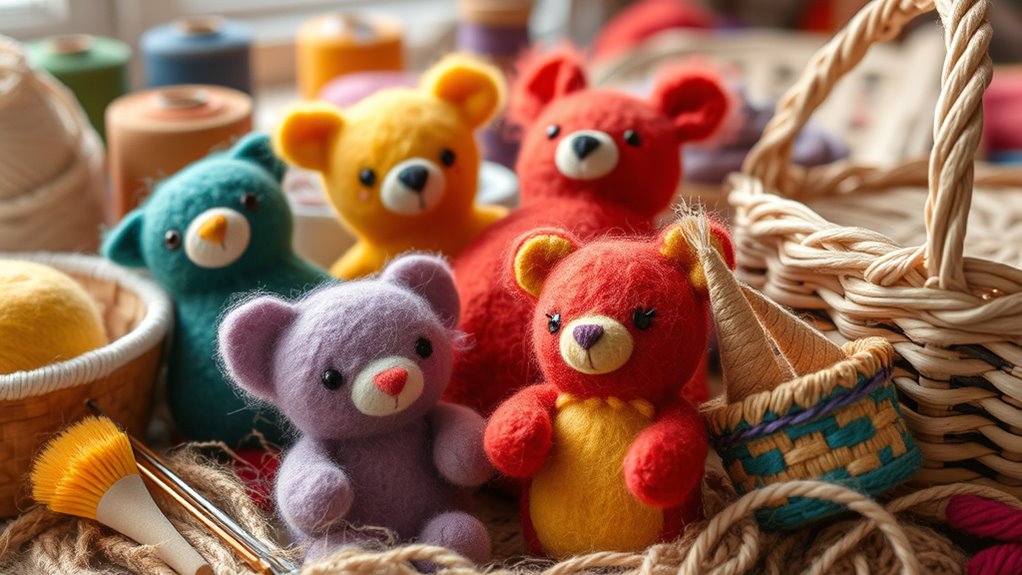
Handcrafting toys offers a rewarding way to create unique, personalized playthings that can delight children and adults alike. When you start this journey, one of the most vital steps is carefully considering material sourcing. You want to select high-quality, safe materials that are suitable for children’s toys. This means choosing natural fibers like wool, cotton, or silk, which are less likely to cause allergic reactions or irritate sensitive skin. It’s necessary to verify that your materials come from reputable suppliers who prioritize sustainability and transparency, so you know exactly where your supplies originate. This not only guarantees the safety of your finished toy but also aligns with eco-friendly practices, making your handcrafted items more meaningful and responsible.
Safety standards are equally essential in handcrafting toys. Unlike mass-produced toys, handmade ones often lack exhaustive safety testing, so it’s up to you to make sure they meet all necessary regulations. You should familiarize yourself with safety guidelines specific to children’s toys, such as avoiding small parts that could pose choking hazards or using non-toxic, dye-free dyes in your felt, fabric, and wool. When sewing or felting, double-check that stitches are secure and that no loose fibers or threads could be ingested. If you’re weaving, make certain your finished piece has no sharp edges or rough spots that could cause injury. Incorporating safety standards throughout your crafting process shows your commitment to making toys that are not only beautiful but also safe for play. Additionally, understanding the importance of material sourcing can help ensure your toys are both safe and environmentally friendly.
Ensure your handmade toys meet safety standards by avoiding small parts and using non-toxic dyes.
In addition to material sourcing and safety standards, it’s a good idea to test your toys with gentle use before gifting or selling them. For example, gently tug on sewn seams, check the durability of felted parts, and examine the overall finish for potential hazards. If you’re making toys for children, especially infants or toddlers, consider seeking guidance from toy safety resources or certifications to confirm your work meets industry benchmarks. This extra step can give you peace of mind and guarantee that your handcrafted toys are truly safe for their intended age group.
Ultimately, creating toys through felting, sewing, or weaving allows you to blend artistry with responsibility. By paying close attention to where your materials come from and adhering to safety standards, you craft not just a plaything but a trusted item that brings joy without risk. Your careful choices and craftsmanship turn simple fibers and fabrics into cherished keepsakes, fostering a sense of pride and confidence in your handmade creations.
Frequently Asked Questions
What Safety Precautions Should I Take When Crafting Toys?
When crafting toys, you should prioritize age-appropriate safety by choosing non-toxic materials and avoiding small parts for young children. Always guarantee the toy’s durability so it can withstand play without breaking or posing hazards. Use sharp tools carefully, keep your workspace organized, and supervise children during play. Regularly inspect finished toys for loose threads or weak spots, and follow safety guidelines to create safe, fun, handmade toys.
How Do I Choose Non-Toxic Materials for Handmade Toys?
You should always opt for non-toxic materials by choosing hypoallergenic fabrics and natural dyes to guarantee safety for children. Look for labels that specify non-toxic, organic, or child-safe certification. Test new materials for allergies and avoid synthetic dyes or chemicals. By selecting high-quality, natural options, you create safe, eco-friendly toys that are gentle on sensitive skin and reduce potential health risks.
Can I Customize Toys for Specific Age Groups?
Yes, you can customize toys for specific age groups by focusing on age-appropriate designs and using effective customization techniques. For younger children, keep shapes simple, avoid small parts, and use soft, non-toxic materials. For older kids, add complex details and interactive features. By tailoring your designs with these techniques, you guarantee safety and engagement, making your handmade toys perfect for each age group’s developmental needs.
What Tools Are Essential for Handcrafting Toys?
Think of your toolkit as the paintbrushes of your craft. Essential tools include sharp scissors for clean cuts, needles for sewing, and felting needles for shaping fibers. When choosing fiber selection, pick quality materials suited for your toy’s purpose. Remember, tool maintenance is key—keep blades sharp and clean to guarantee safety and precision. With these tools, you’ll turn simple fibers into charming toys that last.
How Do I Care for and Maintain Handmade Toys?
To care for your handmade toys, you should regularly clean them gently with a damp cloth to avoid damage. Avoid harsh toy cleaning methods that could ruin delicate details. Store your toys in a cool, dry place, preferably in a breathable container to prevent mold or dust buildup. Follow these storage tips, and you’ll keep your handcrafted treasures beautiful and lasting for years to come.
Conclusion
As you weave, sew, and felt your toys, you realize each stitch and fiber mirrors your own journey. Sometimes, the smallest details create the most meaningful moments, reminding you that craftsmanship isn’t just about the end result but the stories you embed within. Perhaps in these handmade treasures, you find a quiet reminder that beauty often emerges from patience and care—just like life itself, shaped by your gentle touch.