
In train play, you create engaging stories by designing routes that connect different destinations, whether for freight, passengers, or rescue missions. You can partner with others to control trains, promoting teamwork, communication, and strategic planning. By adding realistic scenery and historical details, you make your setup immersive and educational. As you continue exploring, you’ll discover how combining storytelling, route planning, and cooperation brings your railway world to life in exciting ways.
Key Takeaways
- Develop engaging stories by designing routes that reflect different historical periods and scenarios.
- Foster cooperation through multiplayer setups, encouraging teamwork in train operation and route management.
- Create realistic and dynamic routes connecting diverse destinations for immersive play experiences.
- Incorporate railway history to add educational storytelling and deepen understanding of train evolution.
- Use scenery and scenario planning to enhance collaboration and make play more interactive and meaningful.

Have you ever watched a train glide smoothly along its tracks and wondered how to create your own engaging train-themed play at home? Building a captivating train setup isn’t just about arranging tracks and engines; it’s about immersing yourself in the fascinating world of railway history and mastering model train techniques. This knowledge transforms simple play into a rich, educational experience. Understanding railway history helps you appreciate how trains revolutionized transportation, connecting cities and fueling economic growth. It adds depth to your play, allowing you to create realistic routes that mirror the evolution of railways—from steam-powered engines to modern electric trains. Incorporating this background into your setup makes the play more meaningful, sparking curiosity about the past and encouraging storytelling around different eras of train travel. Learning about train technology can help you troubleshoot issues and enhance the realism of your models.
When it comes to model train techniques, precision and creativity are your best tools. You’ll want to learn how to assemble and maintain your trains and tracks effectively. For instance, learning how to properly lay tracks ensures smooth operation and reduces derailments. Using techniques like ballast placement and wiring for electrical connectivity can make your model railway more realistic and functional. You might also explore different types of scenery—mountains, tunnels, towns—that add realism and excitement to your routes. These model train techniques aren’t just technical skills; they’ve become an art form, enabling you to craft detailed landscapes that tell stories and set scenes for your play. As you develop your layout, consider how the design influences the routes your trains will follow, and how cooperation among different train units can keep everything running seamlessly.
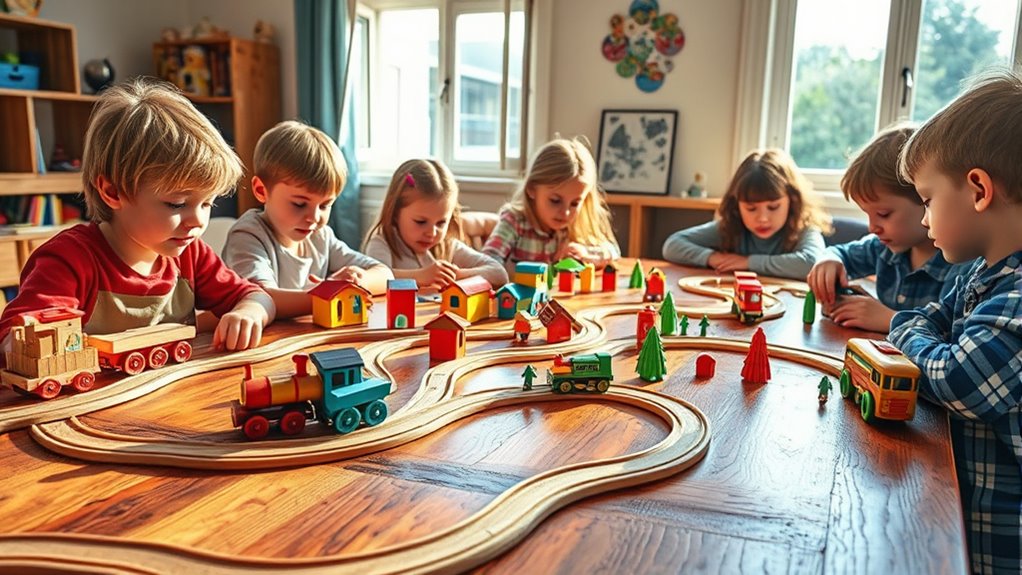
Creating stories around your train routes makes the experience even more engaging. You can imagine your trains delivering goods to bustling stations or rescuing stranded passengers in remote areas. Planning routes that connect various destinations encourages problem-solving and collaborative play, especially if you involve others. Children can enjoy taking turns controlling the trains, coordinating movements, and creating scenarios that require cooperation. This type of play promotes teamwork, communication, and strategic thinking. Whether it’s racing trains through mountain passes or setting up elaborate stations, the key is to keep the play dynamic and adaptable. Incorporating railway history and model train techniques into your setup provides a foundation that sparks imagination and learning. With every route, story, and train, you’re not just playing—you’re exploring a world that’s built on centuries of innovation, craftsmanship, and teamwork.
Frequently Asked Questions
How Do I Unlock New Train Characters in Train Play?
To unbolt new train characters, you need to complete specific tasks or milestones within the game. As you progress, you’ll unbolt train character unbolts that allow you to customize your routes more creatively. Focus on achieving goals and exploring different routes, which often lead to new characters appearing. Keep playing consistently, and you’ll gradually unbolt a variety of train characters to enhance your route customization options.
Are There Multiplayer Modes Available for Cooperative Play?
Yes, multiplayer options are available for cooperative gameplay in Train Play. You can team up with friends or other players to build and manage routes together, enhancing the fun and teamwork. These multiplayer modes allow you to collaborate on completing challenges, share resources, and strategize as a group. Just connect online or locally, and you’re ready to enjoy cooperative gameplay, making your train adventures more engaging and social.
What Are the System Requirements for Playing Train Play on PC?
You’ll need a PC with hardware compatibility that can handle the most epic train journeys, so aim for at least a quad-core processor, 8GB RAM, and a dedicated graphics card like an NVIDIA GTX 970 or better. Keep your graphic settings adjustable, from smooth, low-detail runs to stunning, high-res visuals. If your system meets these requirements, you’ll enjoy immersive gameplay without a hitch, making every track a masterpiece.
Can I Customize Train Routes Beyond the Default Options?
Yes, you can customize train routes beyond the default options. The game offers route customization through train route editing, allowing you to create and modify routes to suit your preferences. You can design intricate networks, add new stations, and tailor the routing experience. This feature enhances gameplay, giving you the freedom to experiment and build unique rail systems, making your train play experience more personalized and engaging.
Is There a Storyline or Narrative Progression in Train Play?
Think of train play as a journey through a tapestry of storylines. Yes, there’s storyline development that adds narrative depth, making your experience richer. You’ll find characters and scenarios that evolve, creating a sense of progression like a train weaving through scenic landscapes. This storytelling element immerses you, turning simple routes into meaningful adventures, and keeps your interest alive with fresh twists and engaging story arcs.
Conclusion
As you navigate the world of train play, remember it’s more than just routes and stories—it’s a journey of cooperation and imagination. Just like a well-coordinated train, your efforts and creativity come together to create something magical. So, embrace the adventure, keep the tracks clear, and let your imagination run wild. After all, isn’t life itself just a train ride, full of endless possibilities waiting on the horizon?