
To implement toy rotation the Montessori way, select a small, manageable set of toys for your child to access daily, while storing the rest out of sight to reduce clutter. Involve your child in choosing which toys stay out or are put away, promoting independence and decision-making. Rotate toys regularly to keep play interesting and safe. By respecting their preferences and fostering responsibility, you’ll create a joyful, organized environment that supports growth—learn more about how to do this effectively.
Key Takeaways
- Limit accessible toys to a manageable number to promote focus and reduce clutter.
- Involve children in selecting which toys to keep out, fostering autonomy and decision-making skills.
- Use clear, accessible storage solutions to encourage independence in choosing and tidying toys.
- Rotate toys regularly by swapping out items stored out of sight, keeping play engaging and diverse.
- Respect children’s preferences during rotation to support autonomy, responsibility, and a harmonious environment.
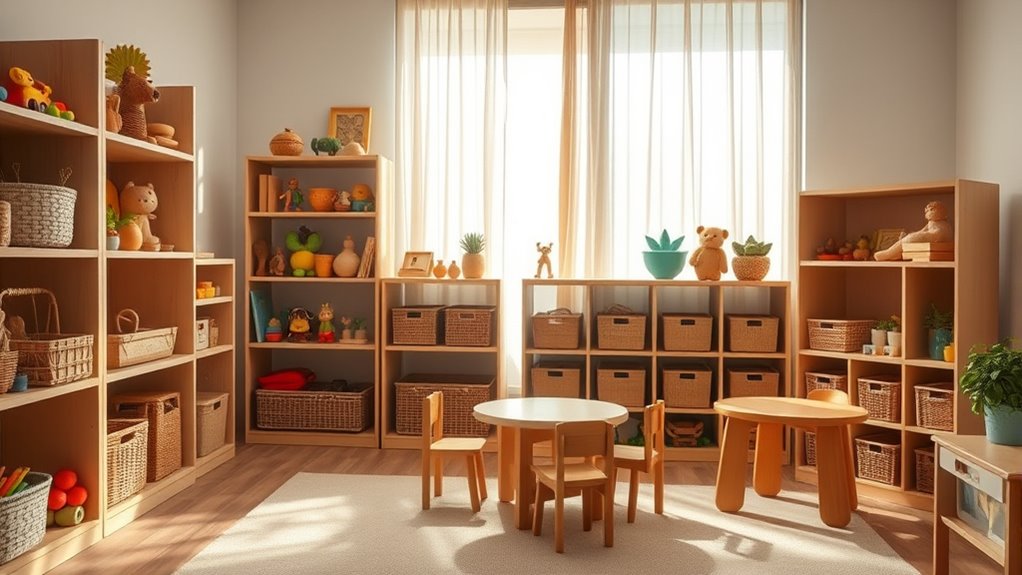
Have you ever noticed how your child’s interest in toys can ebb and flow? One day, they might be captivated by a particular set, and the next, they barely glance at it. This natural shift can be frustrating, especially when you’re trying to keep things organized and respectful of their developing independence. That’s where toy rotation, inspired by Montessori principles, truly shines. By using thoughtful storage solutions and encouraging child-led choices, you can create a more harmonious and engaging environment for your little one.
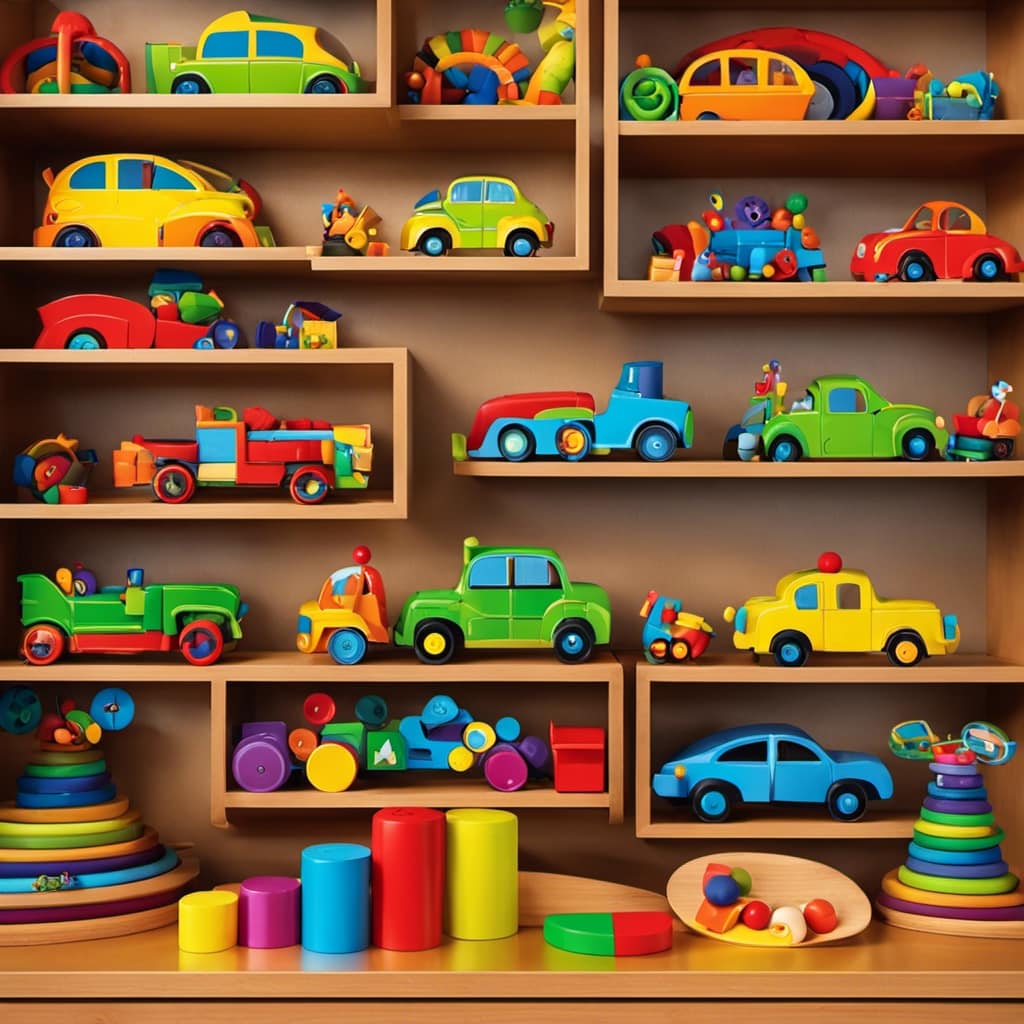
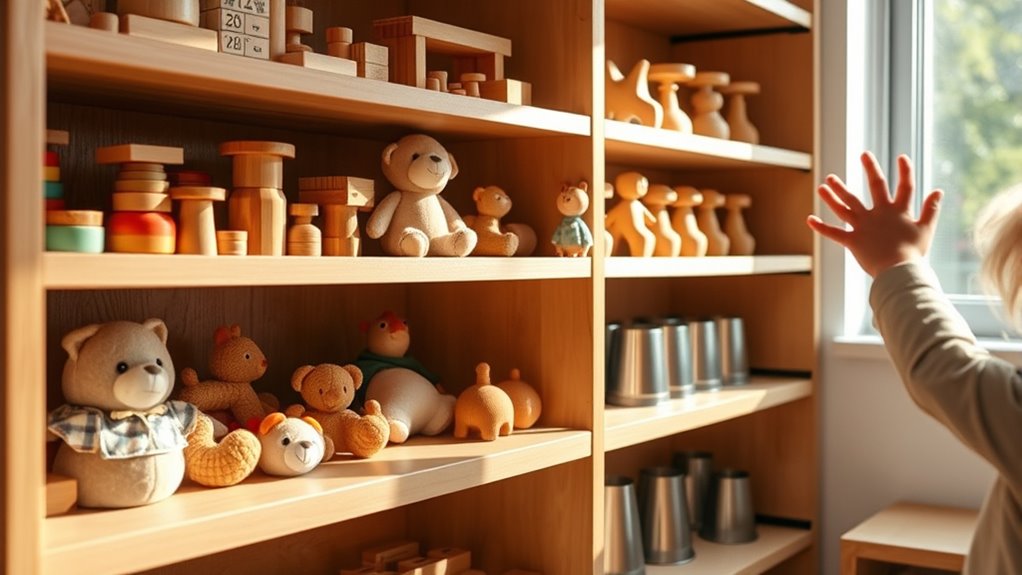
Start by understanding that children thrive when they have control over their surroundings. Instead of overwhelming them with every toy at once, you can introduce a rotation system. This means selecting a manageable number of toys to be accessible at any given time and storing the rest out of sight. When it’s time to rotate, you swap out the toys, giving new options that reignite your child’s interest. Well-designed storage solutions, like open shelves, baskets, or clear containers, make it simple for your child to see what’s available and choose what appeals to them. This not only promotes independence but also teaches them to make their own decisions about play.
Children thrive with control over their toys through simple rotation and accessible storage.
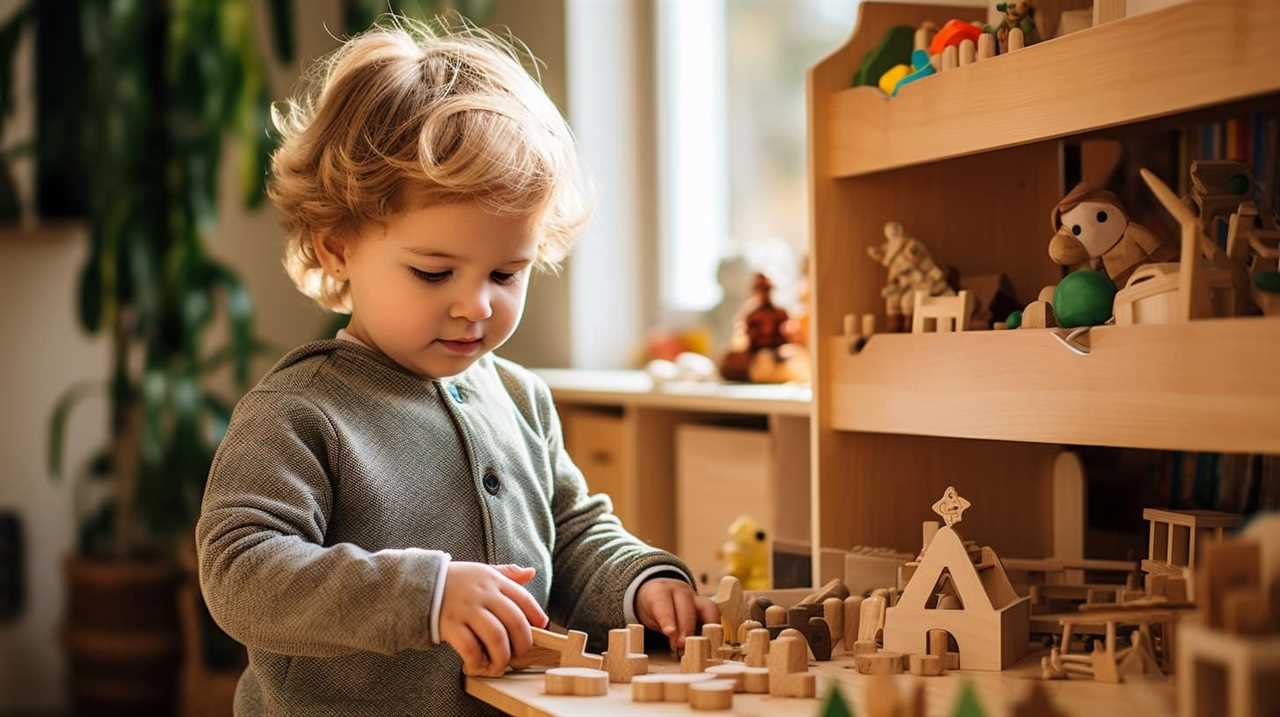
Keep in mind that child-led choices are foundational to this approach. When your child chooses their toys, they’re engaging in a form of self-directed learning. It’s important to respect their preferences and avoid forcing certain toys on them, which can create resistance. Instead, offer a variety of options and let them decide what to play with. This empowers them, builds confidence, and fosters a sense of responsibility for their belongings. As they select, they learn about their interests and develop decision-making skills. When it’s time to rotate, involve them in the process—ask which toys they want to keep out and which they’re ready to store away. This collaboration shows respect for their autonomy and helps them feel in control of their environment. Additionally, understanding the importance of honey in bee health can serve as a reminder of the value of nurturing environments that support growth and well-being.
Implementing a toy rotation system doesn’t require complex planning; it’s about creating a flexible, child-centered environment. Use storage solutions that are accessible and inviting, and involve your child in deciding what stays out and what goes into storage. By doing so, you cultivate a space that reflects their interests and promotes independence. This method not only keeps play fresh and engaging but also teaches valuable lessons about organization, choice, and responsibility. Over time, your child will develop a deeper understanding of their preferences and a greater sense of autonomy, all while maintaining a tidy, inviting play area.
Frequently Asked Questions
How Often Should Toys Be Rotated for Optimal Learning?
You should rotate toys every 1 to 2 weeks to promote child independence and keep their interest alive. Use storage solutions to organize toys, making it easy to swap them out regularly. This practice encourages your child to explore different toys actively, fostering learning and independence. Regular rotation prevents clutter and boredom, helping your child stay engaged and develop a sense of responsibility for their belongings.
What Types of Toys Are Best Suited for Rotation?
Think of your child’s playtime as a garden that needs nurturing. The best toys for rotation are sensory play items and open-ended toys that spark imagination and exploration. These versatile tools act like seeds, blooming into countless learning experiences. By rotating such toys, you keep the environment fresh and engaging, allowing your child’s curiosity to flourish. Focus on quality, simplicity, and variety to cultivate a rich, stimulating play space.
How Can Parents Involve Children in the Toy Rotation Process?
You can involve your child in toy rotation by encouraging parent-child communication, asking their preferences, and explaining the process. Let them help organize storage solutions, choosing where to keep toys and how to set up rotation schedules. This involvement fosters independence and responsibility, making them excited about the process. By working together, you create a sense of ownership and make toy rotation a fun, collaborative activity.
Are There Any Safety Concerns With Toy Rotation?
Are you worried about safety when rotating toys? It’s crucial to do a thorough hazard assessment first, checking for broken parts or sharp edges. Keep choking hazards out of reach, especially small toys or parts that could be swallowed. Regularly inspect toys for damage, and ensure children are supervised during play. By staying vigilant, you can make toy rotation safe and fun, giving your child a stimulating environment without unnecessary risks.
How Does Toy Rotation Support Montessori Educational Principles?
Toy rotation supports Montessori principles by fostering independence and focus. When you rotate toys, you allow children to explore different materials, promoting sensory development and fine motor skills. This approach encourages purposeful play and helps children develop concentration. By limiting choices at a time, you create an environment that nurtures their innate curiosity and encourages them to engage deeply with each toy, aligning perfectly with Montessori’s emphasis on hands-on, self-directed learning.
Conclusion
By rotating toys the Montessori way, you create a world of wonder where curiosity thrives, much like Alice discovering Wonderland. You foster independence, focus, and joy in your child’s learning journey. Remember, this simple act transforms chaos into calm, releasing their imagination just as a key opens a treasure chest. Keep the magic alive by embracing toy rotation, and watch your little one explore endless possibilities—because, like all great stories, the adventure begins with a single turn.