

Toddler sensory play is a fun and purposeful way to support your child’s natural curiosity and development. By encouraging hands-on exploration with materials like rice, water, or play dough, you help boost their fine motor skills, language, and emotional regulation. Messy activities foster creativity and problem-solving while strengthening sensory connections in their brain. If you keep exploring, you’ll discover easy ways to make sensory play safe, engaging, and beneficial for your little one’s growth.
Key Takeaways
- Sensory play engages toddlers in messy activities that promote curiosity, exploration, and learning through tactile experiences.
- Incorporating messier materials like pudding or shaving cream supports sensory integration and emotional regulation.
- Messy sensory activities enhance fine motor skills, hand-eye coordination, and problem-solving abilities.
- Purposeful messy play builds confidence, independence, and language development through discovery.
- Creating safe, flexible messy play environments encourages joyful exploration and overall brain development.
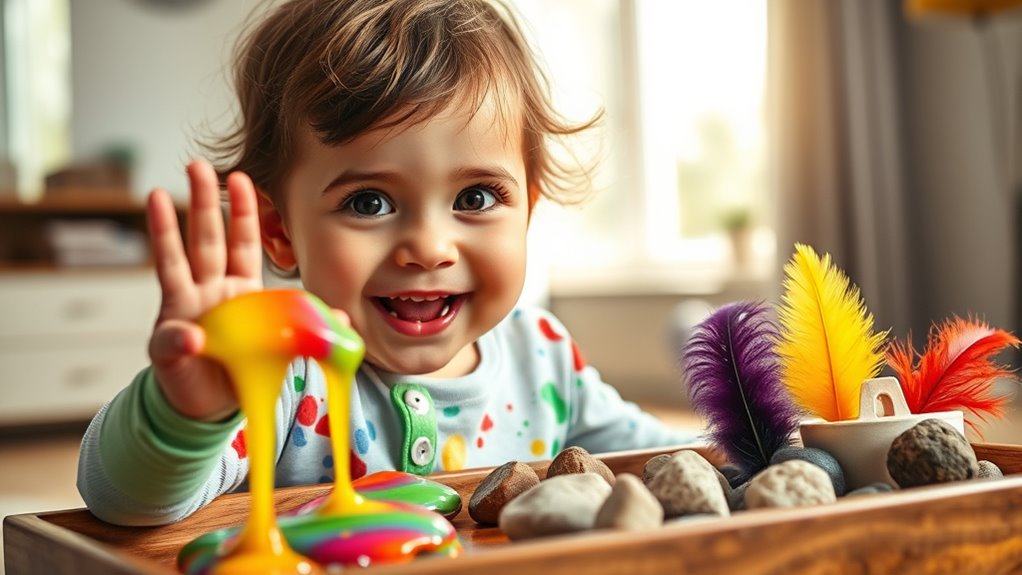
Have you ever wondered how toddlers explore the world around them? Their curious nature drives them to touch, feel, and manipulate everything within reach. Sensory play offers an incredible way to support this natural curiosity while helping their brains develop in meaningful ways. When you introduce sensory activities, you’re giving your little one opportunities to learn about textures, temperatures, and shapes. The benefits of sensory play are vast—enhancing fine motor skills, improving hand-eye coordination, and fostering language development. Plus, it can boost their confidence as they master new sensations and tools.
You might be surprised to discover how simple sensory play ideas can turn everyday objects or materials into exciting learning opportunities. For example, filling a shallow bin with rice, pasta, or beans creates a tactile surface for your toddler to explore. Adding small toys or scoops encourages them to practice pincer grips and hand movements. Using materials like shaving cream or pudding can introduce a new sensory experience that’s both messy and enthralling, all while supporting sensory integration. These activities not only entertain but also help your child process sensory input more effectively, which is vital for their overall development.
Simple sensory play ideas like rice bins and pudding engage toddlers and promote development.
By engaging in sensory play, you’re also nurturing your child’s cognitive skills. When they compare textures or identify different smells, they’re building connections that will aid their understanding of the world. Sensory activities can also be calming and help regulate emotions, especially during stressful or overstimulating moments. Creating a sensory bin or setting up a water table allows your toddler to experiment freely, fostering independence and problem-solving skills. Incorporating a variety of sensory experiences can also support sensory integration, which is crucial for processing sensory information efficiently. The key is to keep the activities safe, age-appropriate, and flexible—letting your child lead the way.
Incorporating sensory play ideas into your daily routine is easier than you might think. You can add a few drops of food coloring to water for visual stimulation, or include scented play dough to engage their sense of smell. You might even hide small objects within a bag of dry pasta for them to find by touch. These simple tweaks make sensory play both educational and fun. Remember, the goal isn’t perfection or tidiness but creating an environment where your toddler can discover and learn through their senses. As they grow, these sensory experiences lay a foundation for future learning, problem-solving, and emotional regulation. So, embrace the mess and enjoy watching your little one thrive through sensory exploration.
Frequently Asked Questions
How Can Sensory Play Support a Toddler’s Emotional Development?
Sensory play helps your toddler develop emotional awareness by allowing them to explore and express feelings through different textures and activities. It also promotes self-regulation as they learn to manage their reactions to new sensations, calming themselves when overwhelmed or excited. You support this growth by providing safe, engaging sensory experiences, encouraging your toddler to identify emotions, and guiding them to use sensory cues to calm or energize themselves effectively.
Are There Any Safety Concerns With Messy Sensory Play?
You should be aware of safety concerns during messy sensory play, especially regarding food safety and allergy awareness. For instance, a toddler with nut allergies could accidentally ingest allergens if they play with contaminated substances. Always supervise closely, use non-toxic, allergy-free materials, and make certain the workspace is clean. Keeping a first aid kit nearby and knowing your child’s allergies helps prevent accidents and ensures safe, enjoyable sensory experiences.
What Are Some Cost-Effective Sensory Play Ideas at Home?
You can create cost-effective sensory play at home by using DIY materials like rice, pasta, or beans, which are inexpensive and easy to find. Incorporate nature exploration by collecting leaves, stones, or flowers for tactile experiences. Set up simple activities like a sensory bin or a nature scavenger hunt, encouraging your toddler to explore textures and objects safely while boosting their development without spending much money.
How Do I Introduce Sensory Activities to Shy or Anxious Toddlers?
You can introduce sensory activities to shy or anxious toddlers through trust-building activities like gentle touch games and calm interactions. Start with a gradual introduction, offering small, familiar sensory experiences in a safe space. Let your child explore at their own pace, providing reassurance and positive reinforcement. Over time, this approach helps them feel secure, encouraging curiosity and confidence during sensory play.
Can Sensory Play Help With Toddlers’ Language Development?
Think of sensory play as a bridge to your toddler’s language milestones; it sparks their curiosity and invites words to blossom. As they explore textures and objects, you can introduce new vocabulary, turning play into a lively storytelling adventure. This hands-on experience helps your child build vocabulary, making communication more vibrant. With every touch and taste, you’re nurturing their language skills, helping them express ideas with confidence and joy.
Conclusion
So, next time your toddler’s hands are covered in paint, rice, or goo, just remember—you’re witnessing a tiny scientist in action, transforming your living room into a masterpiece museum of mess. Embrace the chaos; after all, this messy playground is where little minds grow, one squishy, sticky experiment at a time. Who knew that toddler sensory play, with all its splatters and spills, could be the most productive disaster of your day?