
Tinker trays are designed to help you organize materials in a way that sparks open-ended exploration and inventive thinking. Instead of focusing on specific outcomes, you curate a variety of supplies like buttons, screws, or beads to encourage spontaneous experimentation. This setup shifts your mindset from creating perfect results to discovering new ideas and solutions. By continuing to explore, you’ll uncover how these trays can transform your creative process and workspace into a playground of possibilities.
Key Takeaways
- Tinker trays focus on organizing diverse materials to inspire exploration rather than guiding toward specific results.
- They encourage spontaneous experimentation by providing accessible, flexible spaces for creative discovery.
- Curating materials for open-ended use fosters a mindset of play and inquiry over fixed outcomes.
- Reconfigurable trays support ongoing exploration and adaptation to evolving project ideas.
- Emphasizing materials over outcomes cultivates inventive thinking and a playful approach to creation.
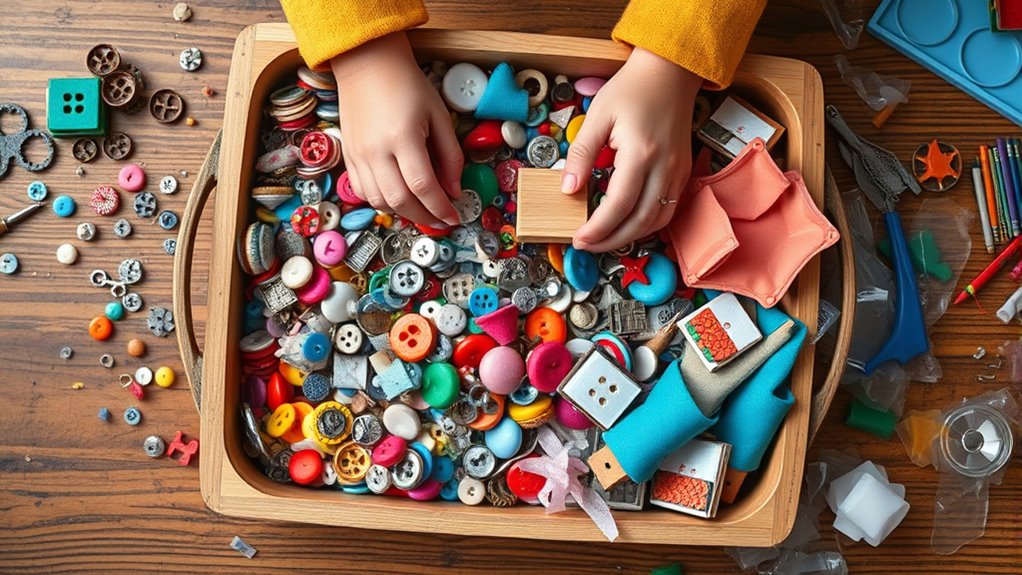
Tinker trays are versatile organizers designed to keep your small parts, tools, and craft supplies neatly arranged and easily accessible. When you use a tinker tray, you’re inviting open-ended exploration into your workspace. Instead of guiding yourself toward a specific outcome, you can freely experiment with different materials, shapes, and arrangements. The beauty of this approach lies in how the tray fosters creative organization—your supplies aren’t just stored away, but actively encourage you to see new connections and possibilities. Whether you’re working on a craft project, scientific experiment, or DIY repair, the tray becomes a hub for spontaneous discovery.
With a tinker tray, you get to curate your materials in a way that sparks curiosity rather than stifling it. You can set out buttons, beads, screws, or miniature parts without worrying about them getting lost or cluttering your workspace. This setup promotes a mindset of play and inquiry, where the process matters more than the final product. You’re not confined to a rigid plan, and that freedom means you’re more likely to stumble upon inventive solutions or unexpected ideas. It’s about creating an environment that nurtures exploration, so your focus shifts from perfect results to the joy of discovery.
The organization provided by tinker trays isn’t just functional; it’s a tool that supports your creative thinking. When everything has its place, you spend less time searching and more time engaging with your materials. This efficient setup helps you stay immersed in open-ended exploration, allowing you to experiment with different combinations and techniques without interruption. Over time, you’ll notice how this method enhances your ability to think outside the box, as it encourages you to view your supplies as a palette for endless possibilities rather than static objects to be used in a predetermined way.
Furthermore, the flexibility of a tinker tray aligns perfectly with creative organization. Instead of rigid compartments that limit your options, many trays are customizable, letting you adapt them to your evolving projects. You can add or remove sections, switch out contents, or reconfigure the layout based on your current focus. This adaptability ensures that your workspace remains a dynamic environment, constantly supporting your open-ended exploration. As a result, you’re more likely to develop a habit of inventive thinking, seeing your collection of supplies as a toolkit for discovery rather than just storage.
In the end, a tinker tray empowers you to curate your materials intentionally, fostering an open-ended approach where exploration and creativity thrive. It transforms your workspace into a playground for ideas, where organization becomes a catalyst for innovation and discovery. Incorporating creative organization principles can further enhance your ability to generate new ideas and solutions.
Frequently Asked Questions
How Can Tinker Trays Support Different Age Groups?
You can support different age groups with tinker trays by selecting age-appropriate tools and materials that match their developmental levels. Use engagement strategies like varying complexity, incorporating familiar themes, and offering open-ended prompts to encourage exploration. By tailoring the tray contents and activities, you foster curiosity and hands-on learning, ensuring each age group stays engaged and challenged without feeling overwhelmed or bored.
What Materials Are Best for Tinker Trays?
Honestly, the best materials for tinker trays are those that spark open-ended exploration and sensory engagement. Think everyday objects like buttons, fabric scraps, and natural materials like shells or leaves—stuff that invites kids to experiment without restrictions. Avoid overly structured items; instead, curate diverse textures, colors, and shapes that encourage curiosity and creativity. Your goal is to let their imaginations run wild with a simple, sensory-rich selection.
How Do Tinker Trays Promote Creativity?
You promote creativity by encouraging open-ended exploration and sensory engagement through tinker trays. When you provide diverse, inviting materials, children feel free to experiment and imagine without restrictions. This hands-on approach helps them develop problem-solving skills and express their ideas freely. By focusing on the process rather than the outcome, you foster a natural curiosity that fuels their creative thinking and builds confidence in their abilities.
Can Tinker Trays Be Used in Classrooms?
Think of tinker trays as your classroom’s Pandora’s box, ready to spark curiosity. Yes, you can absolutely use them in classrooms. With tinker tray customization and thematic tinker trays, you tailor experiences to fit your lesson plans and students’ interests. They invite hands-on exploration, fostering creativity and problem-solving. By curating materials carefully, you create a dynamic environment where students learn through discovery, making every moment an adventure.
How Should Tinker Trays Be Maintained and Stored?
You should regularly clean and inspect your tinker trays to keep them organized and safe. Use organization tips like labeled containers and designated storage spots to prevent clutter. Always consider safety considerations by checking for broken parts or sharp edges and ensuring materials are handled properly. Store trays in a dry, stable area away from direct sunlight, and encourage students to return items after use to maintain a safe, orderly environment.
Conclusion
By focusing on curating materials rather than predetermined outcomes, you empower creativity and exploration. Research shows that children engaged in open-ended tinkering develop stronger problem-solving skills and resilience. Remember, when you provide diverse materials without a set goal, you’re nurturing curiosity and innovation. So, next time you set up a Tinker Tray, think less about the finished product and more about the process—it’s where true learning happens. Let curiosity lead the way!