To create taste-safe sensory recipes for babies and toddlers, focus on incorporating safe, allergen-friendly textures like mashed avocado, fruit purees, or cooked vegetables with varied consistencies. Start with gentle textures and gradually introduce new ones, using tools like silicone spatulas or soft brushes for exploration. These recipes promote safe, engaging food play that supports motor skills and food acceptance. Keep exploring different ideas, and you’ll discover how to turn mealtime into a sensory adventure for your little one.
Key Takeaways
- Use allergen-friendly, edible ingredients like mashed fruits, vegetables, or coconut yogurt to ensure safety during sensory exploration.
- Incorporate a variety of textures—smooth, soft, chewy, crunchy—to promote tactile learning and oral motor development.
- Start with gentle textures such as fruit mash with tiny bits, gradually introducing more complex consistencies like cooked carrots or soft cheese.
- Utilize tools like silicone spatulas or soft brushes to enhance fine motor skills and encourage active food engagement.
- Design recipes that turn mealtime into a safe, engaging sensory adventure, fostering curiosity and healthy eating habits.
Taste-safe sensory recipes are designed to provide engaging experiences for individuals with sensory sensitivities or food allergies. When you’re working with babies and toddlers, exploring different food textures becomes an essential part of their development. Sensory play isn’t just about fun; it helps children learn about their environment and develop important motor skills. By introducing safe, tasty recipes that focus on food texture, you give your little ones the chance to discover new sensations without worry.
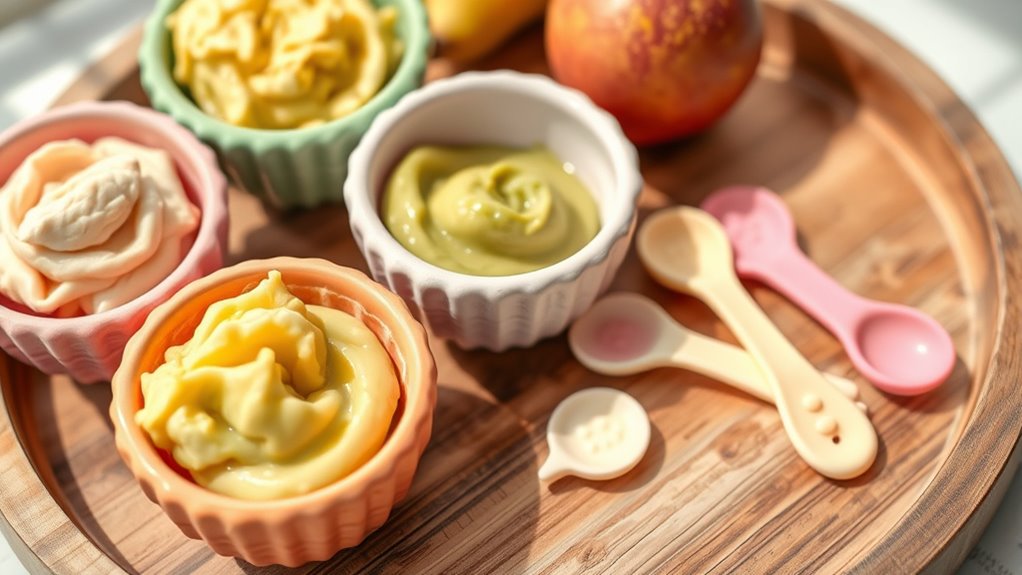
You’ll want to start with recipes that emphasize the variety of textures—think smooth, crunchy, soft, or chewy. For example, a simple fruit mash with tiny bits of soft fruits like bananas or cooked apples offers a gentle, smooth texture that’s perfect for babies just starting solids. As they grow, you can incorporate more varied textures, like adding small pieces of cooked carrots or soft cheese, giving them opportunities to feel different consistencies. These textures stimulate the senses and encourage your child to explore food actively, turning eating into a form of sensory play.
Start with smooth fruit mash and gradually introduce varied textures like cooked carrots and soft cheese.
One way to make sensory play both safe and enjoyable is by creating recipes that are edible and allergen-friendly. Using ingredients like coconut yogurt, mashed avocado, or pureed vegetables ensures that every bite is safe. When children touch and taste these foods, they build a better understanding of food textures, which can aid in developing their oral motor skills and acceptance of new foods. Plus, since these recipes are taste-safe, you don’t need to worry about choking hazards or allergic reactions, allowing your child to explore freely.
As you introduce different food textures, observe how your child responds to each one. Do they seem intrigued by the crunch of a cooked vegetable chip? Do they prefer the silky softness of a fruit puree? Engaging with these textures during sensory play helps build their confidence with new foods and supports their oral development. You can also incorporate sensory play by providing tools like silicone spatulas or soft brushes, allowing your child to feel and manipulate the food in various ways. This hands-on approach encourages curiosity and promotes fine motor skills.
Ultimately, creating taste-safe sensory recipes centered around food texture turns eating into an interactive, educational experience. It fosters curiosity, builds confidence, and nurtures healthy eating habits—all while keeping safety at the forefront. By thoughtfully selecting ingredients and textures, you empower your child to explore the world of food through sensory play, making mealtime a joyful, engaging adventure.
Frequently Asked Questions
How Do I Ensure Recipes Are Allergen-Free for My Baby?
To guarantee recipes are allergen-free for your baby, start with allergy testing to identify potential triggers. Always read labels carefully and choose safe, single-ingredient foods. Use ingredient substitutions when necessary, like replacing nuts with seeds or fruit purees. Keep a detailed list of safe foods and avoid cross-contamination by thoroughly cleaning utensils and surfaces. This proactive approach helps minimize allergy risks and keeps your baby safe while exploring new tastes.
Can These Recipes Be Adapted for Different Age Groups?
Yes, you can adapt these recipes for different age groups by making age-appropriate modifications and ingredient substitutions. For younger babies, you might blend ingredients smoothly and avoid added salt or sugar. As your child grows, you can gradually introduce more textures and flavors. Always consider developmental stages and consult your pediatrician for specific guidance. This way, you guarantee the recipes suit your child’s changing needs safely.
What Are Safe Serving Sizes for Toddlers?
Imagine a tiny garden where each plant needs just enough water to thrive. For toddlers, safe serving sizes focus on portion control and appropriate feeding frequency. Typically, offer small portions—about a couple of tablespoons for fruits or veggies—and space meals every 2-3 hours. This approach nurtures your child’s growth without overwhelm, helping them develop healthy eating habits while ensuring they’re neither hungry nor overfilled.
How Long Can Sensory Recipes Be Stored Safely?
You can typically store sensory recipes for 24 to 48 hours, depending on the preservation methods you use. To guarantee safety, keep them refrigerated at or below 40°F (4°C) and use airtight containers to prevent contamination. If you want to extend storage, consider freezing portions, which can last up to a month. Always check for spoilage signs before serving, and discard if anything seems off.
Are There Specific Ingredients to Avoid in Sensory Recipes?
Sure, avoid ingredients that trigger food allergies, like nuts, eggs, or dairy, even if they seem harmless. Ironically, what’s “safe” for grown-ups might not be for tiny taste testers. Always check labels and consider ingredient substitutions to guarantee safety. Steer clear of honey, unpasteurized products, and certain seafood. Your goal? Keep sensory recipes both exciting and safe, so your little one explores without unnecessary risks.
Conclusion
As you explore these taste-safe sensory recipes, remember that sometimes the simplest ingredients can create the most memorable moments. It’s funny how a single spoonful can turn a hesitant eater into a curious explorer, just like how a forgotten fruit can surprise you with its sweetness. Trust your instincts and enjoy each discovery. After all, the journey of feeding your little one often leads to the sweetest surprises — sometimes when you least expect them.