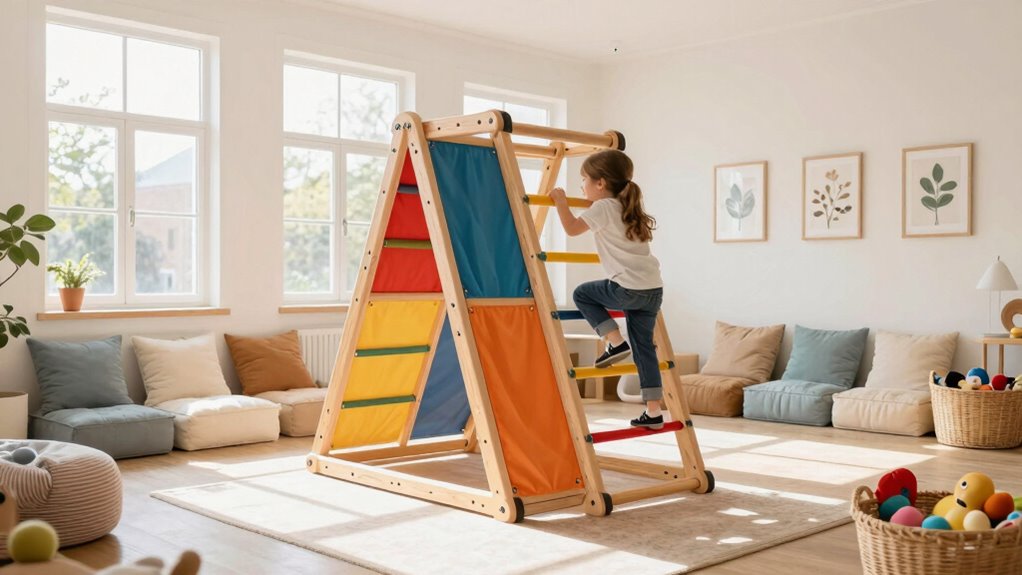

To support climbing play without chaos, set clear safety rules and encourage responsible behavior. Regularly inspect and maintain equipment to keep it safe and in good condition, preventing unexpected hazards. Create a designated climbing area with soft mats and appropriate structures for different ages and skill levels. Guide children to respect the equipment and each other, fostering confidence and safety. If you want to discover more tips on creating a balanced, secure climbing environment, keep exploring these strategies.
Key Takeaways
- Establish clear rules and routines for safe climbing behavior and turn-taking.
- Regularly inspect and maintain equipment to ensure safety and prevent unexpected issues.
- Provide adequate supervision to monitor children and intervene when necessary.
- Design designated climbing zones with soft mats and clear boundaries to contain play.
- Educate children on safety practices and respectful equipment use to foster responsible play.

Climbing play offers children essential opportunities for physical development and confidence-building, but without proper management, it can quickly turn into chaos. To keep things safe and organized, you need to pay close attention to safety precautions. Before children start climbing, check that all equipment is securely assembled, stable, and free from hazards like sharp edges or loose parts. Ensure the climbing structures are appropriate for the children’s ages and skill levels, reducing the risk of falls or injuries. Encourage children to follow rules, such as waiting for their turn and avoiding rough behavior, to maintain a safe environment. Positioning soft mats or padding underneath climbing areas can also minimize injuries if someone does fall, giving everyone peace of mind. These safety precautions are your first line of defense against accidents and help foster a sense of responsibility among children. Additionally, using proper installation techniques can significantly improve the safety and stability of climbing structures. Regularly educating yourself about safety standards and best practices can also help you stay ahead of potential hazards. Staying informed about industry safety guidelines can further enhance your ability to create a secure play environment. Incorporating proper maintenance routines ensures that equipment remains safe and functional over time, preventing accidents caused by deterioration or neglect.
Equally important is regular equipment maintenance. Over time, wear and tear can compromise the safety of climbing structures. Make it a routine to inspect all equipment thoroughly—look for rust, loose bolts, cracked wood, or frayed ropes. Tighten any loose fittings immediately and replace damaged parts before allowing children to play again. Maintenance also involves cleaning the equipment to prevent the buildup of dirt and bacteria, which can cause deterioration and pose health risks. By staying on top of equipment upkeep, you not only ensure safety but also extend the lifespan of the structures, saving you money and effort in the long run. When children see that you prioritize the safety and upkeep of their play area, they develop respect for the equipment and understand the importance of following safety rules.
Creating an environment where climbing play can flourish without chaos requires a combination of proactive safety precautions and diligent equipment maintenance. Educate children about the importance of safety, encouraging them to be mindful of their actions and the condition of the structures. Set clear guidelines for climbing activities, and enforce them consistently. When you maintain the equipment regularly and adhere to safety precautions, you foster a positive environment where children can explore, challenge themselves, and build confidence confidently. With these measures in place, you create a balanced space that promotes physical activity while minimizing risks, ensuring that everyone enjoys climbing play safely and without chaos.
children's climbing play structures with soft mats
As an affiliate, we earn on qualifying purchases.
As an affiliate, we earn on qualifying purchases.
Frequently Asked Questions
How Can I Encourage Safe Climbing Techniques?
You can encourage safe climbing techniques by emphasizing climbing safety and providing clear technique training. Teach your child to always test holds before putting full weight on them, keep three points of contact, and climb within their skill level. Model proper behavior and supervise closely, offering gentle reminders about safety. Reinforcing these habits helps develop good technique and reduces the risk of falls or injuries during climbing activities.
What Are the Best Age-Appropriate Climbing Equipment Options?
For young children, age-appropriate climbing equipment includes low, sturdy climbing walls and simple playground structures. These options promote confidence, coordination, and safe exploration. Look for features like soft mats underneath, wide handholds, and manageable heights. Climbing walls designed for beginners and toddler-friendly playground structures guarantee safety and fun. By choosing equipment suited to their age, you encourage active play while minimizing risks of falls or injuries.
How Do I Prevent Injuries During Climbing Activities?
To prevent injuries during climbing activities, you should conduct a thorough risk assessment beforehand to identify potential hazards. Always guarantee proper safety gear, like helmets and harnesses, is used correctly. Supervise closely, guiding your child on proper techniques and safe climbing limits. Keep the climbing area clear of obstacles, and teach your child to listen to their body and stop if they feel uncomfortable or unsafe.
What Is the Ideal Supervision Ratio for Climbing Play?
Did you know that a supervision ratio of 1 adult to 4 children is recommended for climbing safety? You should actively oversee climbing activities, ensuring children follow safety rules while encouraging independence. Use supervision strategies like constant visual monitoring, positioning yourself where you can see all climbers, and engaging with kids to promote safe play. This balance helps prevent accidents and fosters a secure, enjoyable climbing environment for everyone involved.
How Can I Incorporate Climbing Into Daily Routines?
You can incorporate climbing into daily routines by setting aside specific indoor or outdoor times for climbing challenges. Choose a safe, designated space where your child can explore different climbing options, whether indoors or outdoors. Encourage them to try new challenges regularly, helping develop their strength and coordination. Make climbing a fun, routine activity that promotes active play while keeping chaos at bay, and supervise appropriately to guarantee safety.
Conclusion
Supporting climbing play is like tending a garden—you nurture growth with patience and care, watching as your child’s confidence blossoms and their imagination reaches new heights. While chaos may momentarily sprout like wildflowers, it’s simply the vibrant energy of exploration. With mindful guidance, you cultivate a safe space where their spirit can soar freely. Remember, every climb is a step toward independence, transforming chaos into the colorful tapestry of learning and discovery.