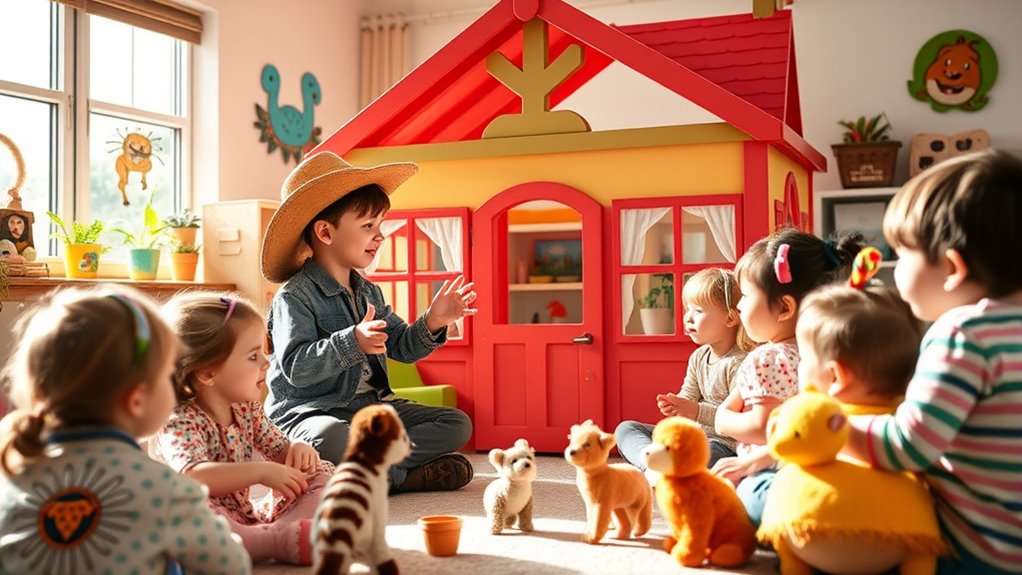

Engaging children in play-based storytelling helps develop their narrative skills by stimulating imagination and encouraging active participation. Using puppet shows, role play, and improvisation allows kids to explore emotions, sequence events, and understand story structure in a hands-on way. Promoting collaborative storytelling and asking open-ended questions foster critical thinking and confidence. If you want to discover more about making storytelling through play even more effective, keep exploring these fun strategies.
Key Takeaways
- Play-based activities like puppet shows encourage children to create and manipulate stories, enhancing their narrative skills.
- Role-playing allows kids to explore different perspectives, improving sequencing, problem-solving, and emotional understanding.
- Hands-on storytelling with puppets and props makes narratives more tangible and memorable, fostering active engagement.
- Asking open-ended questions during play promotes critical thinking and helps children develop coherent story structures.
- Collaborative storytelling through role negotiation builds verbal skills, confidence, and the ability to share and listen effectively.
Storytelling through play is a powerful way to spark imagination and deepen understanding in children. When you encourage kids to engage in activities like puppet shows and role playing, you’re giving them tools to explore stories actively rather than passively consuming them. Puppet shows, in particular, allow children to bring characters to life, fostering creativity and expressive language. As they manipulate puppets, they learn to develop dialogue, experiment with emotions, and understand narrative flow. This hands-on approach makes storytelling tangible and memorable, helping children grasp complex ideas through physical interaction.
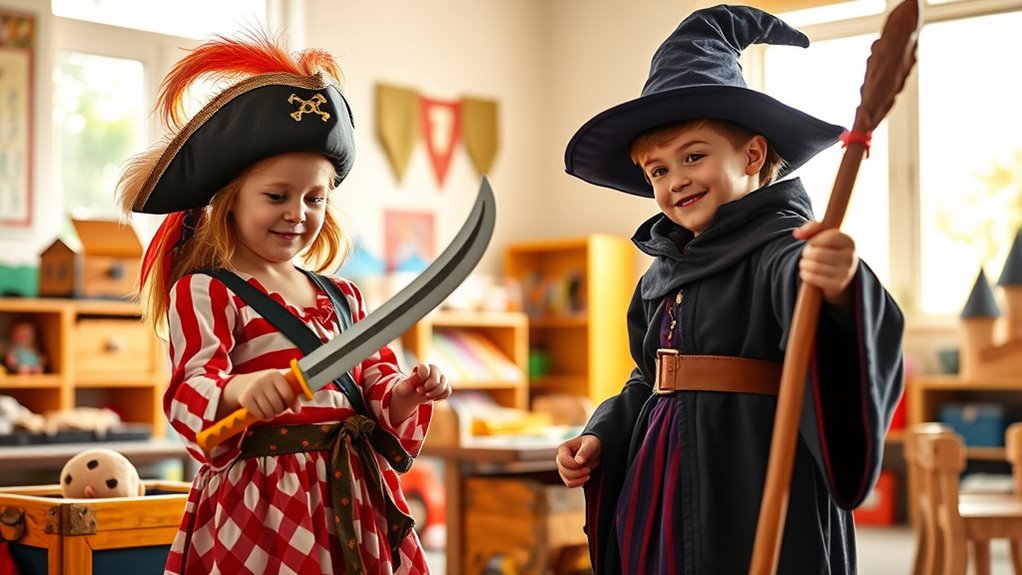
Role playing takes storytelling a step further by immersing children in different scenarios and perspectives. When kids act out roles—whether as firefighters, doctors, or explorers—they practice narrative skills like sequencing events, problem-solving, and empathy. You might see children improvising stories on the fly, adjusting their characters’ actions based on new developments or other participants’ input. This dynamic process strengthens their ability to construct coherent stories, recognize cause-and-effect relationships, and develop their vocabulary as they describe what they’re doing and feeling.
Both puppet shows and role playing serve as interactive platforms that promote verbal expression and social skills. As children craft stories with puppets, they learn to communicate ideas clearly and confidently. When they participate in role playing, they often negotiate roles, share ideas, and listen to others’ contributions, which enhances their collaborative storytelling abilities. These activities also boost confidence because children see their stories come to life through their actions and words. They begin to understand the power of narrative by actively creating and sharing their stories with peers or caregivers.
You can facilitate these storytelling activities easily. Set up a puppet theater or create simple puppets from socks or paper bags, then encourage children to invent stories around their characters. For role playing, provide costumes or props that align with the story themes, and prompt children to act out scenarios that promote critical thinking and storytelling. As they do, ask open-ended questions like, “What happens next?” or “How does your character feel?” to prompt deeper storytelling and reasoning.
Frequently Asked Questions
How Can Parents Encourage Storytelling During Everyday Activities?
You can encourage storytelling during everyday activities by engaging your child in imaginative play and using storytelling techniques. Ask open-ended questions about their day, create fun characters together, or invent stories while playing. Use everyday moments, like grocery shopping or cooking, as opportunities to craft stories. This approach nurtures their creativity, enhances narrative skills, and makes storytelling a natural, enjoyable part of daily life.
What Are Some Age-Appropriate Storytelling Games for Toddlers?
You can boost your toddler’s storytelling skills with age-appropriate games that focus on imaginative play. Try using storytelling puppets to bring stories to life and encourage your child to create their own tales. Play simple role-playing games where your toddler acts out different characters or scenarios. These activities help develop their language, creativity, and understanding of story structure, making storytelling fun and engaging for their age.
How Does Storytelling Through Play Benefit Language Development?
Imagine a child telling a story with stuffed animals, and you’ll see how storytelling through play boosts language skills. It encourages vocabulary expansion as they describe characters and actions. Plus, it promotes social-emotional growth, helping kids understand feelings and build empathy. When you engage in these playful narratives, you’re supporting their communication, making language learning natural and fun while fostering emotional understanding and social skills.
What Role Do Cultural Stories Play in Play-Based Learning?
Cultural stories play a crucial role in play-based learning by enriching your child’s understanding of their heritage and values. Through cultural storytelling and play traditions, they learn important lessons, language, and social norms. You help them connect with their identity while fostering creativity and empathy. Incorporating these stories into play encourages meaningful engagement, making learning both fun and culturally relevant. This approach strengthens their sense of community and belonging.
How Can Educators Assess a Child’s Narrative Skills Through Play?
Imagine a canvas where your child’s storytelling paints vivid pictures. You assess their narrative skills by observing story complexity and expressive language during play. Notice how they structure stories, use descriptive words, and incorporate characters or themes. By engaging in open-ended activities, you can gauge their ability to connect ideas and express thoughts clearly, helping you support their growing storytelling skills in a natural, playful way.
Conclusion
As you watch a child craft a story with toys, it’s like planting seeds in a garden—each play moment nurtures their narrative skills. Just last week, I saw a little girl turn a simple dollhouse into a world of adventures, showcasing her imagination and storytelling ability. Remember, when you encourage play, you’re helping them build a rich storytelling foundation—like watering those seeds—leading to confident, creative storytellers tomorrow.