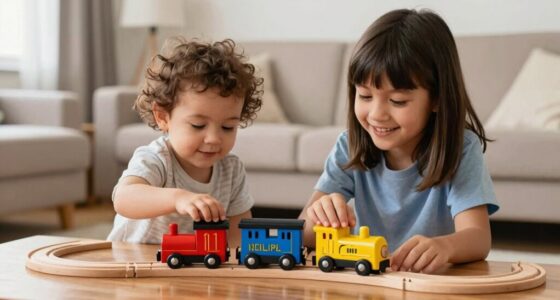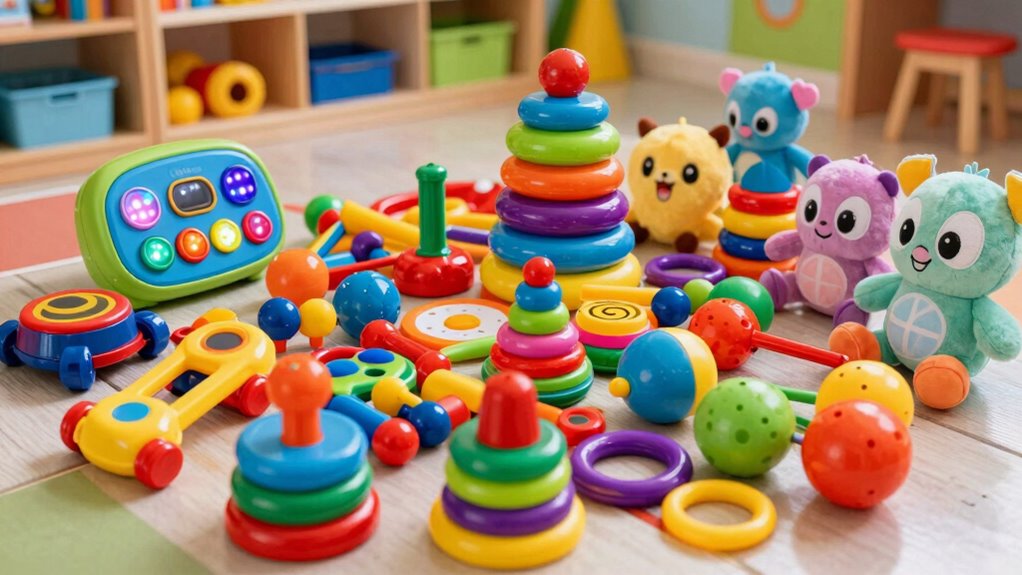

To spot overstimulating preschool toys quickly, watch how your child reacts during play. Signs like excessive fidgeting, crying, withdrawal, or irritability suggest the toy’s sensory input might be too intense. Look for signs of fatigue, anxiety, or difficulty focusing. Notice if they seem overwhelmed or exhausted afterward. Recognizing these reactions helps you choose more suitable toys and create calmer play environments. Keep exploring to discover effective ways to support your child’s sensory needs.

Turn the school run and nap time into listening time
- Thousands of audiobooks, podcasts and originals
- Listen on your phone, tablet or Echo — also offline
- Cancel anytime
Key Takeaways
- Look for toys with flashing lights, loud sounds, or chaotic movements that may overwhelm a child’s senses.
- Observe if the toy demands rapid responses or has unpredictable stimuli that can cause overstimulation.
- Watch for signs of distress, such as crying, irritability, or withdrawal during play with certain toys.
- Check if the toy triggers signs of fatigue, anxiety, or difficulty focusing in the child.
- Assess whether the toy’s sensory input seems excessive or overwhelming for the child’s individual sensitivities.
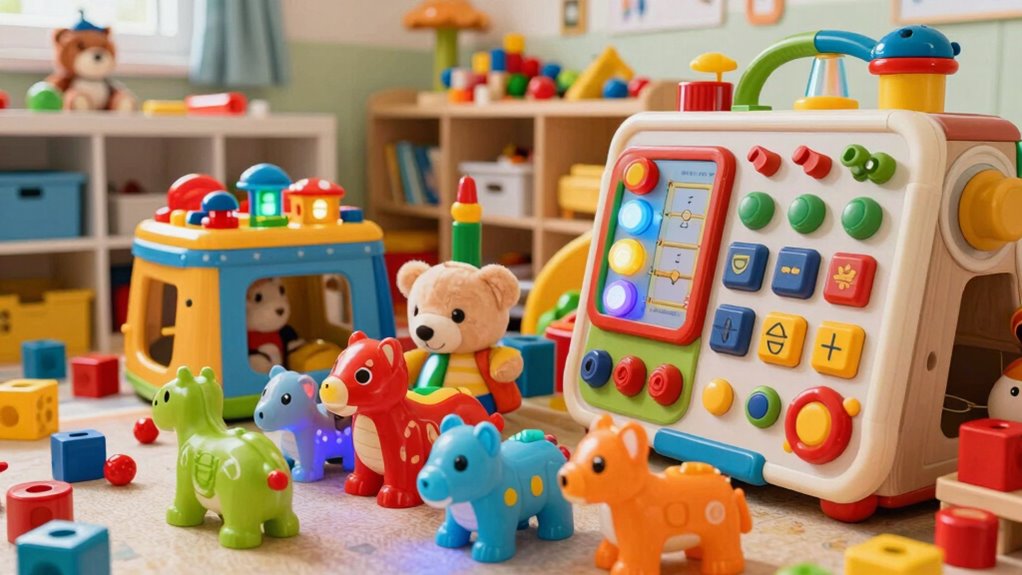
You’ll want to watch for signs that a toy is causing sensory overload. Maybe the child starts to fidget excessively, cry, or seems unable to focus on the activity. They might also become irritable or withdraw from play altogether. These reactions suggest the toy’s sensory input is too intense, whether it’s bright flashing lights, loud sounds, or complex, chaotic movements. If a toy demands rapid responses or produces unpredictable stimuli, it’s likely overstimulating. Pay attention to how the child reacts during play—if they seem anxious or exhausted afterward, it’s time to reconsider that toy. Recognizing the importance of appropriate sensory input can help in selecting toys that support a child’s development without overwhelming them. Remember, the goal is to encourage engagement and learning, not to push their sensory limits. Incorporating calming sensory input into toy selection can help create a more balanced play environment. Being aware of a child’s sensory sensitivities can further aid in choosing appropriate toys that foster positive experiences. Understanding your child’s individual sensitivities can help you choose toys that are appropriate for their needs and promote positive play experiences.
calming sensory toys for preschoolers
As an affiliate, we earn on qualifying purchases.
As an affiliate, we earn on qualifying purchases.
Frequently Asked Questions
Can Overstimulating Toys Harm a Child’s Development?
Overstimulating toys can harm your child’s development by causing sensory overload, which overwhelms their senses and makes focusing difficult. This overload may lead to increased stress or anxiety and potentially contribute to developmental delays over time. To protect your child’s growth, choose toys that are age-appropriate, simple, and promote calm exploration, allowing them to develop skills at a comfortable pace without feeling overwhelmed.
How Often Should I Rotate Preschool Toys?
You should rotate preschool toys weekly or every two weeks to keep your child’s interest fresh. Prioritize toy safety by inspecting for damages during rotations and store unused toys properly with effective storage solutions to prevent clutter. Regular rotation not only prevents overstimulation but also promotes healthy development by encouraging new play experiences. Keep a schedule and organize toys systematically to make rotations easy and guarantee your child’s environment remains safe and engaging.
Are There Specific Signs of Overstimulation During Play?
You might notice signs of overstimulation during play, like your child becoming irritable or having trouble focusing. These signals often stem from sensory overload, making their attention span short and their reactions intense. If your child seems overwhelmed, with frequent fussiness or difficulty calming down, it’s a clear sign that the toys are too stimulating. Pay attention to these cues and adjust playtime to keep their experience positive and balanced.
What Age Is Most Vulnerable to Overstimulating Toys?
You’re most vulnerable to overstimulating toys between ages 2 and 4, when children are highly curious but still developing self-regulation skills. During this time, sensory overload from cluttered toy collections can overwhelm them easily. Keep toy clutter minimal and choose simpler, age-appropriate toys. Watch for signs like fussiness or difficulty calming down, which indicate overstimulation. Limiting noisy, bright, or multifaceted toys helps children stay balanced during play.
How Do I Balance Educational and Overstimulating Toys?
To balance educational and overstimulating toys, you should prioritize toy safety and observe your child’s reactions to prevent sensory overload. Offer a variety of simple, age-appropriate toys that promote learning without overwhelming their senses. Rotate toys regularly, and watch for signs of overstimulation like fussiness or disengagement. This approach guarantees your child gains educational benefits while avoiding overstimulating experiences that can hinder their development.
Conclusion
Just like a conductor gracefully manages an orchestra, you can balance your child’s play by spotting overstimulating toys before they drown in chaos. Keep an eye out for loud, flashing, or overly complex toys that might turn playtime into a wild symphony. By choosing simpler, calming options, you create a harmonious environment where your little one can explore and grow. Remember, a well-directed play session is your baton to nurturing curiosity without the noise of overstimulation.
Cold & flu season Picks
humidifiers
As an affiliate, we earn on qualifying purchases.