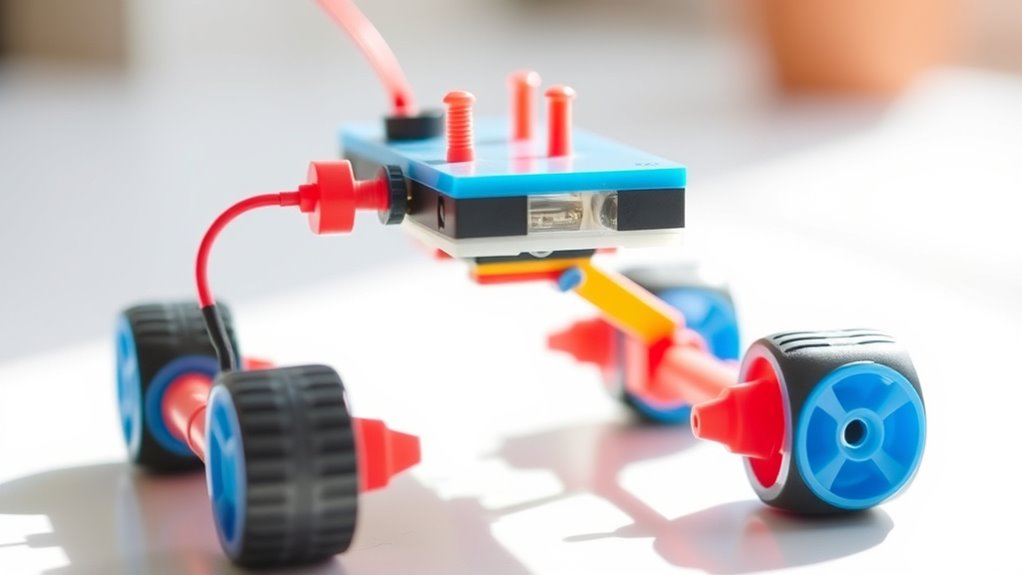

Simple robotics crafts that require no soldering let you build functional robots using everyday materials like popsicle sticks, string, and clips. You can modify remote control cars or create robotic arms with snap-in or screw-in parts, avoiding complex electronics. These projects are accessible, affordable, and perfect for beginners. They teach basics of mechanics and electronics in a fun, hands-on way. Keep exploring to discover more creative ways to bring your robotic ideas to life.
Key Takeaways
- Use household items like popsicle sticks, string, and clips to build basic robotic structures without soldering.
- Opt for modular kits with snap-in or clip-on parts for easy assembly of robots and robotic arms.
- Incorporate simple electronic components like switches, batteries, and Bluetooth modules for remote control.
- Follow step-by-step guides to create remote-controlled cars or robotic arms using non-soldering techniques.
- Emphasize hands-on learning, allowing beginners to understand robotics concepts through accessible, solder-free projects.
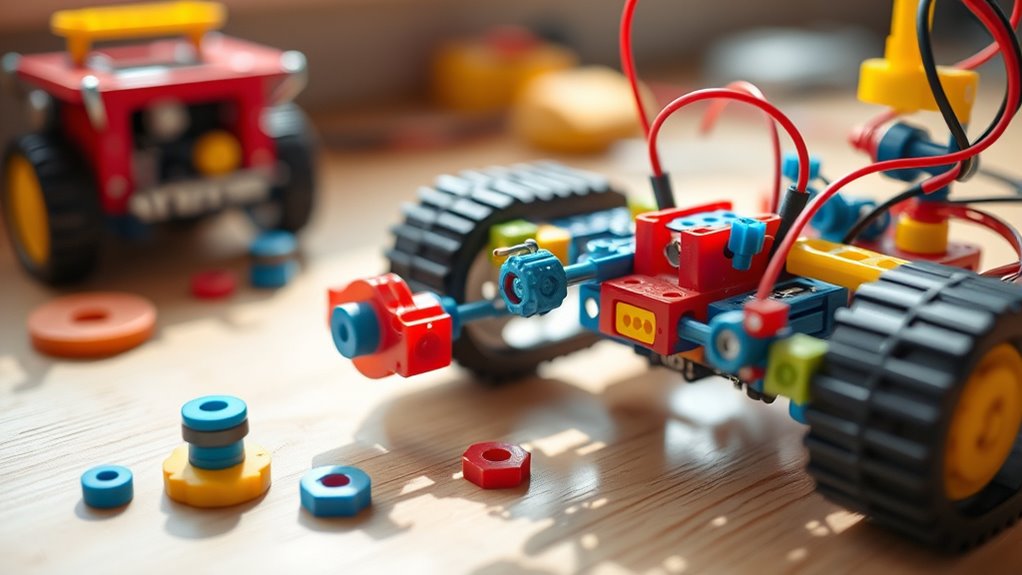
Have you ever wondered how to turn simple materials into a functioning robot? You’re in luck, because many robotics crafts don’t require soldering or complex tools. Instead, you can create impressive projects using basic household items, some batteries, and a few easy-to-find parts. Whether you’re interested in transforming remote controlled cars or building your own robotic arm projects, these crafts are accessible and satisfying, even for beginners.
Starting with remote controlled cars, you can modify them to give them new functionalities or add custom features. For instance, by replacing or extending the original controls with simple switches or Bluetooth modules, you can make the car respond to your commands via a smartphone or remote. These modifications often involve only plugging in new batteries or attaching wires with clips, making the process straightforward without soldering. You can also add sensors or lights to make your remote controlled car more interactive. The key is to use pre-made kits or parts that snap or clip into place, allowing you to customize your vehicle without technical barriers. This approach not only makes the project fun but also helps you understand basic electronic concepts like circuits and remote control signals.
Modify and upgrade RC cars easily with simple switches, Bluetooth modules, and clip-on parts—no soldering required.
When it comes to robotic arm projects, you don’t need complicated electronics or soldering skills. Many kits are designed with modular components that connect easily with clips or screws. You can build a simple robotic arm using popsicle sticks, string, and small motors, or opt for a ready-made kit that includes all the parts. These kits often come with step-by-step instructions, making assembly simple and accessible. Once assembled, you can control the robotic arm with a remote or a simple app, moving its joints and grasping objects. Such projects teach you about mechanics, motion, and basic programming, all without the need for soldering. Plus, they’re highly customizable—you can add extra features like grippers, sensors, or even cameras.
The beauty of these no-soldering robotics crafts is that they’re perfect for hands-on learning and experimentation. They demonstrate that you don’t need advanced skills or expensive equipment to create functional robots. With just some basic tools, patience, and creativity, you can turn everyday materials into impressive robotic creations. Whether modifying remote controlled cars or building robotic arms, these projects empower you to explore robotics in a simple, engaging way. They serve as a foundation for more complex builds later on and give you confidence in your ability to understand how robots work—all without soldering a single wire. Additionally, exploring basic electronic concepts helps deepen your understanding of how these devices operate.
Frequently Asked Questions
What Age Group Is Suitable for These Robotics Crafts?
You’ll find these robotics crafts are best suited for children aged 8 and up, as they offer excellent age appropriateness and beginner friendliness. Younger kids might need supervision and guidance, but older children and teens can enjoy building and exploring without much help. These crafts are designed to be simple and engaging, making them perfect for beginners to develop their interest in robotics while having fun.
Are There Any Safety Concerns With the Materials Used?
You don’t need to worry about major safety concerns with these robotics craft materials. They’re designed with material safety in mind, using non-toxic and child-friendly components. Just follow tool precautions, like handling small parts carefully to prevent choking hazards and using scissors or glue safely. Supervise young children during assembly, and ensure they understand the importance of following safety guidelines to enjoy a fun, worry-free crafting experience.
Can These Crafts Be Expanded Into More Complex Projects?
Absolutely, you can turn simple robotics crafts into more complex projects, like building a robot that responds to voice commands. Think of it as planting a seed that grows with robotics programming and creative customization. As you learn new skills, you’ll find endless ways to expand your projects, adding sensors, motors, and coding to make your creations smarter and more interactive. The sky’s the limit for your robotic innovations!
Do I Need Prior Experience to Build These Robots?
You don’t need prior experience to build these robots. They’re designed for straightforward DIY assembly, making it easy for beginners. Just follow the step-by-step instructions, and you’ll be fine. However, parental supervision is recommended for younger kids to ensure safety and provide guidance. With patience and curiosity, you can successfully complete these projects and even learn new skills along the way!
Are There Recommended Tools or Supplies to Get Started?
Did you know that most beginners spend just 15 minutes gathering supplies before starting? To get going, you’ll need basic tools like scissors, glue, and a craft knife. Plus, gather craft supplies such as foam, paper, and small motors. These essentials make building your robot easier and fun. Keep it simple with these basic tools and supplies, and you’ll be ready to create your robot without hassle or soldering!
Conclusion
As you complete these simple robotics crafts, remember you’re not just building toys—you’re shaping your future. Each piece you assemble is a symbol of your creativity and curiosity, revealing endless possibilities. Just like a seed grows into a mighty tree, your skills will flourish with patience and practice. Embrace these projects as small steps toward a world where your ideas can take flight. Keep building, keep dreaming—you hold the power to turn sparks into brilliance.