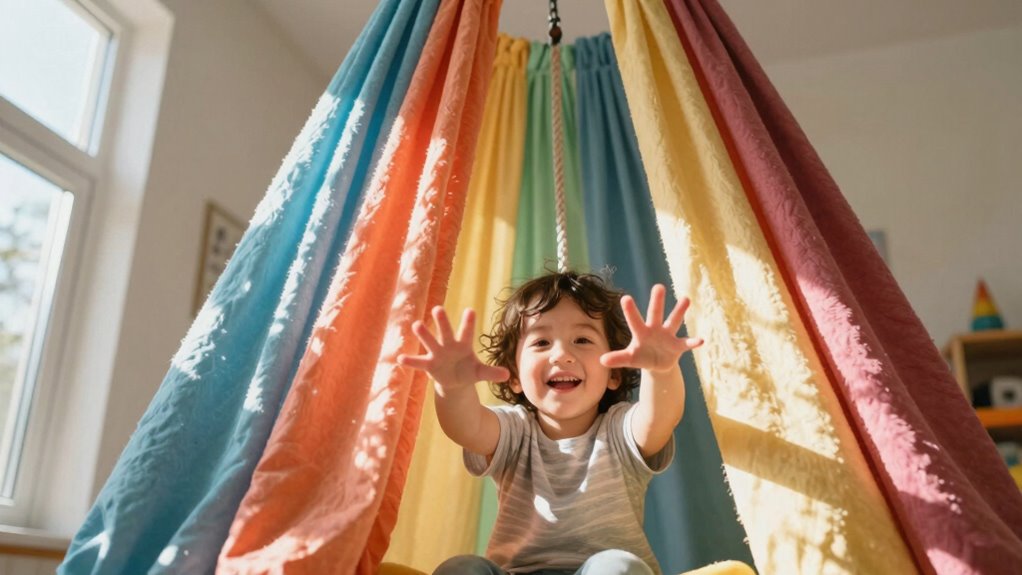

Using a sensory swing helps you develop better body awareness through playful movement. As you swing, tilt, or spin, your muscles strengthen, and you learn to control your body. The vestibular stimulation improves your sense of balance and spatial understanding, making everyday tasks easier. By exploring different positions, you build confidence and coordination naturally. Keep exploring, and you’ll discover how these playful experiences support overall growth and sensory integration.

Turn the school run and nap time into listening time
- Thousands of audiobooks, podcasts and originals
- Listen on your phone, tablet or Echo — also offline
- Cancel anytime
Key Takeaways
- Sensory swings promote natural movement, helping children develop awareness of their body positions in space.
- Swinging stimulates the vestibular system, essential for understanding and controlling body movement.
- Play with swings encourages exploration, building confidence in balancing and coordinating physical activities.
- Sensory swings reinforce neural pathways involved in proprioception and motor control.
- Movement on swings enhances overall body awareness and spatial orientation through engaging, active play.
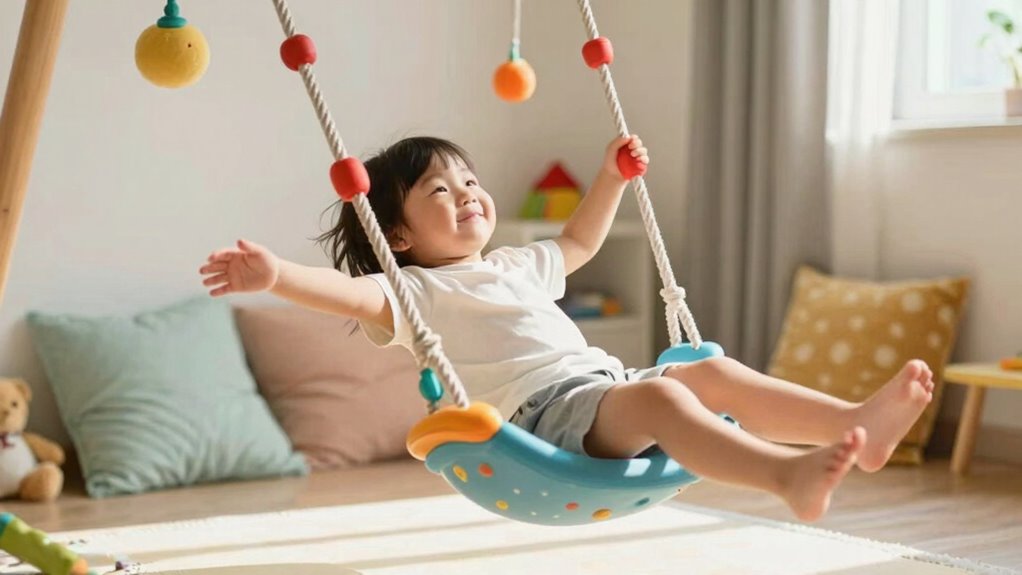
Sensory swings are increasingly popular tools for enhancing body awareness, especially for children with sensory processing challenges. These swings provide a dynamic environment that encourages active movement, helping kids develop essential skills like balance, coordination, and sensory integration. When you use a sensory swing, you’re creating opportunities for your child to engage their body in ways that promote stability and spatial awareness. As they sway, tilt, and spin, they learn to adjust their movements naturally, strengthening muscles and improving overall coordination.
Sensory swings promote active movement, strengthening muscles, balance, and spatial awareness for children with sensory challenges.
The swinging motion stimulates the vestibular system, which is crucial for balance and spatial orientation. With regular play, your child begins to better understand how their body moves through space, gaining confidence in their physical abilities. This process of sensory integration helps them process and respond to sensory input more effectively, reducing feelings of overwhelm or disorganization. As they become more attuned to their body’s responses, they start to develop a clearer sense of where they are in relation to their environment, which is fundamental for body awareness.
Play with sensory swings isn’t just about fun—it’s a purposeful activity that subtly challenges and refines motor skills. When your child is swinging, they learn to control their movements, whether that means holding on tightly or adjusting their position to keep balanced. These actions reinforce neural pathways involved in coordination and proprioception, which is your body’s sense of its position in space. Over time, this helps improve their ability to perform everyday tasks that require steady balance and precise movements, such as climbing, jumping, or even writing.
Using a sensory swing also encourages your child to experiment and explore movement freely, fostering confidence and independence. As they learn to balance and coordinate while swinging, they become more comfortable navigating other physical activities. This type of sensory play provides a safe outlet for sensory modulation, allowing children to regulate their arousal levels and improve their overall sensory processing. Additionally, engaging in sensory integration, which involves the brain organizing and interpreting sensory information, is supported through swinging activities, making them especially beneficial for children with sensory challenges. Incorporating movement-based sensory activities like swinging can help further develop their sensory processing skills and overall body awareness. With consistent use, you’ll notice advances not only in their physical skills but also in their emotional regulation and focus.
In essence, sensory swings act as a bridge between play and developmental growth. They support the development of balance, coordination, and sensory integration in a way that’s engaging and natural. By incorporating these swings into your child’s routine, you’re giving them a valuable tool to build body awareness through movement-filled play, helping them become more confident and capable in their daily life.
As an affiliate, we earn on qualifying purchases.
Frequently Asked Questions
Are Sensory Swings Suitable for All Ages?
Sensory swings are suitable for many ages, but their therapeutic benefits depend on age appropriateness and individual needs. Younger children often thrive with gentle swings that promote body awareness, while older kids and adults may benefit from more advanced options. Always consider safety and consult a professional if needed, ensuring the swing matches the user’s developmental stage for maximum therapeutic benefits and safe, enjoyable play.
How Do Sensory Swings Differ From Traditional Swings?
Some might think sensory swings are just larger versions of traditional swings, but they’re quite different. Sensory swings are made from specialized materials designed for sensory integration, offering varied textures and gentle, controlled movements that promote body awareness. Unlike traditional swings, they often feature enclosed designs or unique shapes that help calm or stimulate the senses, making them more functional for therapeutic or developmental play.
Can Sensory Swings Be Used at Home Without Supervision?
You can use sensory swings at home, but you’ll need to guarantee proper home installation and always provide parental supervision. Always follow the manufacturer’s instructions for setup to prevent accidents. Never leave your child unsupervised while they’re using the swing, as safety is paramount. Regularly check the swing’s stability and hardware to ensure continued safety. With attentive supervision and correct installation, sensory swings can be a safe, fun way to promote body awareness at home.
What Safety Precautions Are Necessary for Sensory Swing Use?
When using a sensory swing at home, you need to prioritize safety by ensuring proper swing installation and checking material safety. Securely anchor the swing to a sturdy support, following manufacturer instructions closely. Always inspect the materials for durability and any signs of wear before each use. Keep a close eye on the swing’s condition and use it on a flat, safe surface to prevent accidents, ensuring a fun, safe experience.
How Long Should a Typical Sensory Swing Session Last?
Back in the day, a quick jaunt around the block was enough, but today, your child’s swing duration should be 10 to 15 minutes per session. Keep session length appropriate to their age and attention span. Overdoing it can cause fatigue or overstimulation, so watch for signs of tiredness or discomfort. Always prioritize safety and make sure breaks between sessions to support effective sensory integration and body awareness.
Conclusion
You’ll find that sensory swings turn playtime into a powerful journey of body awareness, helping you or your child feel more grounded and confident. Imagine the swing as a gentle anchor in a whirlwind of sensations, transforming chaos into calm with each sway. This simple yet magical tool can release a world where body awareness blossoms like a radiant sunflower reaching for the sun, making every moment of play a step toward greater self-understanding and balance.
Cold & flu season Picks
humidifiers
As an affiliate, we earn on qualifying purchases.