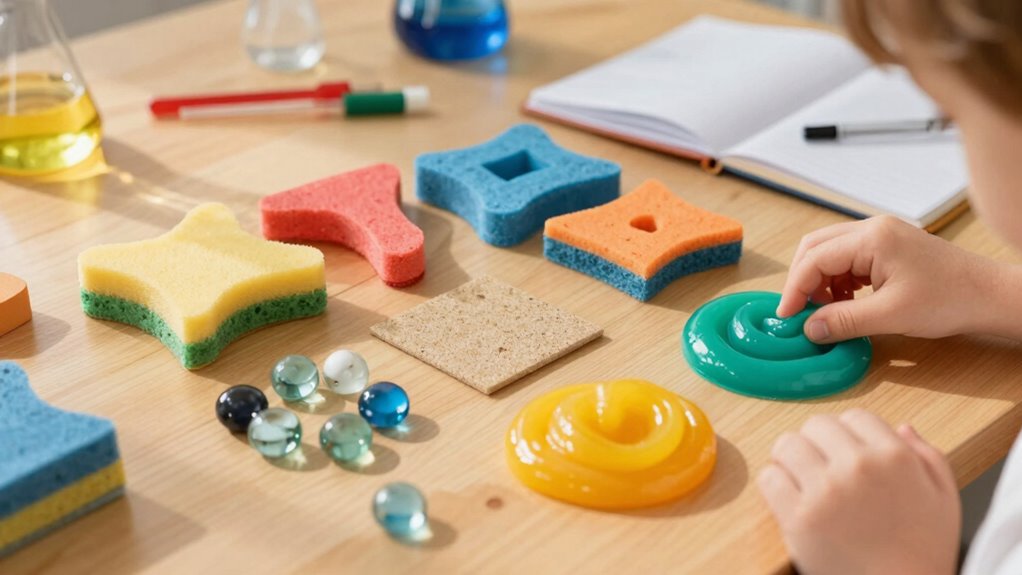

To use sensory materials in STEM invitations, select items that align with your activity’s objectives and engage multiple senses like touch, sight, and sound. Incorporate textures, colors, and even smells to invite participation and make abstract concepts tangible. Guarantee materials are safe, inclusive, and easy to handle. By thoughtfully integrating diverse sensory elements, you create memorable, immersive experiences that boost understanding and curiosity. Keep exploring to discover more ways to enrich your STEM invitations effectively.

Turn the school run and nap time into listening time
- Thousands of audiobooks, podcasts and originals
- Listen on your phone, tablet or Echo — also offline
- Cancel anytime
Key Takeaways
- Incorporate tactile elements that align with STEM concepts to enhance engagement and understanding.
- Use contrasting textures and sensory cues to make invitations more inviting and stimulating.
- Highlight sensory exploration opportunities in your invitation language to encourage participation.
- Ensure materials are safe, accessible, and varied to accommodate diverse sensory needs.
- Gather feedback on sensory engagement to refine and improve future STEM activity invitations.
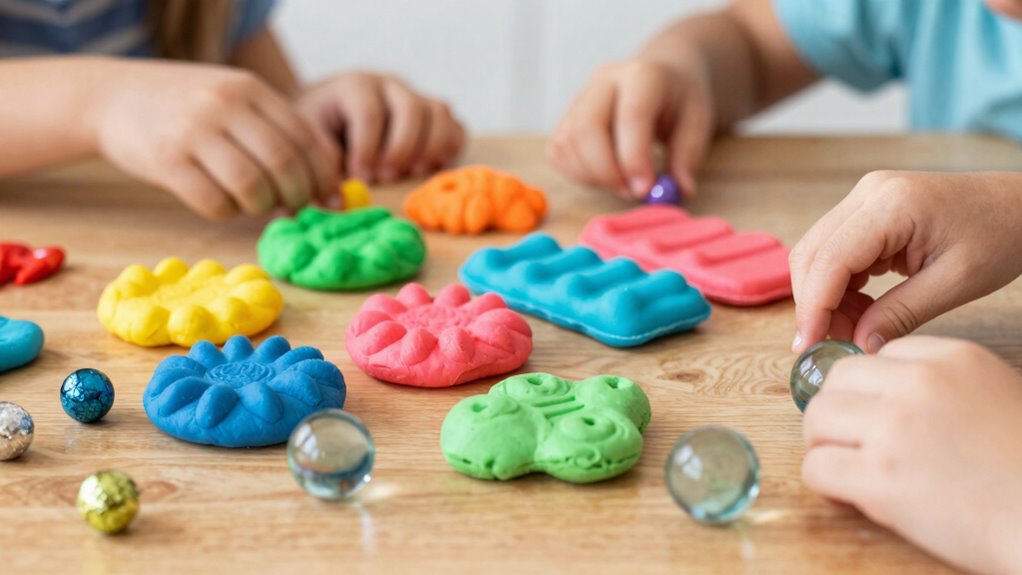
Incorporating sensory materials into STEM invitations can substantially enhance engagement and understanding for learners of all ages. When you include tactile exploration, you’re tapping into a fundamental way humans learn—through touch. By offering materials that children and adults can feel, you encourage active participation and curiosity. For example, using textured objects like rough rocks, smooth beads, or squishy gels invites learners to physically connect with the concepts. This tactile interaction helps them grasp abstract ideas more concretely, making the learning experience memorable.
Multisensory engagement is the key to making STEM activities more impactful. Instead of relying solely on visuals or verbal instructions, you combine touch, sight, and sometimes sound or smell to create a rich learning environment. When designing invitations, think about how different sensory inputs can work together. For instance, you might include materials with contrasting textures alongside visual cues—like a shiny metallic foil paired with soft fabric—to stimulate multiple senses simultaneously. This approach keeps learners attentive and fosters deeper comprehension. Incorporating multisensory strategies can further amplify the effectiveness of your activities. Additionally, understanding how sensory integration influences learning can help you better tailor activities to diverse sensory preferences.
To effectively use sensory materials, start by aligning them with your learning objectives. If you’re teaching about circuits, incorporate conductive playdough that learners can mold and test for conductivity. For biology lessons, add real or imitation plant leaves, seeds, or feathers so students can explore structures through touch. When inviting others to participate, emphasize the tactile aspect of the activity. For example, you could say, “Feel the different textures and see how they relate to the concept,” urging learners to physically engage with the materials. Recognizing the importance of sensory feedback can guide you in selecting the most effective materials for your lessons.
It’s also important to take into account safety and accessibility. Choose materials that are non-toxic, easy to clean, and suitable for all participants. For those with sensory processing differences, provide options that are less overwhelming or offer alternative ways to explore the concepts. Incorporating a variety of textures and sensory stimuli ensures inclusivity and maximizes multisensory engagement. Additionally, understanding how sensory processing influences learning can help tailor activities to diverse needs. Being mindful of individual sensory preferences can make your STEM invitations more welcoming and effective.
Finally, reflect on how the sensory materials you include influence the learning process. Are they enhancing understanding? Are learners more enthusiastic and curious? Adjust your invitations based on this feedback, and don’t be afraid to experiment with new materials. When you thoughtfully incorporate tactile exploration and multisensory engagement into your STEM invitations, you’re creating a dynamic environment where learners actively discover and connect with the subject matter.
sensory materials for STEM activities
As an affiliate, we earn on qualifying purchases.
As an affiliate, we earn on qualifying purchases.
Frequently Asked Questions
How Do I Select Appropriate Sensory Materials for Different STEM Activities?
To select appropriate sensory materials for different STEM activities, focus on texture exploration and material variety. Think about the specific skills or concepts you’re teaching, then choose materials that offer diverse textures—smooth, gritty, squishy—that engage senses. Consider safety and accessibility, ensuring materials are non-toxic and suitable for all learners. By mixing different textures and materials, you create engaging, hands-on experiences that foster curiosity and deepen understanding in STEM activities.
What Safety Precautions Should I Take With Sensory Materials in STEM?
Ever imagined your students exploring with sensory materials safely? Always check sensory safety by inspecting materials for non-toxic, hypoallergenic qualities, and avoid choking hazards. Use durable, age-appropriate materials to prevent breakage and hazards. Keep a close eye during activities, and guarantee proper supervision. Do you have first aid supplies nearby? By prioritizing material durability and sensory safety, you create a secure environment where students can confidently explore and learn.
How Can Sensory Materials Be Adapted for Children With Sensory Processing Issues?
To adapt sensory materials for children with sensory processing issues, focus on sensory integration and tactile exploration. You can use softer, textured, or calming materials to help them engage comfortably. Offer options like squishy or smooth objects, and allow children to explore at their own pace. Incorporate visuals or auditory cues if needed, ensuring the activities support their individual sensory needs and promote positive tactile exploration experiences.
Are There Cost-Effective Options for Sensory Materials in STEM Invitations?
Like finding hidden treasures, you can discover budget-friendly alternatives for sensory materials in STEM invitations. Use household items like rice, pasta, or beans as tactile components. Reuse containers to organize sensory materials, making them easy to access and store. Thrift stores or repurposed items offer affordable options, and DIY activities help you create engaging sensory experiences without overspending. Keeping sensory material organization straightforward ensures effective and cost-efficient STEM invitations.
How Do Sensory Materials Enhance Engagement in STEM Learning?
Sensory materials boost engagement in STEM learning by promoting sensory integration and tactile exploration. When you include these materials, you help learners actively engage their senses, making abstract concepts more concrete. This hands-on approach encourages curiosity, improves focus, and reinforces understanding. By allowing students to touch, manipulate, and explore, you create an inviting environment where they can discover and learn through their natural curiosity and sensory experiences.
Conclusion
By incorporating sensory materials into your STEM invitations, you turn simple activities into memorable adventures—think of it as giving your students a taste of the future, much like an inventor from the Renaissance. You’ll ignite curiosity, foster deeper understanding, and make learning irresistible. So go ahead, channel your inner Leonardo da Vinci, and craft invitations that engage all senses. After all, in the world of STEM, experiencing is believing—and the possibilities are endless!
Fall Picks
fall essentials
As an affiliate, we earn on qualifying purchases.