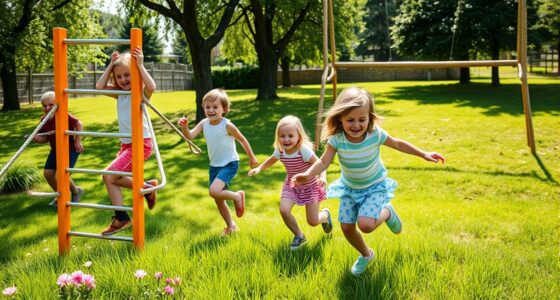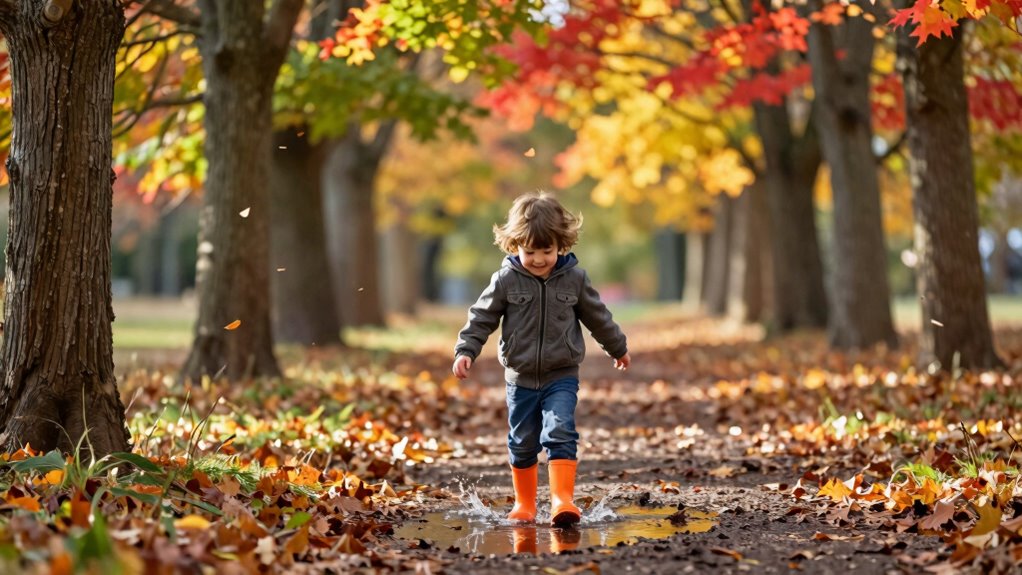

To help kids notice seasonal changes through outdoor play, encourage them to observe their surroundings closely—look at leaf colors, feel different textures like bark or fallen leaves, and listen for bird songs. Engage their senses with activities like raking leaves, feeling snow, or exploring budding plants. Ask questions to spark curiosity and guide their attention to subtle environmental shifts. Continue exploring these ideas to discover more fun ways to help them connect with nature’s evolving patterns.
Key Takeaways
- Incorporate sensory activities like feeling tree bark or observing leaf colors during outdoor exploration.
- Encourage children to ask questions and describe environmental changes they notice outside.
- Use natural objects such as leaves, acorns, or flowers as tangible tools for seasonal observation.
- Plan themed seasonal activities, like raking leaves in autumn or listening for bird songs in spring.
- Discuss ecological concepts and seasonal adaptations to deepen understanding during outdoor play.
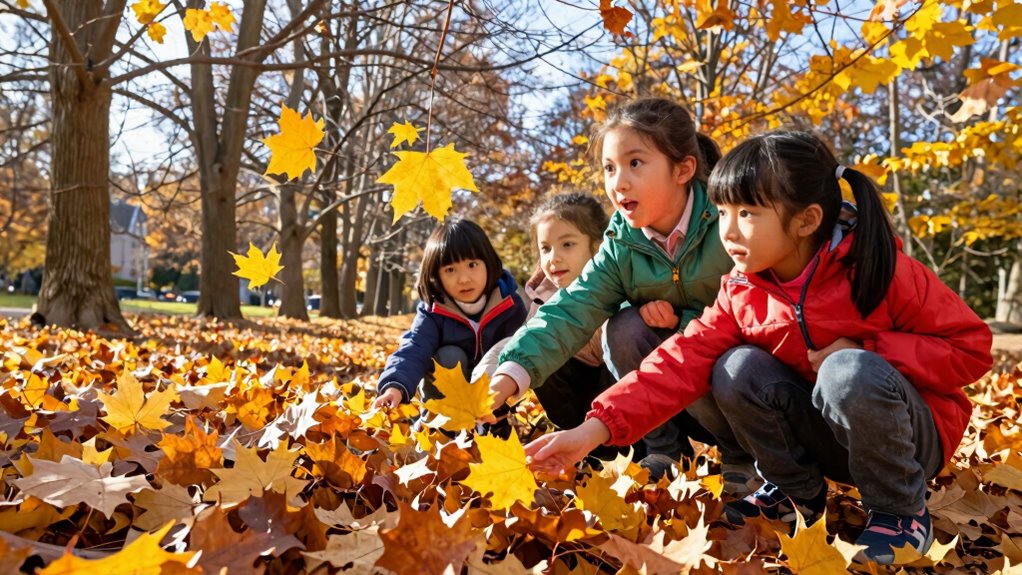
Have you ever wondered how to help your kids become more aware of the changing seasons? One of the best ways is through outdoor play that encourages nature exploration and sensory activities. When you step outside with your children, you’re opening the door to a world full of clues about the season’s transition. Start by pointing out visible signs like colorful leaves, blooming flowers, or bare branches. Let your kids touch the rough bark of trees or feel the soft, fallen leaves under their fingers. These simple sensory activities make the experience more engaging and help them notice subtle changes they might otherwise overlook.
Encourage kids to explore seasonal signs through touch and observation during outdoor play.
Encourage your children to observe and describe what they see around them. Ask questions like, “Do you notice how the leaves are changing color?” or “Can you feel the difference in the air today?” This sparks curiosity and deepens their awareness of seasonal shifts. To make it more interactive, gather natural objects such as acorns, pinecones, or different types of leaves. These objects serve as tangible reminders of the season and can be examined closely, fostering a hands-on connection with nature.
Implement themed sensory activities that highlight seasonal features. For example, during autumn, set up a leaf-raking activity where kids can gather leaves of various shapes and hues, then use them for collage art or sorting games. In winter, let them feel the cold with snow or ice, and experiment with melting ice or making snow angels. Springtime offers opportunities to explore the textures of budding plants or listen to bird songs. Summer invites water-based sensory play, like splashing in puddles or feeling the coolness of a garden hose. Recognizing the importance of biodiversity in our environment can also deepen their understanding of seasonal changes and the diverse life forms that adapt to each season. Learning about ecological systems can further enhance their appreciation for how different elements in nature work together throughout the year.
Incorporating these sensory activities into your outdoor routine helps children develop a stronger awareness of seasonal patterns. It’s not just about observing from afar but engaging their senses to experience the environment firsthand. Developing an understanding of ecological systems can help children appreciate how different species interact with seasonal cues, enriching their overall learning experience. A greater awareness of climate patterns can also help children understand the broader context of seasonal variations and their effects on local ecosystems. As they explore, they’ll start to notice the nuances—how the air feels cooler in fall, how the sunlight shifts, or how different animals behave with the changing weather. By making nature exploration fun and interactive, you foster a natural curiosity that encourages your kids to pay closer attention to their surroundings.
kids sensory nature exploration kit
As an affiliate, we earn on qualifying purchases.
As an affiliate, we earn on qualifying purchases.
Frequently Asked Questions
How Can I Encourage Shy Children to Observe Seasonal Changes?
To encourage shy children to observe seasonal changes, you can create a gentle, inviting environment that makes them feel comfortable. Use quiet, focused activities like collecting colorful leaves or watching bird migrations. Offer lots of positive reinforcement and avoid pressuring them. By patiently guiding their attention and celebrating small discoveries, you help shy children build confidence in encouraging observation, fostering their curiosity and appreciation for nature’s seasonal shifts.
What Outdoor Activities Best Highlight Seasonal Differences?
You can highlight seasonal differences by engaging kids in nature journaling and seasonal scavenger hunts. Encourage them to observe changes in trees, flowers, and weather, then record their findings in a journal. Organize scavenger hunts to find seasonal items like fallen leaves, blooming flowers, or snowflakes. These activities make kids attentive to nature’s shifts and foster curiosity, helping them notice and appreciate the unique aspects of each season.
How Do Seasonal Changes Affect Children’s Outdoor Safety?
You need to stay alert, as seasonal changes can catch children off guard. Dressing kids in layered seasonal clothing is crucial, especially as temperatures fluctuate. Wildlife behavior also shifts, making it important to teach kids to observe and stay clear of animals. Keep an eye out for slippery surfaces or falling branches during storms. Proactively, you help prevent accidents and guarantee outdoor safety as seasons change.
When Is the Best Time to Start Noticing Seasonal Shifts?
You should start noticing seasonal shifts early in the year, around late winter or early spring, when nature begins to change. Encourage your kids to develop seasonal awareness by engaging in regular nature exploration. As they observe new blooms, falling leaves, and changing weather, they’ll learn to appreciate the natural world’s rhythms. Making outdoor play a routine helps kids connect with these seasonal changes, fostering curiosity and a deeper understanding of nature.
How Can I Incorporate Seasonal Observations Into Daily Routines?
You can incorporate seasonal observations into daily routines by engaging in seasonal storytelling and nature journaling. Each day, encourage your kids to share stories inspired by what they see outside, like changing leaves or blooming flowers. Additionally, set aside time for nature journaling, where they draw and note seasonal changes. These activities make noticing seasonal shifts a fun, ongoing part of your routine, fostering curiosity and a deeper connection to nature.
Conclusion
By encouraging outdoor play, you open a window for kids to witness the changing seasons firsthand. Their curiosity will bloom like flowers in spring, soaking in the vibrant shifts around them. As you guide their exploration, you’ll help them see that nature’s seasons are a storybook, waiting to be read with every step they take outside. So, get outside and let the world’s seasons be your child’s greatest teacher — a never-ending adventure of discovery.