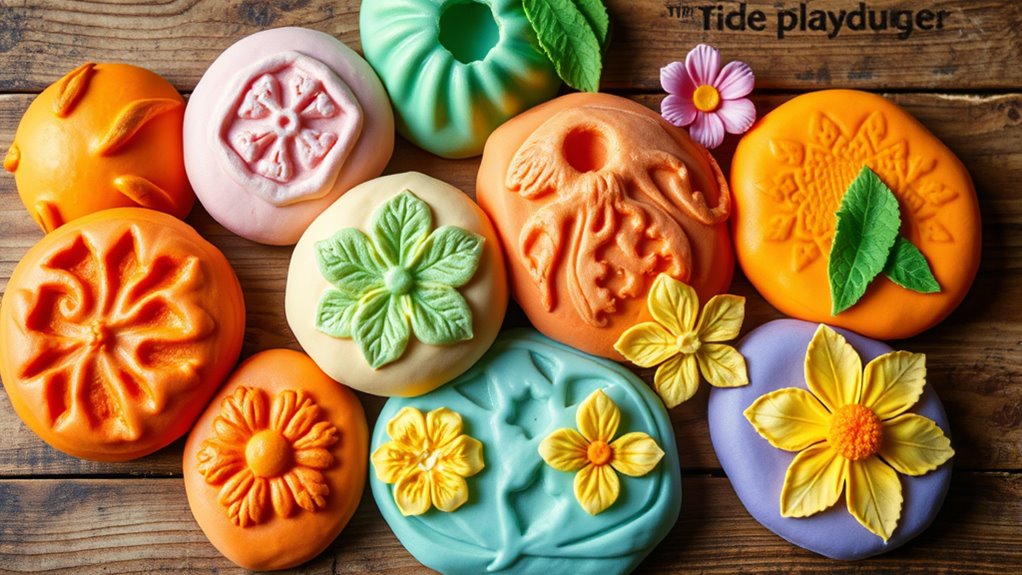

To create scented playdough inspired by the seasons, start with your basic recipe and add seasonal scents like cinnamon for fall or citrus for summer, keeping the amount small to avoid texture issues. Incorporate essential oils or extracts carefully to maintain softness and aroma balance. Adjust ingredients as needed to keep the playdough pliable and fragrant. Continue exploring different combinations to craft a sensory experience that perfectly captures each season’s mood and atmosphere.
Key Takeaways
- Incorporate seasonal scents like cinnamon for fall or citrus for summer into classic playdough recipes.
- Adjust ingredient ratios to maintain a soft, pliable texture while adding seasonal essential oils or extracts.
- Use natural scent sources such as dried herbs, spices, or fruit peels for authentic seasonal aromas.
- Balance scent intensity with texture by adding small amounts of water or flour as needed during mixing.
- Create themed playdough by combining specific scents and colors to reflect each season’s mood and environment.

Creating scented playdough is a fun and easy way to enhance your child’s sensory playtime. When you incorporate seasonal scent combinations, you not only make the experience more engaging but also help your child connect with the changing seasons through scent and texture. For example, during fall, you might add cinnamon and pumpkin spice to evoke cozy autumn days, while in winter, peppermint or pine can create a festive atmosphere. Spring brings fresh, floral scents like lavender and jasmine, and summer calls for vibrant, fruity aromas such as citrus or berries. Mixing these seasonal scents into your homemade playdough allows your child to explore different smells that match the time of year, making each play session a sensory adventure.
To get the most out of these scented creations, pay attention to playdough texture tips. The key to great playdough is achieving the right consistency—smooth, pliable, and easy to knead. If your playdough feels too sticky, try adding a bit more flour gradually, kneading it in until it reaches the desired texture. Conversely, if it becomes too dry or crumbly, incorporate a small amount of water or lotion to restore its softness. When adding scents, always use small amounts of essential oils or extracts, as too much can alter the texture or cause the playdough to become too greasy or sticky. A good rule of thumb is to start with a few drops and adjust as needed. Incorporating seasonal scent combinations can also enhance the sensory experience, making each batch uniquely suited to the time of year.
Incorporating seasonal scents can also influence the playdough’s texture. Citrus oils tend to make the dough slightly tacky, so balancing that with extra flour or cornstarch can help maintain a firm yet soft consistency. Similarly, more moisturizing scents like vanilla or honey might require less additional dry ingredient. The goal is to create a playdough that’s not only fragrant but also easy to manipulate, stretch, and mold. Keep in mind that the scent should be noticeable but not overpowering—your child’s comfort is key, and subtle hints of seasonal aromas can make the playdough more delightful.
Frequently Asked Questions
Can Scented Playdough Be Made Allergy-Friendly?
You can make scented playdough allergy-friendly by choosing hypoallergenic options and fragrance-free alternatives. Avoid common allergens like artificial fragrances, dyes, and certain preservatives. Use natural ingredients such as essential oils, but test for sensitivities first. Opt for fragrance-free recipes or incorporate hypoallergenic scents like vanilla or lavender in small amounts. This way, you create a safer, enjoyable play experience for kids with allergies or sensitivities.
How Long Does Scented Playdough Last?
You wonder how long scented playdough lasts, and it depends on a few factors. The playdough’s shelf life varies, but generally, it lasts about 2 to 3 months if stored properly. Over time, scent retention decreases, and the playdough can dry out or become crumbly. Keep it in an airtight container, and you’ll enjoy the aroma and fun longer. Regularly check for signs of spoilage to ensure safe, enjoyable play.
Are There Natural Alternatives to Artificial Fragrances?
You can definitely find natural alternatives to artificial fragrances by using essential oils or fragrance extracts. These natural options add delightful scents without synthetic chemicals, making your playdough safer and more eco-friendly. Simply add a few drops of your favorite essential oil, like lavender or citrus, to your dough during mixing. This way, you enjoy lovely, authentic scents while avoiding artificial fragrances, perfect for sensitive skin and eco-conscious play.
Is Scented Playdough Safe for Very Young Children?
Think of it like a gentle breeze—playdough can be safe if you’re mindful. For very young children, scented playdough can pose risks due to fragrance allergies and essential oil safety concerns. Always use child-safe, natural ingredients, and avoid strong scents. Supervise playtime closely, and opt for recipes with natural fragrances to guarantee safety. When in doubt, consult a pediatrician before introducing scented playdough to little ones.
How Can I Store Scented Playdough to Maintain Its Scent?
To keep your scented playdough fresh and maintain its scent, follow these storage tips. Store it in an airtight container or resealable plastic bag to prevent air from escaping. Keep it away from direct sunlight and heat, which can cause scent loss. For scent preservation, consider adding a few drops of essential oil before sealing. Proper storage guarantees your playdough stays fragrant and enjoyable for longer.
Conclusion
Now that you have these scented playdough recipes inspired by the seasons, the possibilities are endless. Get creative, mix in your favorite scents, and let your imagination run wild. Remember, a little effort goes a long way—sometimes, the simplest ideas make the biggest splash. So, don’t be afraid to think outside the box and make memories that will last a lifetime. After all, the proof is in the pudding, and these recipes are sure to delight!