

To rotate Montessori toys without shelf clutter, use clear, stackable storage bins to organize toys by type and designate specific containers for in-use and stored items. Regularly inspect and clean toys, updating digital records to match what’s on the shelves. Implement a consistent schedule for reorganization and toy maintenance. By keeping toys tidy, accessible, and properly rotated, you’ll foster a stimulating environment and minimize clutter—continue to explore simple strategies that make this even easier.

Turn the school run and nap time into listening time
- Thousands of audiobooks, podcasts and originals
- Listen on your phone, tablet or Echo — also offline
- Cancel anytime
Key Takeaways
- Use clear, labeled containers to organize toys by type and rotation schedule, reducing visual clutter.
- Implement a digital inventory system to track toy status and plan rotations efficiently.
- Rotate toys by swapping in-use items with stored ones, keeping only a few accessible at a time.
- Establish regular cleaning and inspection routines to maintain toy quality and safety, minimizing clutter buildup.
- Reorganize and update storage periodically to ensure easy access and a tidy play environment.
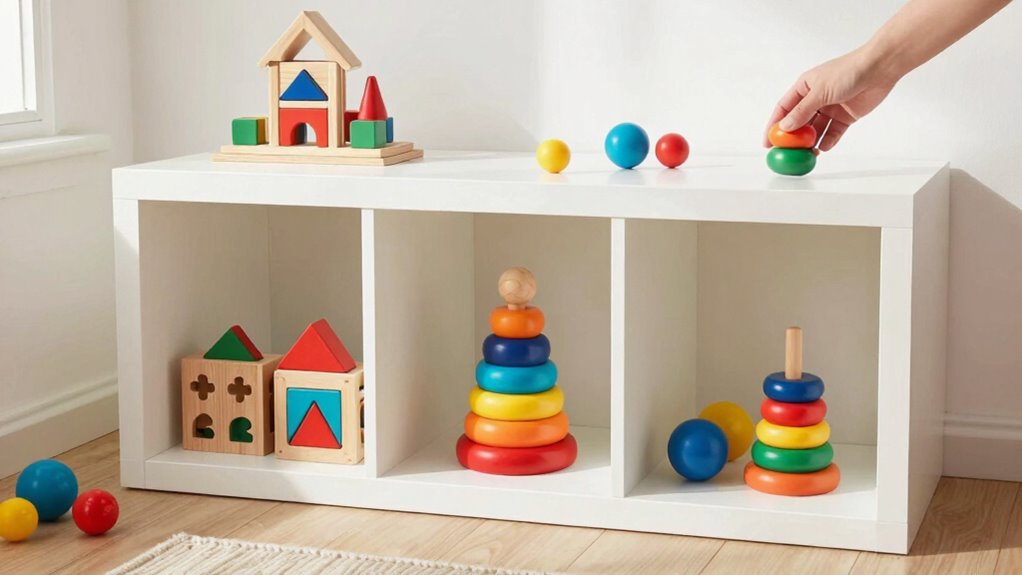
Keeping your child’s Montessori toys organized can be challenging, especially when your shelves quickly become cluttered. One effective way to manage this is by implementing a thoughtful toy rotation system. Instead of leaving every toy out at once, you can use digital storage to keep track of what toys you have and what’s been used recently. Creating a simple digital inventory—whether through a spreadsheet or a dedicated app—helps you monitor toy availability and plan rotations without the hassle of rummaging through cluttered shelves. With this system, you can easily update which toys are currently in use and which ones are stored away, making it simple to switch toys in and out regularly. Additionally, maintaining a digital record allows for easy updates and quick reference, improving overall organization. This approach also makes it easier to set reminders for toy cleaning and maintenance, keeping everything running smoothly.
Using digital inventories streamlines toy rotation and keeps shelves tidy and organized.
Toy maintenance plays a critical role in this process. When you rotate toys, you give yourself a chance to inspect and clean each item thoroughly. Regular maintenance ensures that toys stay safe and in good condition, reducing the risk of damage or dirt buildup that can make them less appealing or unsafe for your child. After each rotation, spend a few minutes checking for loose parts, cleaning surfaces, and repairing any worn-out pieces. This not only extends the lifespan of the toys but also keeps your child’s environment inviting and hygienic. Regularly toy maintenance can also help you identify toys that may need replacing or upgrading, ensuring ongoing safety and engagement. Incorporating organization techniques can further streamline the process and help maintain a clutter-free space. Consistent routines, such as scheduled cleaning and inspection, can make the rotation process more manageable and sustainable over time.
To keep shelf clutter minimal, designate specific storage containers for different types of toys. Use clear, stackable bins or baskets so you can see what’s inside at a glance. When it’s time to rotate, simply swap out the toys from these containers with the ones stored away. This approach maintains a tidy space and makes the transition seamless. As you do this, update your digital storage records to reflect what’s currently available and what’s tucked away. This way, you always know which toys are ready for use and which ones need to be cleaned or repaired before returning to rotation. Incorporating consistent routines for rotation and maintenance can further streamline the process and foster a sense of order. Building a habit of regularly reviewing and reorganizing toys can greatly enhance overall clutter control.
Implementing a toy rotation system not only helps reduce clutter but also encourages your child’s independence and curiosity by making playtime more intentional and engaging.
clear stackable storage bins with lids for toy organization
As an affiliate, we earn on qualifying purchases.
As an affiliate, we earn on qualifying purchases.
Frequently Asked Questions
How Often Should I Rotate Montessori Toys?
You should rotate Montessori toys every 2 to 4 weeks, depending on your child’s interest and development. This frequency aligns with Montessori philosophy, encouraging curiosity and independence. Prioritize toy durability by choosing high-quality, natural materials that withstand frequent use. Regular rotation keeps your child’s environment engaging without clutter, fostering focused play and learning. Adjust the schedule as needed based on your child’s preferences and growth, ensuring a balanced, stimulating Montessori-inspired space.
What Storage Solutions Work Best for Toy Rotation?
A place for everything and everything in its place. You’ll find decorative baskets perfect for storing toys, as they add charm and keep clutter out of sight. Transparent containers are also great, allowing you to see toys easily and manage rotation smoothly. Use these storage solutions to organize toys by type or activity, making it simple to swap them out and keep your space tidy while encouraging independence.
Can Toy Rotation Help With My Child’s Development?
Yes, toy rotation can greatly aid your child’s development. As you rotate toys, you encourage sensory development by exposing them to new textures, shapes, and colors. It also promotes fine motor skills as they grasp, manipulate, and explore different toys. By systematically changing what’s available, you keep your child engaged, stimulate curiosity, and support their overall growth. Plus, it keeps your space organized and clutter-free.
How Do I Involve My Child in the Toy Rotation Process?
You involve your child in the toy rotation process by explaining it simply and asking for their input, fostering parent-child communication. Encourage them to choose toys they feel excited about, promoting sensory exploration and independence. Make it a fun, collaborative activity where they learn responsibility and decision-making. Show enthusiasm and listen to their preferences, helping them feel involved and valued in the process, which enhances their engagement and development.
What Indicators Suggest It’s Time to Rotate Toys?
You’ll notice your child’s toys losing their shine, with some pieces showing signs of wear or disinterest—these are your clues that it’s time to rotate. When toys no longer spark curiosity or seem to have toy longevity, they can clutter your space and dull your child’s engagement. Rotating toys based on their interest and condition helps reduce clutter and keeps your child excited to explore new challenges.
Conclusion
So, next time you think you need a mountain of toys to keep your little one busy, remember—rotating Montessori toys actually keeps things fresh and exciting. Who knew that less clutter could lead to more joy and learning? Instead of drowning in a sea of toys, you’ll find that a simple rotation sparks curiosity and independence. Ironically, the secret to a tidy, stimulating space is just a few toys out at a time—yet somehow, it feels like magic.
Cold & flu season Picks
humidifiers
As an affiliate, we earn on qualifying purchases.