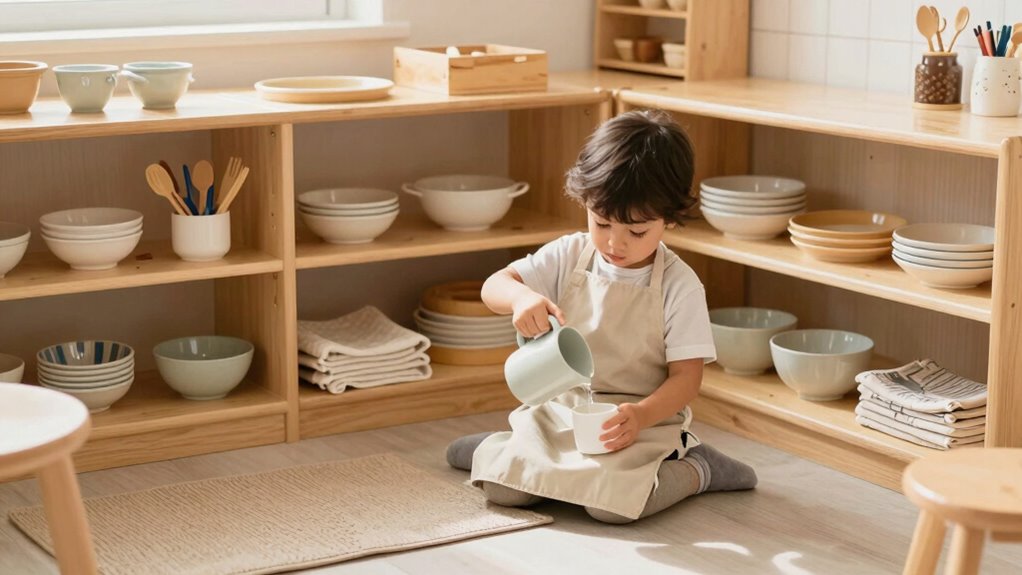

In a Montessori home, involving children in real-life tasks helps you foster their independence, responsibility, and essential life skills. When kids practice routines like pouring water, folding laundry, or caring for plants, they gain confidence and develop patience, focus, and attention to detail. These activities also build social awareness, cultural understanding, and environmental responsibility. If you want to discover how these routines create a solid foundation for lifelong growth, keep exploring the benefits they bring.

Turn the school run and nap time into listening time
- Thousands of audiobooks, podcasts and originals
- Listen on your phone, tablet or Echo — also offline
- Cancel anytime
Key Takeaways
- They foster independence, confidence, and self-reliance through successful real-life experiences.
- They promote cultural awareness and social skills by integrating routines from diverse communities.
- They teach responsibility, teamwork, and discipline essential for social development.
- They build a sense of purpose, autonomy, and positive attitudes toward learning.
- They deepen environmental responsibility and lifelong curiosity through meaningful, everyday activities.

In Montessori homes, real-life tasks are intentionally integrated into daily routines to foster independence and practical skills. These activities aren’t just chores; they’re carefully designed experiences that help your child understand and participate in the world around them. When you involve your child in everyday activities, you’re teaching them more than just how to complete a task—you’re helping them develop essential life skills that will serve them throughout their lives.
One of the key reasons these tasks matter so much is their role in promoting cultural integration. As your child learns to prepare a simple meal, set the table, or care for plants, they gain a deeper appreciation for different customs, foods, and traditions. Practical life skills become a gateway to understanding cultural diversity, fostering respect, and building curiosity about the world. By involving your child in activities like folding laundry or watering the garden, you’re encouraging them to see the relevance of these routines across cultures and communities. It’s not just about doing chores; it’s about connecting your child’s daily experiences to a broader cultural context.
Engaging children in daily routines fosters cultural understanding, respect, and curiosity about the diverse world around them.
Moreover, these real-life tasks build their confidence and autonomy. When your child learns to pour water or button their shirt, they experience success firsthand. This sense of achievement encourages them to tackle new challenges with enthusiasm and resilience. It also teaches patience, concentration, and careful attention to detail—traits that are vital for their development and future independence. As they master these skills, they begin to see themselves as capable and responsible, which nurtures a positive attitude toward learning and self-reliance. Incorporating practical life skills into daily routines also helps children develop a sense of purpose and belonging within their family environment. Additionally, engaging children in cultural practices can further enhance their understanding of different ways of life and strengthen their social awareness.
Engaging your child in practical life skills also enhances their understanding of responsibility and cooperation. Whether they’re helping to clear the table or sort laundry, they learn the importance of contributing to the household and working collaboratively. These routines reinforce the idea that everyone has a role in maintaining a harmonious home environment, laying a foundation for teamwork and social skills. Through repeated participation, they develop habits of organization, time management, and discipline that will serve them well as they grow. Additionally, incorporating biodiversity into these routines can further deepen their connection to the environment and foster a sense of responsibility toward conservation efforts.
Ultimately, incorporating real-life tasks into your home isn’t just about getting chores done; it’s about nurturing a well-rounded individual. By combining cultural integration with practical life skills, you’re providing your child with tools that foster independence, respect for diversity, and a lifelong love for learning. These routines create a meaningful framework for growth, helping your child understand their place in the world and empowering them to navigate it confidently.
Products Worth Considering

Oura Ring 4 Smart Ring – Silver – Size 8

Hyperice Normatec Elite Wireless Compression Boots Recovery – Standard Size

Oura Ring 5 Smart Ring – Silver – Size 10
As an affiliate, we earn on qualifying purchases.
Frequently Asked Questions
How Do Real-Life Tasks Differ From Traditional Chores?
Real-life tasks differ from traditional chores because they focus on practical skills and integrating into daily routines. You actively involve your child in meaningful activities like cooking, cleaning, or gardening, helping them develop independence and confidence. Unlike typical chores, these tasks are designed to teach life skills that your child can use daily, fostering responsibility and a sense of accomplishment while making routines more engaging and purposeful.
When Should Children Start Engaging in Real-Life Tasks?
Think of a young seedling reaching for the sun; children can start engaging in real-life tasks as early as toddlerhood. Introducing practical independence into daily routines helps them build skills gradually. You can start with simple tasks like pouring water or tidying up. By encouraging these activities early, you nurture their confidence and independence, allowing them to grow strong and self-reliant through meaningful, everyday experiences.
How Are Safety Concerns Addressed During Real-Life Tasks?
You address safety concerns by implementing strict safety protocols and supervision strategies during real-life tasks. Always guarantee sharp objects are out of reach, and use child-friendly tools. Keep a close eye on your child, guiding them gently but firmly. Regularly review safety rules together, and create a safe environment by removing hazards. Your active supervision and clear safety measures help your child explore confidently while staying safe.
Can Real-Life Tasks Be Adapted for Different Ages?
Yes, real-life tasks can be adapted for different ages through age-appropriate modifications. For younger children, simplify tasks and provide close supervision, while older kids can handle more complex activities that challenge their skills. These adaptations promote skill development benefits, helping each child build confidence, independence, and practical life skills suited to their developmental stage. Customizing tasks guarantees engagement and growth for every age, fostering lifelong learning.
What Are Some Common Mistakes to Avoid With Real-Life Tasks?
You should avoid rushing or over-assisting when your child is engaged in real-life tasks, as it hampers practical independence and skill development. Make certain tasks are age-appropriate and safe, and give your child enough time to complete them on their own. Don’t overlook the importance of patience or correct tools, which are essential for fostering confidence and mastery. Remember, mistakes are part of the learning process, so stay supportive and encouraging.
Conclusion
Embracing real-life tasks in your Montessori home truly shapes your child’s independence and confidence. By allowing them to participate in everyday chores, you’re not just teaching skills—you’re fostering a sense of mastery that’s timeless, even if you feel like you’ve stepped into a modern-day Renaissance. Remember, these activities are the backbone of their growth, turning routine into a cherished adventure. So, keep the tasks simple and watch your little one blossom, just as I did when I first discovered the joy of a well-organized pantry.