
Pretend kitchens boost your child’s language and social skills by encouraging them to use cooking words like “chop,” “stir,” and “serve,” helping them describe actions clearly. When they role-play as chefs or customers, they practice taking turns, sharing, and listening, which enhances social interaction. This play also helps kids understand social cues, manners, and empathy as they consider others’ needs. Keep exploring to discover more about how pretend kitchens support your child’s development.

Get baby and family essentials delivered free — and shop member deals
- Fast, free delivery on millions of items
- Access to Prime Big Deal Days deals on October 6–7
- Prime Video, Amazon Music and more included
Key Takeaways
- Pretend kitchens introduce cooking vocabulary, enhancing children’s descriptive language and everyday communication skills.
- Role playing in pretend kitchens encourages turn-taking, sharing, and social interaction.
- Children practice social cues and manners within realistic scenarios, improving social competence.
- Engaging in pretend cooking fosters empathy, perspective-taking, and emotional development.
- Collaborative tasks and problem-solving in pretend kitchens build teamwork and social skills.
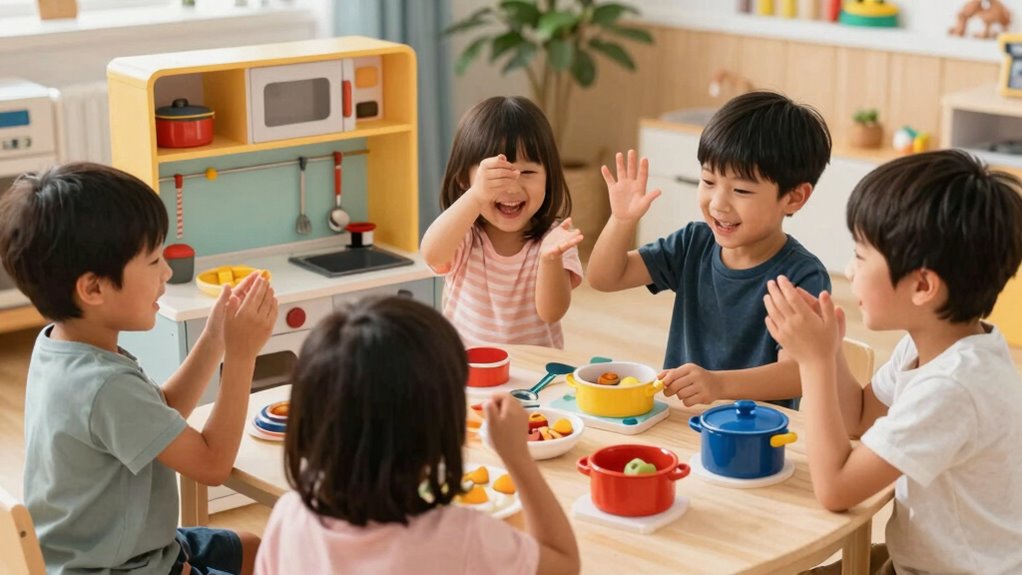
Pretend kitchens are more than just imaginative play spaces—they’re powerful tools for developing social skills in children. When your child engages with a pretend kitchen, you’re helping them build essential language skills, especially through the use of cooking vocabulary. As they mimic real-life cooking scenarios, they learn words like “chop,” “stir,” “pour,” and “serve,” which enhances their ability to describe actions clearly. These terms become part of their vocabulary, enabling them to communicate more effectively in everyday conversations.
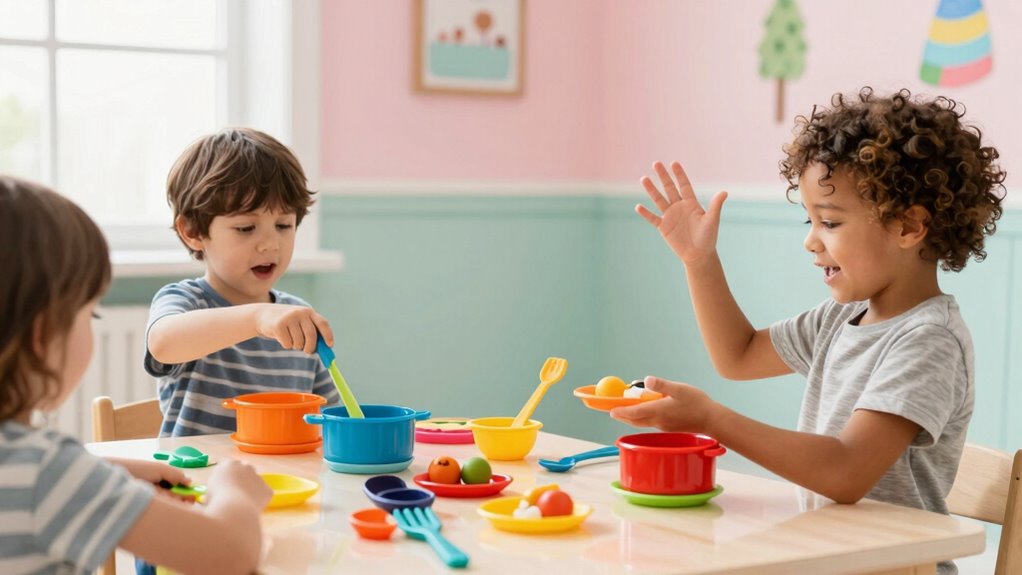
Role playing interactions are at the heart of pretend kitchen play. When your child acts as a chef, waiter, or customer, they practice taking turns, sharing, and expressing their needs. These interactions require them to listen attentively and respond appropriately, which sharpens their conversational skills. As they negotiate who gets to use the stove or decide what to cook, they learn valuable lessons in cooperation and patience. You might notice them asking, “Do you want some soup?” or “Can I add more salt?” which shows their developing ability to use language within social contexts. This kind of role playing creates a safe space for children to experiment with social cues and manners, helping them understand how to navigate real-world interactions later on.
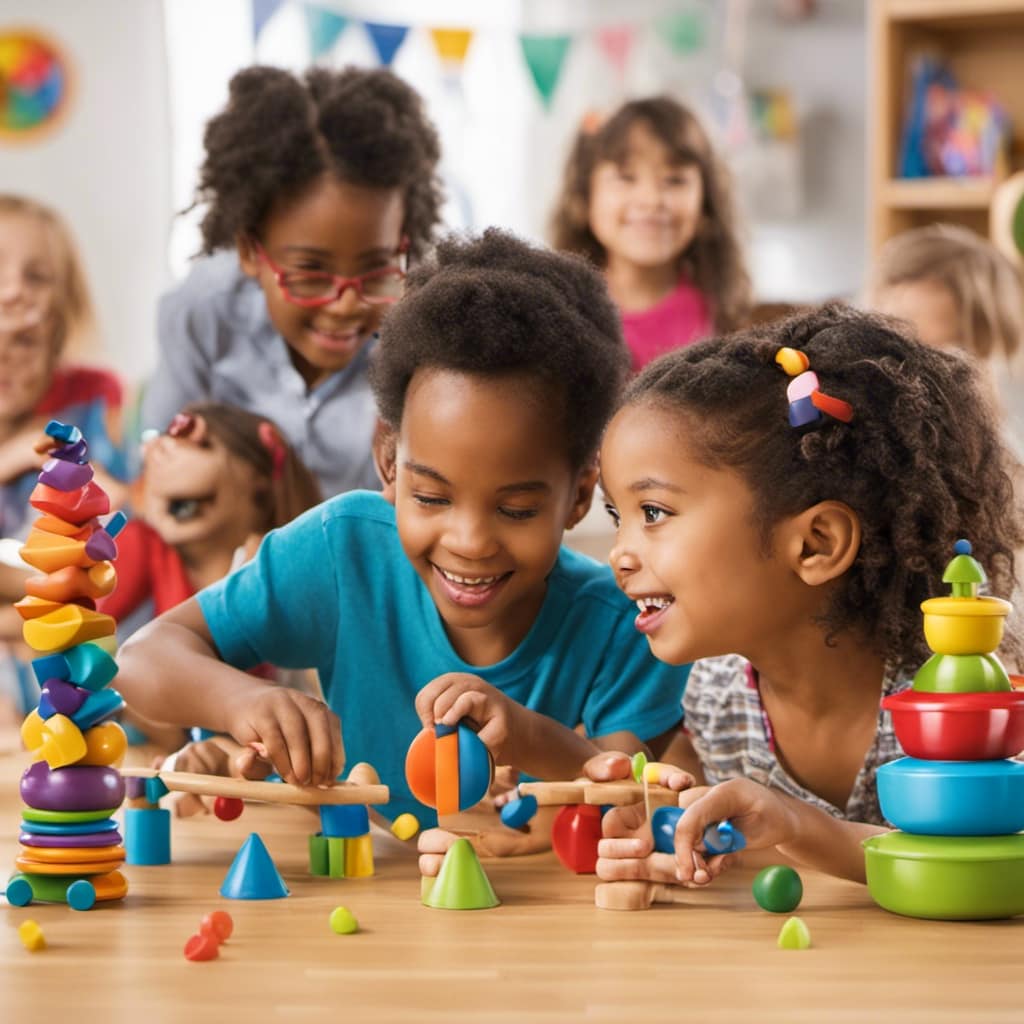
Pretend kitchen play helps children practice sharing, taking turns, and using language in social interactions.
Playing pretend kitchens also fosters empathy. When children pretend to prepare food for a friend or family member, they begin to see things from another person’s perspective. They consider what the other person might want or need, which deepens their understanding of caring and sharing. This emotional development is closely tied to language skills because children often describe their actions and intentions, practicing expressive language along the way. Additionally, engaging in biodiversity concepts such as understanding different foods and ingredients can further enrich their awareness of the natural world and its resources. Exploring food diversity introduces children to a variety of cultural cuisines, broadening their understanding of global interconnectedness. Cultivating an awareness of food sources helps children develop an appreciation for sustainability and environmental impact, which can also be integrated into pretend play scenarios. Incorporating food sourcing concepts can help children connect their play to real-world environmental issues, fostering both language and ecological awareness.
Furthermore, pretend kitchens encourage children to collaborate, problem-solve, and coordinate with their playmates. They might work together to make a “meal,” decide who’s the “chef,” or figure out how to fix a broken “stove.” These activities require them to communicate clearly and listen to each other’s ideas, reinforcing teamwork and social problem-solving. As they engage in such role playing interactions, they learn to express themselves with confidence and to interpret social cues, building a foundation for more complex social skills in school and beyond.
pretend kitchen playset for kids
As an affiliate, we earn on qualifying purchases.
As an affiliate, we earn on qualifying purchases.
Frequently Asked Questions
At What Age Should Children Start Using Pretend Kitchens?
You can introduce pretend kitchens to children around age 2 or 3, as they enjoy role-playing scenarios and exploring their imagination. At this age, they begin to understand kitchen organization tips and imitate real-life actions. Encourage their creativity, and let them explore different roles, like cooking or shopping. As they grow, their language and social skills develop through these engaging pretend kitchen activities, making play both fun and educational.
How Do Pretend Kitchens Support Language Diversity?
Imagine a world where every word paints a richer picture. Pretend kitchens support language diversity by embracing multicultural representation and fostering bilingual vocabulary. You’ll notice children mimic diverse cuisines, names, and phrases, broadening their cultural understanding. This playful setting becomes a bridge, encouraging kids to explore different languages and traditions, enhancing their social skills and empathy. It’s more than play—it’s a celebration of global voices, nurturing inclusive communication.
Can Pretend Kitchens Help Children With Speech Delays?
Yes, pretend kitchens can help children with speech delays by engaging them in role-playing scenarios that encourage verbal expression. As you observe them playing, you’ll notice how they naturally expand their vocabulary, naming utensils, ingredients, and actions. This playful environment motivates children to practice speech in a relaxed setting, boosting their confidence and language skills. The interactive nature of pretend kitchens makes learning fun and effective for children with speech delays.
What Safety Considerations Are Important for Pretend Kitchen Toys?
You probably think pretend kitchens are harmless, but safety standards matter. Always check for choking hazards like small parts that little ones can swallow. Make sure toys are sturdy, non-toxic, and free from sharp edges. Don’t forget to supervise playtime, especially with younger kids. Ironically, what seems like innocent fun can turn unsafe quickly, so prioritize safety to keep playtime delightful and accident-free.
How Can Parents Encourage Imaginative Play in Pretend Kitchens?
You can encourage imaginative play in pretend kitchens by setting up role-playing scenarios that spark curiosity. Offer diverse props and encourage your child to invent stories around cooking or grocery shopping. Ask open-ended questions to inspire creative storytelling, and join in their role-playing to boost confidence. These activities help your child develop language skills and social understanding while having fun exploring different roles and scenarios.
Conclusion
Imagine a pretend kitchen as a busy restaurant where your child’s imagination serves up conversations and cooperation. Just like a chef coordinates ingredients, kids practice social skills by sharing, taking turns, and negotiating. Research shows that children engaged in pretend play develop stronger language abilities and empathy. So, when your little one stirs up a pot of play, they’re not just pretending—they’re cooking up essential skills that will serve them well in real life.
Evergreen bestsellers Picks
bestsellers
As an affiliate, we earn on qualifying purchases.