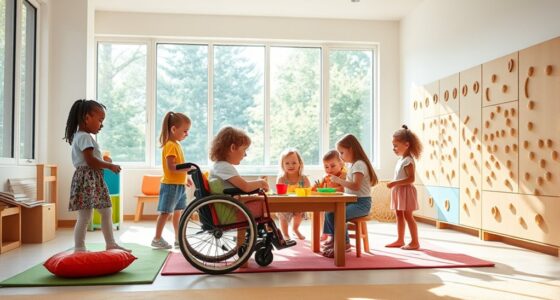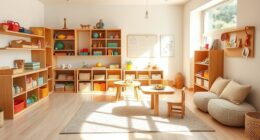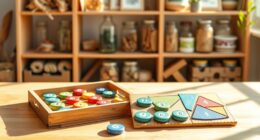
To create a play-friendly home, start by ensuring safety through securing furniture and covering sharp edges. Organize toys with labeled bins and designate specific activity zones to encourage independence. Maximize natural light and add soft lighting for comfort. Incorporate sensory play spaces with textured mats, water tables, and engaging toys. Arrange everything thoughtfully to promote exploration, creativity, and safety. Keep exploring for more ideas on designing an environment that supports your child’s growth and fun.
Key Takeaways
- Secure furniture and cover sharp edges to create a safe space for active exploration.
- Incorporate sensory zones with textured mats, water tables, and engaging toys at accessible heights.
- Organize toys and materials using labeled bins and designated activity areas to promote independence.
- Maximize natural light and add soft lighting to create a warm, inviting environment.
- Arrange the space thoughtfully to encourage safe play, creativity, and ongoing discovery.

Creating a play-friendly home environment is essential for encouraging your child’s development and fostering their creativity. When designing a space that’s safe and stimulating, you’ll want to focus on effective child proofing tips to prevent accidents while making the environment inviting for exploration. Start by securing furniture to the wall, covering sharp edges, and installing safety gates where necessary. These simple steps help eliminate hazards and give you peace of mind, so your child can play freely without constant supervision. Arranging the space thoughtfully ensures that play areas are both accessible and safe, encouraging your child to venture out and learn through their own curiosity.
Creating a safe, stimulating space fosters your child’s development and joyful exploration.
A key aspect of a play-friendly home is creating dedicated sensory play spaces that stimulate your child’s senses and support their cognitive development. These areas can include textured mats, water tables, or sensory bins filled with rice, beans, or sand. Incorporate a variety of materials and objects that encourage touch, sight, and sound. For example, colorful toys, musical instruments, or mirrors can make the space more engaging. Position these sensory play zones at a comfortable height and within clear sightlines, so your child can explore independently while you keep an eye on their safety. Regularly update these areas with new textures and themes to keep their interest piqued and foster ongoing discovery.
To make your home more play-friendly, also consider how to organize the space for easy access and minimal clutter. Use storage bins, shelves, and baskets to keep toys and materials neatly contained, making cleanup simple and encouraging your child to develop responsibility. Labeling storage areas can help them learn organizational skills while fostering independence. Keep high-traffic zones clear of obstructions, and designate specific areas for different types of play—such as a reading nook, art station, or active play zone. This not only helps your child understand boundaries but also nurtures their ability to focus and switch between activities. Incorporating positive thinking techniques into daily routines can further support your child’s confidence and resilience as they explore their environment.
Furthermore, lighting plays a crucial role in creating a welcoming play environment. Maximize natural light during the day and add soft, warm lighting for evening play. This makes the space inviting and comfortable, ultimately enhancing your child’s mood and focus. By combining thoughtful child proofing, dedicated sensory spaces, organized storage, and proper lighting, you craft a home that encourages your child’s growth through safe exploration, creativity, and independence. With these strategies, you foster an environment where your child can thrive, learn, and enjoy every moment of their playtime.
Frequently Asked Questions
How Can I Make Small Spaces More Play-Friendly?
You can make small spaces more play-friendly by maximizing storage solutions to keep toys organized and reduce clutter. Use multi-functional furniture with built-in storage, like ottomans or beds with drawers. Incorporate decorative accents, such as colorful rugs or fun wall decals, to create a lively atmosphere. Keep open areas clear for active play, and regularly rotate toys to keep your space engaging and manageable for your little ones.
What Safety Measures Are Essential for Play Areas?
Think of your play area as a treasure chest—safety first! You need to childproof hazards like sharp edges, exposed outlets, and choking risks. Secure furniture to the wall to prevent tipping, and use soft mats to cushion falls. Keep small objects out of reach and ensure toys are age-appropriate. These safety measures create a secure space where your little adventurers can explore freely without worry.
How to Encourage Creative Play at Home?
To encourage creative play at home, you should foster imaginary worlds and sensory activities. Offer open-ended toys like building blocks or art supplies to spark imagination. Set up cozy spaces for storytelling or role-playing. Incorporate sensory activities such as textured fabrics or water play to stimulate senses. By giving your child freedom and resources, you help them explore their creativity, building confidence and joy through imaginative, sensory-rich experiences.
What Are Budget-Friendly Ways to Create a Play Zone?
Ever wondered how to craft an inviting play zone without breaking the bank? You can start with simple DIY decor ideas that transform your space, making it exciting and functional. Clever storage solutions, like repurposed boxes or hanging organizers, keep toys neat and accessible. With a little creativity and resourcefulness, you’ll create a playful haven that sparks imagination, all while staying budget-friendly and stylish. The best part? It’s easier than you think.
How Can I Balance Play and Study Areas?
You should focus on playroom organization and furniture selection to balance play and study areas. Choose multi-functional furniture that can serve as both storage and seating, helping to keep toys organized while creating a dedicated study zone. Use rugs or room dividers to visually separate the spaces, making it easier for your child to switch between play and focus. This approach keeps the environment organized, functional, and engaging for both activities.
Conclusion
By transforming your home into a play-friendly haven, you turn everyday spaces into magical worlds where imagination soars higher than the tallest skyscraper. With just a few simple tweaks, you create an environment that sparks joy, encourages creativity, and keeps your little ones happily engaged for hours. Remember, a well-designed play space can make your home feel like the most exciting place on Earth—an endless adventure waiting just beyond your doorstep.