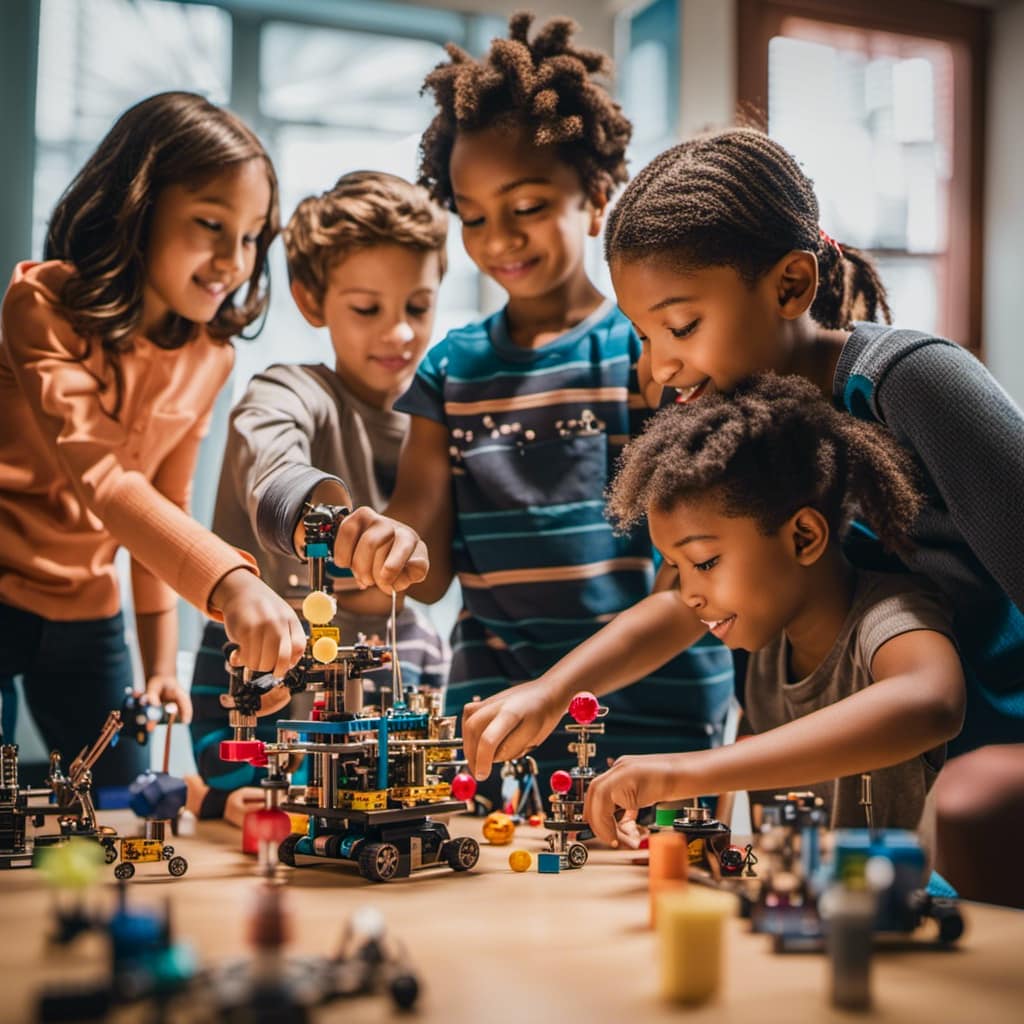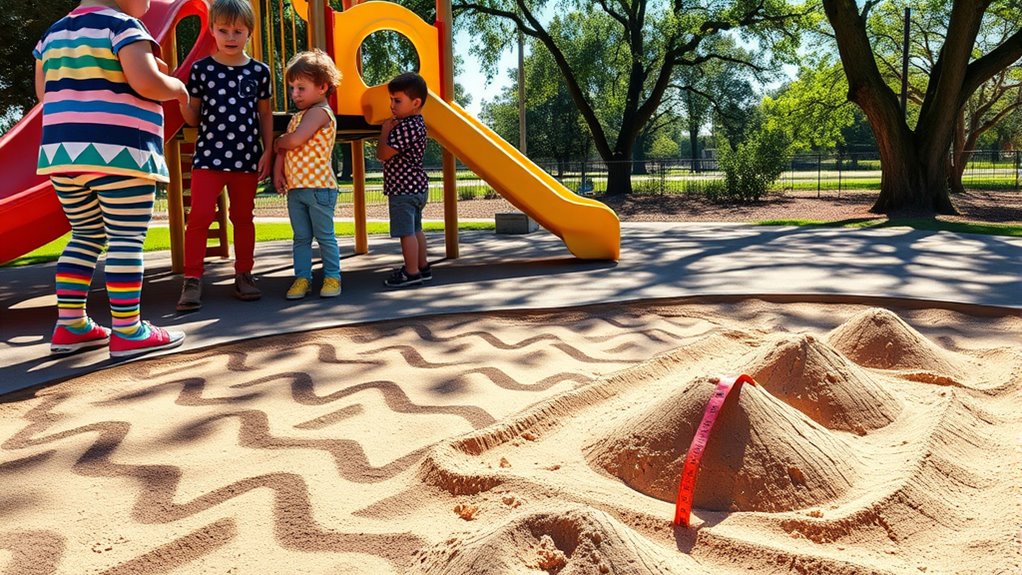

Engaging your child in pattern recognition and measurement activities during play helps develop essential math skills and critical thinking. Activities like sorting objects, creating color sequences, and measuring with hands or tools build understanding of patterns, spatial awareness, and measurement concepts. These playful practices support early math development and problem-solving skills. Keep exploring different activities to boost your child’s learning and help them make connections that will serve them in future math concepts.
Key Takeaways
- Play activities like sorting and matching reinforce pattern recognition and categorization skills essential for early math development.
- Arranging blocks and stacking cups develop spatial awareness and understanding of object relations and symmetry.
- Using tools like rulers and measuring cups during play helps children grasp size, weight, and volume concepts practically.
- Recognizing and extending patterns enhances prediction skills, logical thinking, and attention to detail in everyday tasks.
- Combining pattern activities with measurement tasks builds foundational math skills and promotes problem-solving in real-world play.
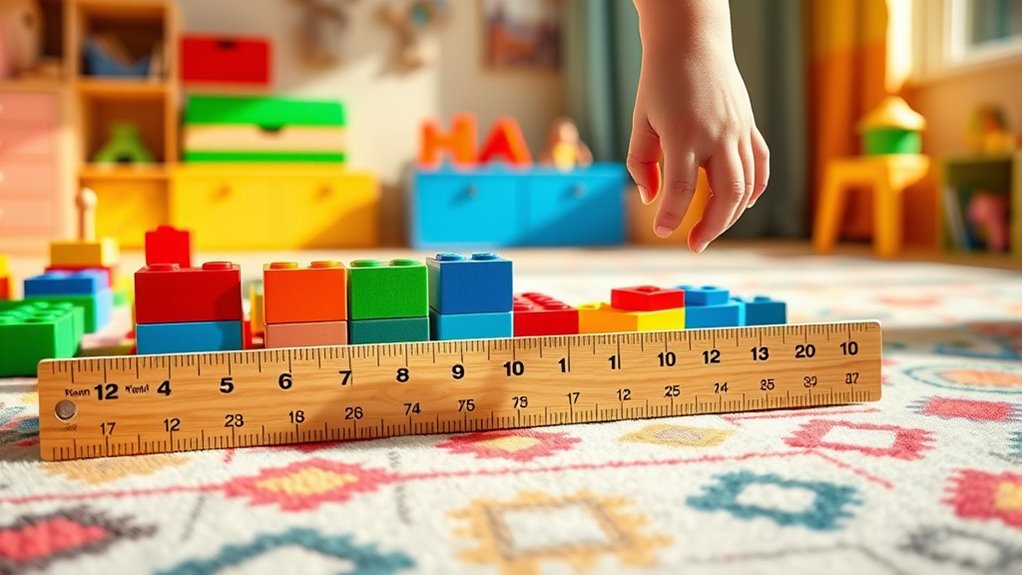
Patterns and measurement are fundamental parts of everyday play that help children develop critical thinking and problem-solving skills. As you watch a child sort blocks or organize toys, you see firsthand how they begin to recognize patterns and understand measurements. These activities aren’t just fun—they’re essential for building the foundation of math skills. When children notice repeating colors or shapes, they’re practicing color recognition, which enhances their ability to differentiate and categorize objects. This skill forms the basis for more complex concepts like sorting, matching, and identifying patterns, all of which are vital for early mathematical development.
As children engage with patterns, they also develop spatial awareness. This involves understanding how objects relate to each other in space—how they fit, align, or move around within a given area. For example, when a child arranges blocks in a row or stacks cups in a specific order, they’re practicing spatial awareness. They learn to judge distances, sizes, and positions, which helps in tasks like navigating their environment or understanding geometric concepts later on. Recognizing patterns in their play also boosts their ability to predict what comes next, strengthening their logical thinking.
In everyday play, you might see children matching colors or creating sequences with beads or stickers. These activities reinforce color recognition by encouraging them to identify, compare, and group similar hues. This process not only builds their visual discrimination skills but also enables them to categorize objects based on color, which is crucial for more advanced math concepts like sorting or pattern creation. Simultaneously, as they manipulate objects to form patterns or fit shapes together, they’re honing their spatial awareness. They learn to judge the size of pieces relative to each other, understand symmetry, and grasp how different parts come together to form a whole.
Encouraging children to notice and create patterns with various objects fosters their ability to observe details and think critically. It also helps them understand that patterns repeat and that sequences can be predicted and extended. When children measure objects using their hands, rulers, or other tools during play, they’re practicing measurement skills that translate into understanding size, weight, and volume. All these activities—recognizing colors, creating patterns, measuring—are interconnected and crucial for developing a solid mathematical mindset. Additionally, understanding measurement concepts helps children connect their play activities to real-world situations where measuring is essential.
Frequently Asked Questions
How Can Parents Encourage Pattern Recognition During Play?
You can encourage pattern recognition during play by engaging your child in activities that promote visual pattern recognition and sensory play techniques. Use colorful blocks, beads, or stickers to create repeating patterns together, asking them to identify and extend the pattern. Incorporate sensory play by exploring textures and sequences, like stacking cups or sorting objects by color or shape. These activities make pattern recognition fun and help develop their problem-solving skills.
What Are Simple Measurement Activities for Young Children?
You can make measuring fun by using everyday objects like blocks or cups to compare sizes or lengths. Incorporate pattern puzzles where children match objects by size or shape, helping them understand measurement concepts. Encourage them to estimate and then verify with actual measurements. These activities promote hands-on learning, making measurement engaging and accessible for young children through playful exploration and simple tools.
How Does Play Influence Mathematical Development?
Ever notice how children build with blocks or sort objects? Play boosts their mathematical development by enhancing sensor awareness and spatial reasoning. As they compare sizes, follow patterns, or navigate spaces, they naturally develop skills like measuring and recognizing shapes. Play turns learning into fun, making abstract concepts tangible. You help your child grow smarter by encouraging activities that challenge their senses and spatial understanding through everyday play.
Are There Cultural Differences in Pattern and Measurement Play?
Yes, there are cultural variations in pattern and measurement play. You’ll notice different play practices across cultures, reflecting diverse traditions and values. For example, some cultures emphasize repetitive pattern games, while others focus on measurement through everyday activities like cooking or building. These variations influence how children develop mathematical understanding, making it essential to recognize and incorporate diverse cultural play practices to support all learners effectively.
What Tools Enhance Learning of Measurement Concepts?
To enhance your learning of measurement concepts, use measuring tools like rulers, measuring cups, and scales to make concepts concrete. Incorporate pattern detection activities such as sorting objects by size or shape, which helps develop your understanding of patterns and measurements. Hands-on tools make abstract ideas tangible, encouraging active engagement and deeper understanding of how measurement works in everyday life.
Conclusion
As you observe your child’s play, you’ll notice how subtle patterns and measurements shape their understanding of the world. These seemingly simple activities gently nurture their cognitive skills and curiosity, laying a quiet foundation for future learning. Embrace these moments as meaningful opportunities, recognizing that even the most casual play is quietly guiding them toward a richer comprehension of their environment. In this way, everyday play becomes a subtle yet profound step in their development.