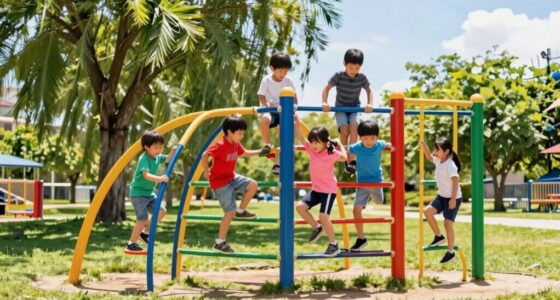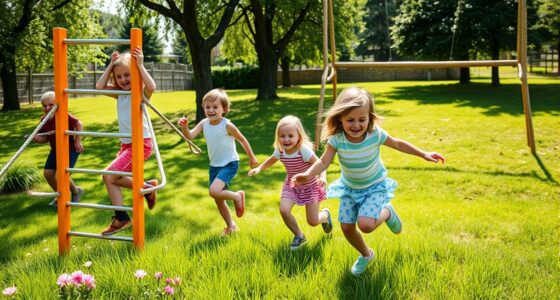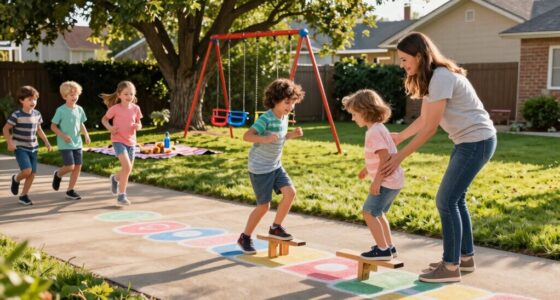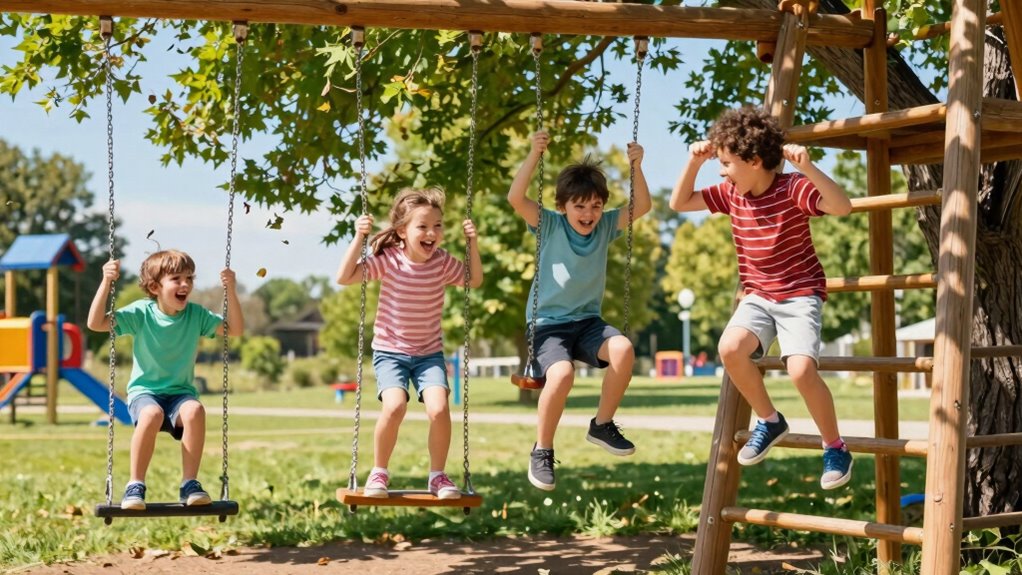

Outdoor play helps your child regulate their feelings by strengthening their physical, emotional, and sensory skills. When kids explore natural environments, they build physical strength and coordination, which boosts confidence and resilience. Exposure to natural stimuli engages their senses and teaches them to manage emotions like excitement or fear. Being outside also reduces stress and creates a calming effect, making it easier for your child to stay focused and balanced. Keep exploring to discover more ways outdoor play benefits your child’s well-being.

Turn the school run and nap time into listening time
- Thousands of audiobooks, podcasts and originals
- Listen on your phone, tablet or Echo — also offline
- Cancel anytime
Key Takeaways
- Outdoor play enhances physical strength and coordination, supporting better emotional regulation through increased confidence and resilience.
- Natural stimuli help children learn to manage responses to excitement, fear, and other emotions in safe environments.
- Exposure to nature’s calming effects reduces stress and promotes focus, aiding emotional stability.
- Engaging with unpredictable outdoor settings fosters adaptability and emotional flexibility.
- Connection to nature encourages self-awareness and impulse control, improving overall emotional regulation skills.
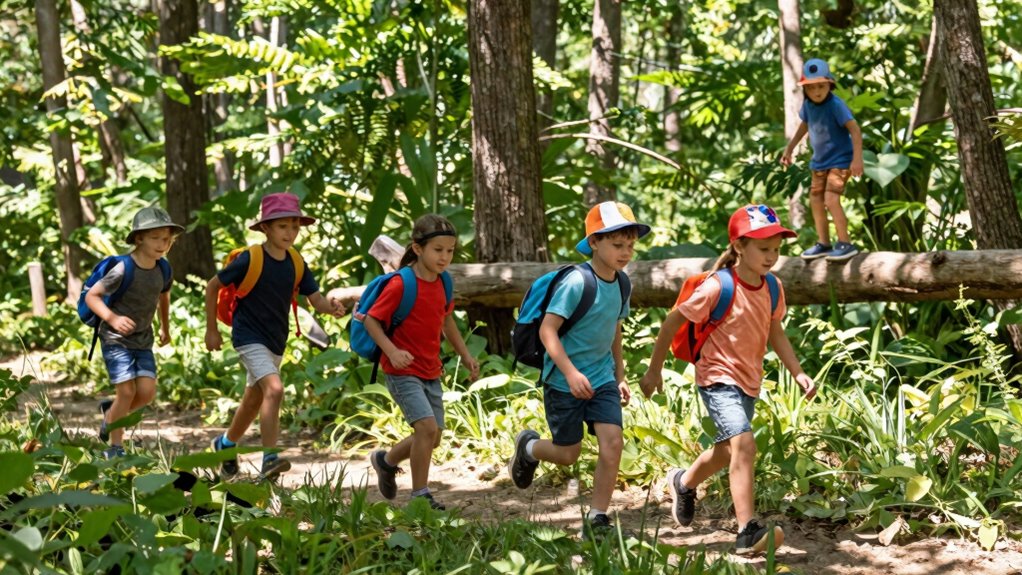
Have you ever noticed how kids thrive when they spend time outdoors? It’s because outdoor play fosters a strong nature connection that benefits their overall well-being. When children immerse themselves in natural environments, they engage in activities that challenge their bodies and minds, helping them develop essential skills. This connection to nature isn’t just about enjoying the scenery; it actively promotes physical development, which plays a key role in how kids learn to regulate their emotions and behaviors. As they climb, run, and explore, they learn to manage their energy levels and adapt to new situations more effectively.
Outdoor play helps kids develop essential skills and emotional regulation through natural exploration and physical activity.
Outdoor play provides a ripe environment for children to build their physical strength and coordination. When they navigate uneven terrain or swing on a tree branch, they’re strengthening muscles and improving their balance. These physical activities require focus and control, which translate into better self-regulation over time. As kids become more confident in their physical abilities, they also learn patience and perseverance, essential qualities for emotional regulation. This connection between physical development and emotional stability is powerful; when children feel competent in their movements, they tend to display more resilience and less frustration.
Furthermore, outdoor play exposes children to natural stimuli that can help them learn to modulate their responses. For example, rushing down a hill or jumping over rocks might evoke excitement or fear. As they experience these feelings in a safe environment, kids learn to recognize and manage their emotions better. This process helps develop their self-awareness and impulse control. The unpredictability of outdoor settings encourages kids to adapt quickly and develop flexibility in their responses, which are critical skills for emotional regulation. Incorporating natural stimuli into play can also enhance sensory integration, further supporting emotional and physical health.
Engaging with nature also reduces stress levels and calms the mind. Fresh air, sunlight, and the sounds of birds or rustling leaves create a soothing backdrop that helps children regulate their emotions. When kids spend time outdoors, they often feel more centered and less overwhelmed by daily stresses. This calming effect enhances their ability to focus, stay calm in challenging situations, and recover from setbacks more quickly. Recognizing the importance of biodiversity in natural environments can amplify these benefits, as diverse ecosystems contribute to richer sensory experiences that further support emotional and physical health.
All these elements—physical development, emotional resilience, and stress reduction—are interconnected, and outdoor play acts as a natural catalyst for fostering better regulation. By encouraging children to spend more time outside, you’re giving them the tools to manage their feelings, develop their bodies, and build confidence that lasts a lifetime.
As an affiliate, we earn on qualifying purchases.
Frequently Asked Questions
How Much Outdoor Time Is Ideal for Children Daily?
You should aim for at least 1 to 2 hours of outdoor play daily for your child. This helps balance indoor activities and screen time limits, promoting better regulation. Kids thrive with plenty of outdoor time because it encourages physical activity, exploration, and social interaction. By setting consistent outdoor routines, you support their emotional and physical development, making it easier for them to manage emotions and stay focused both indoors and outdoors.
Can Outdoor Play Improve Children’s Emotional Resilience?
Yes, outdoor play can dramatically boost your child’s emotional resilience! When kids explore nature, face challenges, and enjoy unstructured fun, they build incredible emotional strength. Outdoor environments serve as resilience-building playgrounds, teaching children to handle setbacks and develop confidence. It’s like giving them a superpower—an unstoppable emotional armor—making them more resilient and better equipped to face life’s ups and downs with a brave, positive spirit.
Are There Specific Outdoor Activities That Boost Self-Regulation?
Yes, certain outdoor activities boost self-regulation effectively. You can encourage your kids to engage in nature exploration, which fosters patience and focus, and obstacle courses, which improve coordination and impulse control. These activities require kids to stay attentive, manage their energy, and adapt to challenges. By participating in these, children learn to regulate their emotions and behaviors better, developing essential skills for emotional stability and resilience.
How Does Outdoor Play Affect Children With Sensory Processing Issues?
Outdoor play can markedly benefit children with sensory processing issues by providing controlled tactile stimulation and reducing sensory overload. You’ll notice that nature offers varied textures and sounds, which help children build tolerance to sensory input. Engaging in activities like digging, climbing, or swinging allows them to explore sensory experiences safely. This exposure promotes better regulation, helping children manage their responses and feel more comfortable in different environments.
What Safety Precautions Should Parents Consider During Outdoor Play?
You should always supervise your child closely during outdoor play, using active supervision strategies like staying within sight and setting clear boundaries. Make certain they wear protective gear, such as helmets, knee pads, and sunscreen, to prevent injuries and sunburn. Check the play area for hazards like sharp objects or broken equipment. Regularly monitor weather conditions and keep an eye on your child’s comfort, safety, and well-being throughout their outdoor activities.
Conclusion
So, next time you see kids running outside, remember it’s not just play—it’s a secret weapon for their emotional and behavioral regulation. Coincidentally, the fresh air and open space might be exactly what they need to calm down after a busy day. It’s almost like nature has a calming magic that we can’t always see, but definitely feel. Embrace outdoor play, and watch how effortlessly your kids find their balance—sometimes, the best solutions are right outside your door.
Halloween Picks
halloween
As an affiliate, we earn on qualifying purchases.