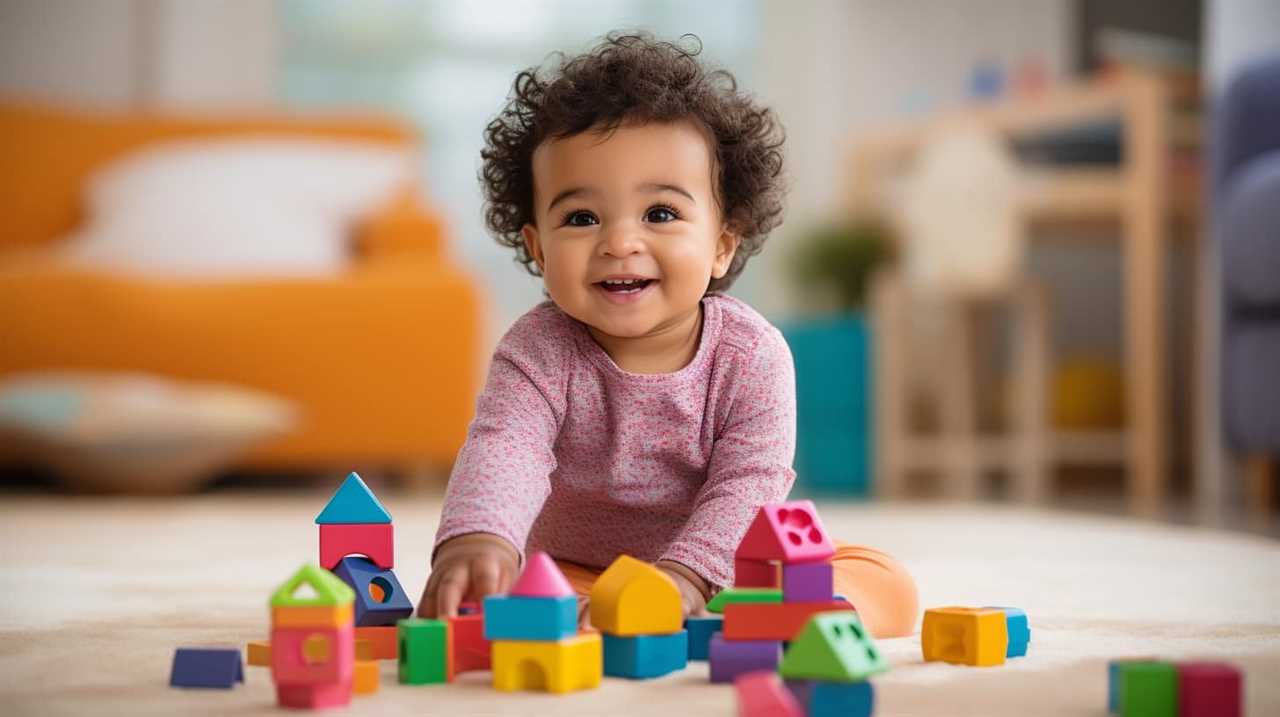
Open-ended preschool toys stay relevant because they grow with your child’s changing interests and abilities. They encourage creativity, problem-solving, and exploration, helping your little one develop essential skills over time. These toys support sensory, motor, and social development and can be used in many ways as your child learns new skills. Their durability makes them a cost-effective choice that keeps kids engaged long-term—if you want to discover how these toys continue to support growth, keep exploring.

Turn the school run and nap time into listening time
- Thousands of audiobooks, podcasts and originals
- Listen on your phone, tablet or Echo — also offline
- Cancel anytime
Key Takeaways
- They adapt to a child’s evolving interests and developmental stages, remaining engaging over time.
- Their versatility allows for multiple uses, encouraging creativity and imaginative play long-term.
- They support skill development across various areas, ensuring ongoing educational value.
- Their durability and timeless design make them a cost-effective, lasting choice.
- They foster social, emotional, and environmental skills that grow with the child’s expanding capabilities.
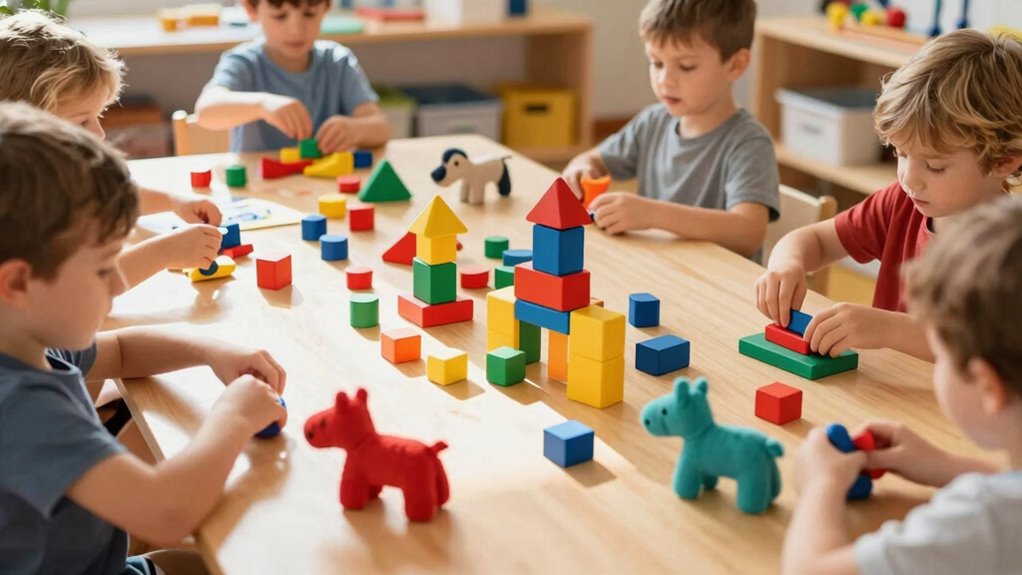
Open-ended preschool toys are essential tools that foster creativity and imagination in young children. These toys don’t have a fixed purpose or a specific way to play, which means your child can use them in countless ways. This flexibility encourages children to explore, invent, and express themselves freely. Because of this, open-ended toys remain relevant over time—they adapt to your child’s growing skills and interests, making play both engaging and educational.
Open-ended toys spark creativity, adapt with your child’s growth, and make play engaging and educational.
One of the main reasons these toys are timeless is their ability to support sensory development. As your child manipulates, touches, and explores these toys, they refine their senses—touch, sight, and even sound. For example, building blocks with different textures or colors help children learn to distinguish between various sensory inputs. This ongoing sensory engagement is essential for brain development, helping your child process information more effectively and build a solid foundation for future learning. Sensory stimulation is a key component in early childhood development, and open-ended toys naturally promote this aspect. Additionally, the ability for these toys to be used in multiple ways encourages flexible thinking, which is crucial for problem-solving skills.
In addition to sensory development, open-ended toys greatly enhance fine motor skills. When your child picks up small objects, stacks blocks, or pieces together different components, they develop coordination and dexterity in their fingers and hands. These activities may seem simple, but they’re indispensable for tasks like writing, buttoning, or using utensils later on. Because these toys don’t dictate how they should be played with, your child is encouraged to experiment and practice, gradually increasing their skill level. This self-directed play promotes confidence and independence, empowering them to try new challenges as they grow. Supporting developmental milestones through play is another reason these toys remain valuable over the years.
Furthermore, the appeal of open-ended toys lies in their ability to grow with your child. What fascinates them at age two might evolve into more complex projects by age four or five. Their imaginative play becomes more sophisticated, and they can use the same toys in different ways over the years. Their ability to adapt to changing interests underscores the enduring relevance of these toys. Their imaginative play becomes more sophisticated, and they can use the same toys in different ways over the years. This longevity means you don’t need to constantly replace toys, making them a cost-effective choice that withstands the test of time. Additionally, these toys often support biodiversity by encouraging natural exploration and hands-on interaction with varied materials. Promoting such natural interactions helps children develop a deeper appreciation for their environment.
Finally, open-ended toys foster social and emotional development. When children play together with these versatile toys, they learn cooperation, sharing, and negotiation. They develop patience and empathy as they take turns and collaborate on building projects or role-playing scenarios. The open-ended nature of these toys encourages children to express their feelings and ideas freely, fostering confidence and emotional resilience. These social interactions are vital for developing a strong sense of community and understanding others’ perspectives.
In short, open-ended preschool toys stay relevant because they adapt to your child’s developmental needs, support sensory and fine motor skills, and nurture creativity and social skills—all while providing endless opportunities for fun and learning.
open-ended preschool building blocks
As an affiliate, we earn on qualifying purchases.
As an affiliate, we earn on qualifying purchases.
Frequently Asked Questions
How Do Open-Ended Toys Support Different Developmental Stages?
Open-ended toys support your child’s development by fostering creative exploration and encouraging them to think outside the box. As they play, they naturally develop motor skills through activities like stacking, building, or manipulating objects. These toys adapt to different developmental stages, challenging their abilities while promoting problem-solving, imagination, and coordination. By offering versatile play opportunities, you help your child grow mentally, physically, and emotionally at every age.
Are Open-Ended Toys Suitable for Children With Special Needs?
Yes, open-ended toys are suitable for children with special needs because they support sensory integration, promote communication skills, and encourage creativity. You’ll find these toys adaptable to various abilities, helping children explore and express themselves comfortably. By engaging multiple senses and fostering social interaction, open-ended toys create inclusive play environments. You can confidently incorporate these toys into your child’s routines, knowing they help develop essential skills at their own pace.
How Can Parents Encourage Creative Play With Open-Ended Toys?
You can encourage creative play with open-ended toys by providing a variety of materials that spark imagination. Engage your child by asking questions that inspire storytelling and exploration. Encourage social interaction by playing together, sharing ideas, and collaborating on projects. Let your child lead their play, allowing their creative imagination to flourish. Your active involvement fosters confidence and helps develop essential social skills, making playtime both fun and educational.
What Are Some Budget-Friendly Open-Ended Toy Options?
Like finding a pearl in a sea of shells, budget-friendly open-ended toys shine brightly. You can choose affordable alternatives like wooden blocks, repurposed household items, or craft supplies—these are playful investments that encourage creativity without breaking the bank. These versatile toys foster imagination and can be used in countless ways, making them perfect for sparking your child’s curiosity and development while sticking to your budget.
How Do Open-Ended Toys Compare to Electronic Toys in Learning Benefits?
Open-ended toys often provide richer learning benefits compared to electronic toys because they foster creativity and problem-solving without relying on digital stimulation or technological engagement. While electronic toys may offer immediate entertainment and interactive features, open-ended toys encourage imagination and critical thinking. You’ll notice that children develop better social skills, adaptability, and cognitive abilities when they explore and invent with simple, versatile toys, making them a timeless choice.
Conclusion
As you watch children explore with open-ended toys, it’s clear they spark creativity and joy that timelessly resonate, much like a beloved vinyl record in a world of streaming. These toys foster imagination, problem-solving, and independence—values that never go out of style. So, keep investing in open-ended play; it’s an enduring gift that shapes bright, curious minds. After all, in a world rushing forward, these toys remain a cherished anchor for limitless discovery.
Cold & flu season Picks
humidifiers
As an affiliate, we earn on qualifying purchases.