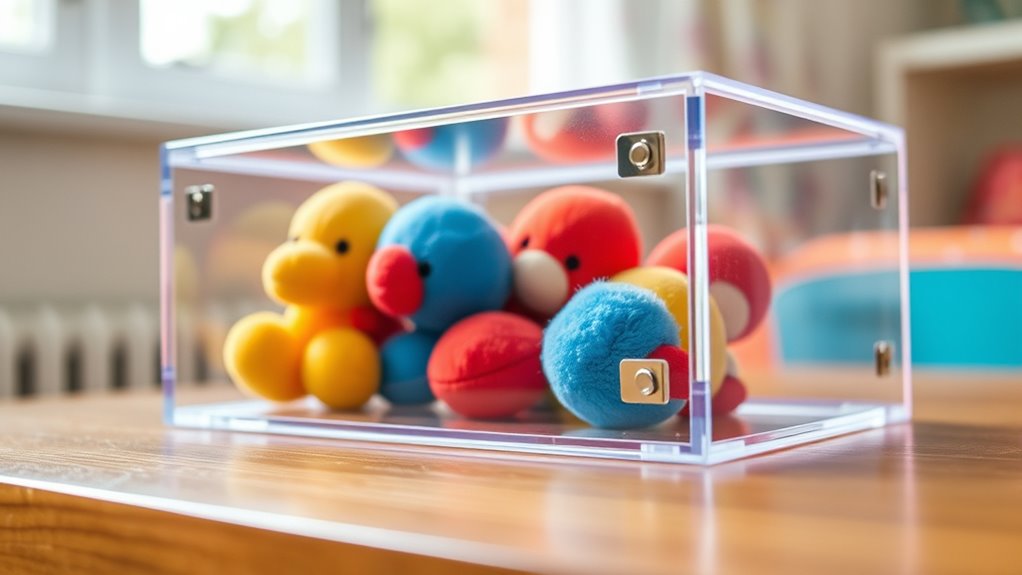

Object permanence boxes are valuable tools that help children understand that objects still exist even when hidden, sparking curiosity and supporting cognitive growth. They encourage active exploration, improve hand-eye coordination, and foster problem-solving skills. These boxes also build confidence as kids learn to search and retrieve objects independently. If you want to discover how they can boost early development and engage children effectively, keep exploring the many benefits behind this simple yet powerful tool.
Key Takeaways
- Object permanence boxes visually demonstrate a child’s understanding that hidden objects still exist, fostering cognitive development.
- They engage multiple senses, encouraging sensory exploration and early learning through touch, sight, and movement.
- Using these boxes promotes exploration, spatial awareness, and problem-solving skills as children retrieve hidden objects.
- They help develop motor skills, hand-eye coordination, and focused attention vital for future academic tasks.
- Incorporating object permanence boxes builds confidence, independence, and trust in the environment, supporting overall cognitive growth.

Object permanence boxes are simple yet powerful tools used to demonstrate a child’s understanding that objects continue to exist even when they’re out of sight. When you introduce these boxes to a young child, you’re not just providing a toy; you’re opening a window into their developing mind. These tools play an essential role in fostering sensory development, which is fundamental in early learning skills. As children reach, grasp, and manipulate the box, they engage multiple senses—touch, sight, and sometimes even sound—helping them understand the concept of object permanence. This process sharpens their ability to connect sensory input with mental representations, setting the stage for more complex cognitive skills.
Using an object permanence box encourages active participation, making learning engaging and concrete. When a child drops an object into the box, they see it disappear, then reappear, reinforcing the idea that unseen objects still exist. This experience enhances their understanding of cause-and-effect relationships, which are essential early learning skills. As they repeatedly practice retrieving objects from the box, they develop patience, hand-eye coordination, and problem-solving abilities. These skills are foundational for later academic tasks, like reading and math, where focus and coordination are necessary.
You’ll notice that as children become more confident with the object permanence box, their curiosity deepens. They start experimenting with different objects, exploring how they fit and move within the box. This exploration boosts their sensory development even further, as they learn to differentiate textures, shapes, and sizes. The act of searching and retrieving also nurtures their spatial awareness, helping them understand relationships between objects and space. These early experiences with sensory-rich activities like using the object permanence box are essential for developing a broad range of early learning skills, including memory, attention, and motor skills. Additionally, incorporating varied objects can help enhance their understanding of object properties, further enriching their sensory experience.
Most importantly, working with an object permanence box helps children build a sense of security and trust in their environment. When they discover that objects still exist, even when they’re out of sight, they gain confidence in their ability to understand the world around them. This confidence encourages them to explore more independently, fueling their natural curiosity. In this way, the simple act of playing with an object permanence box becomes a foundational activity that considerably contributes to a child’s cognitive and sensory development, paving the way for more advanced learning and discovery.
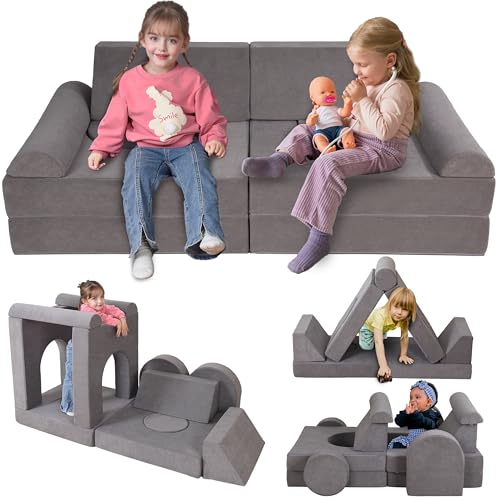
Winhomish 12-Piece Modular Kids Play Couch – Premium Soft Foam, Removable Cover, Comfortable & Safe Toddler Couch for Children 1-6 Years, Portable & Easy to Clean, Ideal for Living Room & Playroom
Premium Quality Modular Design – The Winhomish 12-piece kids modular play couch offers a luxurious and customizable solution...
As an affiliate, we earn on qualifying purchases.
Frequently Asked Questions
How Does Object Permanence Development Vary Across Different Age Groups?
You’ll notice that object permanence development varies across age groups. As sensor development advances, infants reach key cognitive milestones, like understanding that objects continue to exist even when out of sight. By around 8-12 months, most children grasp this concept, reflecting their growing cognitive skills. Older kids refine this understanding further, showing more complex thinking. Your observation aligns with typical developmental progress, highlighting how sensor development influences cognitive milestone achievement.
Can Object Permanence Boxes Be Used for Children With Special Needs?
Imagine working with a child with sensory integration challenges who struggles with motor skills. Using object permanence boxes can help them develop these skills by encouraging exploration and memory. These tools can be adapted to suit their needs, making learning engaging. You can see progress as they improve their understanding of hidden objects, boosting confidence and cognitive development, especially when tailored for children with special needs.
What Materials Are Safest for Creating DIY Object Permanence Boxes?
When creating DIY object permanence boxes, you want to guarantee you’re using safe materials. Choose non-toxic supplies like food-grade silicone, smooth wood, or BPA-free plastic to protect your child’s health. Avoid sharp edges, toxic paints, or cheap plastics that could splinter or leach harmful chemicals. Always verify that all materials are child-safe and free from choking hazards, ensuring your homemade box is both fun and safe for your little one to explore.
How Do Cultural Differences Influence the Use of Object Permanence Toys?
Imagine exploring how different cultures see the value of play, shaping their approach to toys like object permanence boxes. Cultural perceptions deeply influence how often and in what ways these toys are used, reflecting broader play traditions. Some cultures emphasize social interaction over individual discovery, affecting toy design and use. Recognizing these differences helps you appreciate diverse learning styles and adapt your approach to nurturing curiosity across various cultural contexts.
Are There Any Contraindications for Using Object Permanence Boxes With Certain Children?
You should be cautious when using object permanence boxes with children who have developmental delays or sensory sensitivities. These children might find the activity overwhelming or confusing, potentially causing frustration or distress. It’s important to observe their reactions closely and adapt the activity as needed. If they show signs of discomfort, consider alternative methods that suit their individual needs better, ensuring a positive and supportive learning experience.

Annualring 10-Piece Mini Kids Play Couch, Modular Flower Foam Sofa, Convertible Soft Play Sofa with Washable Cover, Indoor Climbing Furniture for Playroom, Pink & Beige
10-Piece Modular Kids Play Couch for Endless Fun:This foam kids play couch includes 10 soft modular pieces that...
As an affiliate, we earn on qualifying purchases.
Conclusion
By exploring how object permanence boxes work, you see their powerful role in cognitive development. They’re not just toys; they embody Piaget’s theory that babies gradually understand objects continue to exist even when hidden. This suggests that your child’s ability to grasp object permanence isn’t just about play—it’s a sign of developing reasoning skills. So, next time you see a child interact with one, remember you’re witnessing a fascinating step in their mental growth.
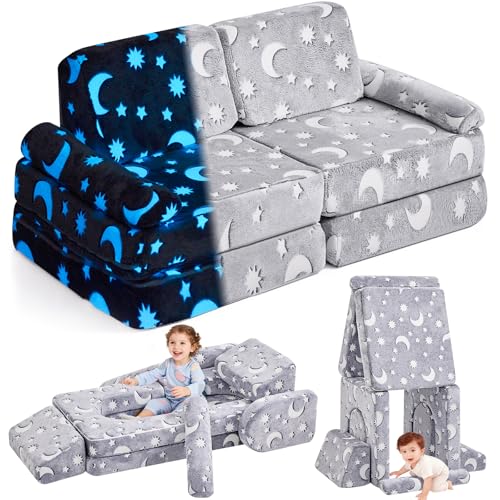
IFNOW Star Modular Kids Play Couch for Toddlers 1-3, 10 Pcs Convertible & Washable Toddler Foam Couch for Playroom & Living Room, Glow-in-the-Dark, Apartment Friendly CPC Certified Building Fort couch
MADE FOR TODDLERS AGES 1-3: Designed as a soft first modular kids play couch for little ones, this...
As an affiliate, we earn on qualifying purchases.

zefinot Modular Kids Play Couch 10PCS – Convertible Kids Sofa & Toddler Play Couch with DIY Foam Pieces for Imaginative Play, Climbing & Relaxation for Playroom, Bedroom, Nursery & Living Room
【Versatile Design】The modular kids play couch offers different shapes foam for DIY unlimited builds,such as sofas, forts, tunnels,...
As an affiliate, we earn on qualifying purchases.