
Sound cylinders are powerful, hands-on tools that help young learners develop phonemic awareness. By using these simple instruments, you encourage children to focus on individual sounds, compare different noises, and stay attentive to auditory details. Their engaging design makes learning fun and interactive, building confidence in early literacy skills. As you explore further, you’ll discover how these tools can transform phoneme recognition into an enjoyable routine for your students.
Key Takeaways
- Sound cylinders serve as engaging, tactile tools to develop phoneme isolation and improve early literacy skills in young children.
- They enhance auditory discrimination by allowing children to compare and recognize different sounds produced by various materials.
- Using sound cylinders promotes focused listening and attention, foundational for decoding and phonemic awareness.
- They make abstract sound concepts tangible, facilitating hands-on, interactive learning for small groups or individual instruction.
- Incorporating sound cylinders boosts confidence in early reading skills, supporting literacy development and overall language comprehension.
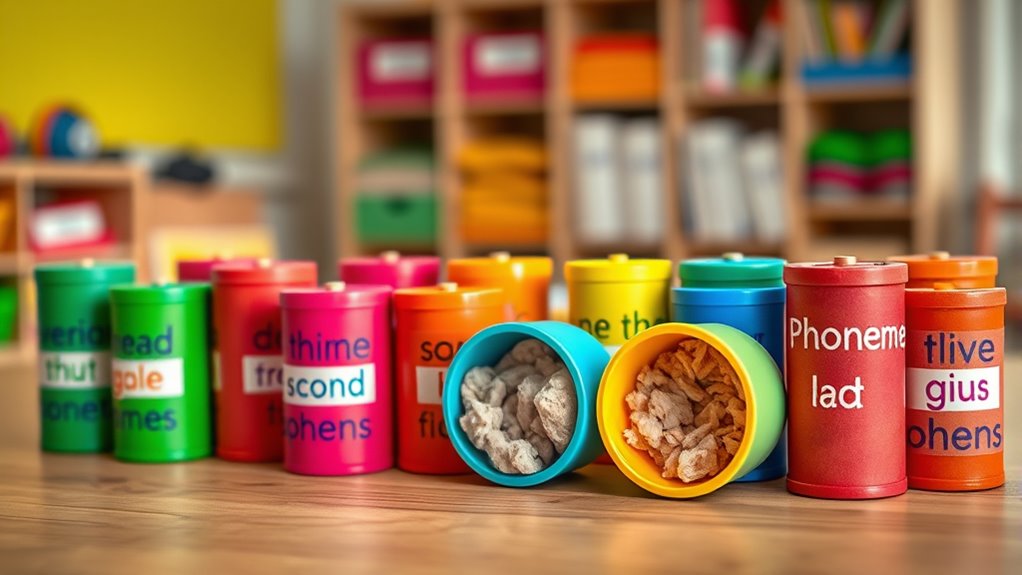
Sound cylinders are simple yet fascinating musical instruments that produce sound when rolled or shaken. As you introduce these to young learners, you open the door to developing essential early phonemic awareness skills. These small, handheld tools are more than just musical toys—they serve as powerful aids in phoneme isolation and auditory discrimination. When children manipulate sound cylinders, they’re actively engaging with the sounds around them, which helps lay the foundation for fluent reading and language development.
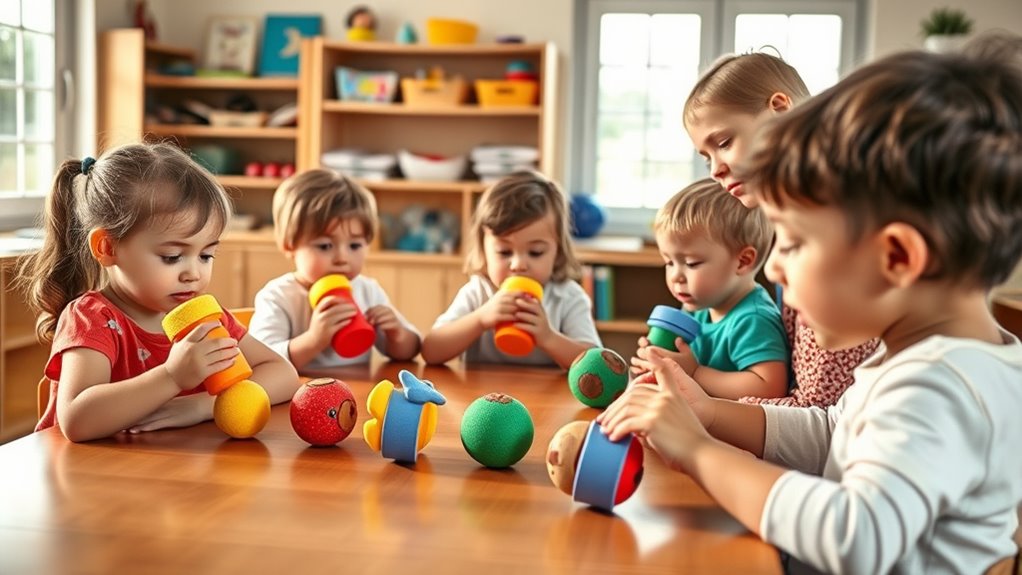
Imagine giving a child a set of sound cylinders, each filled with different materials that produce distinct sounds—like beads, pebbles, or rice. As they shake or roll the cylinders, you can guide their attention toward the specific sounds they hear. This process not only makes the activity engaging but also helps children practice phoneme isolation—the ability to identify individual sounds within words. For example, by asking, “What sound do you hear when you shake this cylinder?” you encourage them to focus on one phoneme at a time, reinforcing their understanding of how sounds form words.
In addition to phoneme isolation, sound cylinders are excellent tools for fostering auditory discrimination—the skill of recognizing differences and similarities among sounds. You can create activities where children compare the sounds produced by different cylinders, encouraging them to notice subtle distinctions. For instance, one cylinder might contain dry beans, producing a rattling sound, while another has marbles, creating a different tone. As children listen carefully, they learn to distinguish between similar sounds, which is essential for decoding words and spelling later on. This active listening practice enhances their overall auditory skills, making them more confident in identifying sounds within spoken language.
Using sound cylinders also encourages children to become more attentive listeners. When you incorporate them into your teaching, you’re helping children develop the ability to focus on specific sounds in a noisy environment, a critical aspect of auditory discrimination. Repetition and variation in these activities strengthen their ability to discern phonemes, which directly impacts their reading readiness. Plus, because sound cylinders are versatile and simple, you can adapt the activities to suit different learning levels, making them an inclusive tool in your educational toolkit.
Ultimately, sound cylinders serve as engaging, hands-on tools that make abstract phonemic concepts tangible. They help children isolate individual phonemes and discriminate between different sounds through active listening and manipulation. As a result, you’re nurturing the foundational skills necessary for literacy, all while keeping the learning process fun and interactive. Whether used in small group activities or one-on-one instruction, sound cylinders are invaluable for unblocking early phonemic awareness and building confident, capable readers.
Frequently Asked Questions
How Do Sound Cylinders Improve Early Literacy Skills?
Sound cylinders improve early literacy skills by enhancing your child’s phonemic awareness and auditory discrimination. When they listen to different sounds through the cylinders, they learn to identify and differentiate phonemes, which are the building blocks of words. This active engagement helps them recognize sounds in words, making it easier to develop reading skills. By practicing with sound cylinders, you give your child a fun, hands-on way to strengthen essential foundational skills for literacy.
What Age Group Benefits Most From Sound Cylinders?
Imagine discovering the perfect activity at just the right time—that’s what sound cylinders offer for early learners. You’ll find that young children, typically around ages 3 to 5, benefit most from these age-appropriate activities, aligning with their developmental milestones. This playful approach helps nurture phonemic awareness, setting a strong foundation for future literacy. Engaging in these activities supports their growth, making learning both fun and effective during these vital early years.
Are Sound Cylinders Effective for Children With Learning Disabilities?
You might wonder if sound cylinders are effective for children with learning disabilities. They can be, as these tools promote phonemic differentiation and auditory discrimination, essential skills for language development. By actively engaging children in listening and distinguishing sounds, sound cylinders help improve their auditory processing. With tailored guidance, children with learning disabilities can benefit greatly, strengthening their foundational phonemic awareness and supporting overall communication skills.
How Can Parents Incorporate Sound Cylinders at Home?
You can incorporate sound cylinders at home through DIY sound activities that boost your child’s phonemic awareness. Engage in simple games like matching sounds to objects or creating patterns with different cylinders. Your active parental engagement makes these activities fun and educational, helping your child develop early reading skills. Set aside dedicated time, encourage exploration, and celebrate their progress to make learning enjoyable and effective.
What Materials Are Best for Creating Durable Sound Cylinders?
You might think fragile materials work best, but durable materials truly enhance cylinder longevity. For maximum material durability, choose hardwood or sturdy plastic, as they withstand frequent handling and accidental drops. Focus on cylinder design that reinforces seams and edges, preventing cracks. Using thick, high-quality materials ensures your sound cylinders stay intact longer, making them a reliable tool for early phonemic awareness. Investing in durable materials and thoughtful design keeps these educational tools effective and safe.
Conclusion
Using sound cylinders can seem simple, but their impact on early phonemic awareness is powerful. Imagine your child confidently distinguishing sounds, building a strong foundation for reading. Some might think it’s just play, but it’s actually revealing vital skills that set up lifelong learning success. With every shake and match, you’re fostering their confidence and curiosity. So, don’t overlook this fun, effective tool—your child’s future literacy skills are just a sound away.